
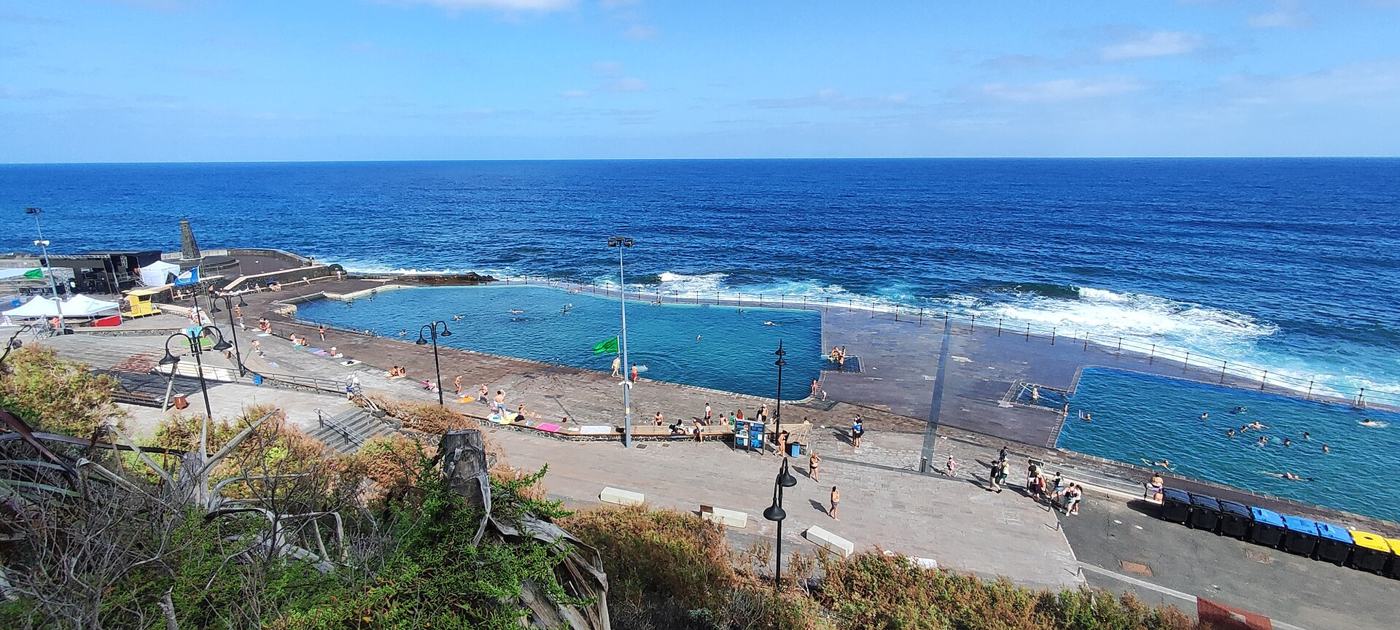
Bajamar · Towns of Tenerife
Bajamar and Punta del Hidalgo: La Laguna's shore
Guanche caves and shell middens, a fishing village around a seventeenth-century chapel, a road built for bananas, the hotels of the 1960s and the surfers of the 1970s. The story of the coast where La Laguna meets the sea.
5 min read · 4 sources · Updated October 2026
Piscinas naturales de Bajamar · Mentxuwiki, CC BY-SA 4.0
Most people know Bajamar for its sea pools and Punta del Hidalgo for its lighthouse and its waves. Behind both lies a longer story: a coast lived on by the Guanches, settled by farmers and fishermen after the conquest, briefly a municipality of its own, and in the 1960s one of the places where tourism in Tenerife began. Its name is simply the Spanish word for low tide.
Between Anaga and the sea
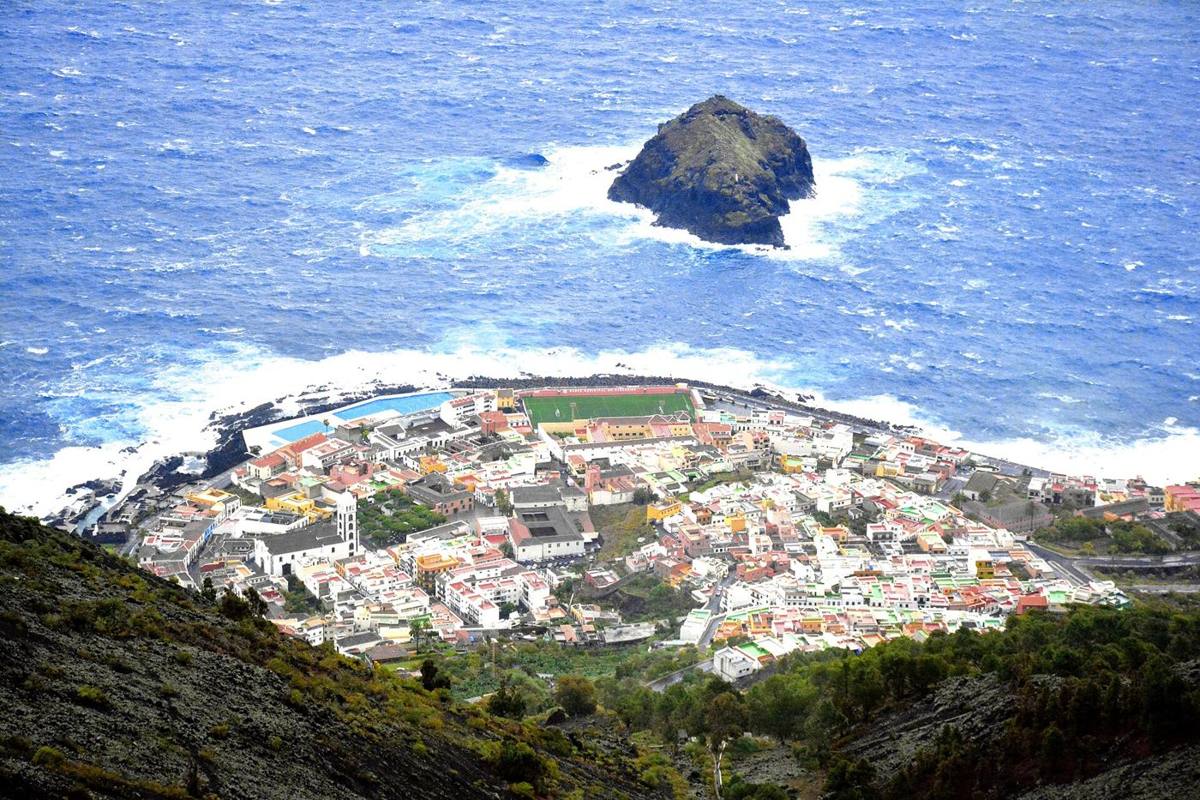
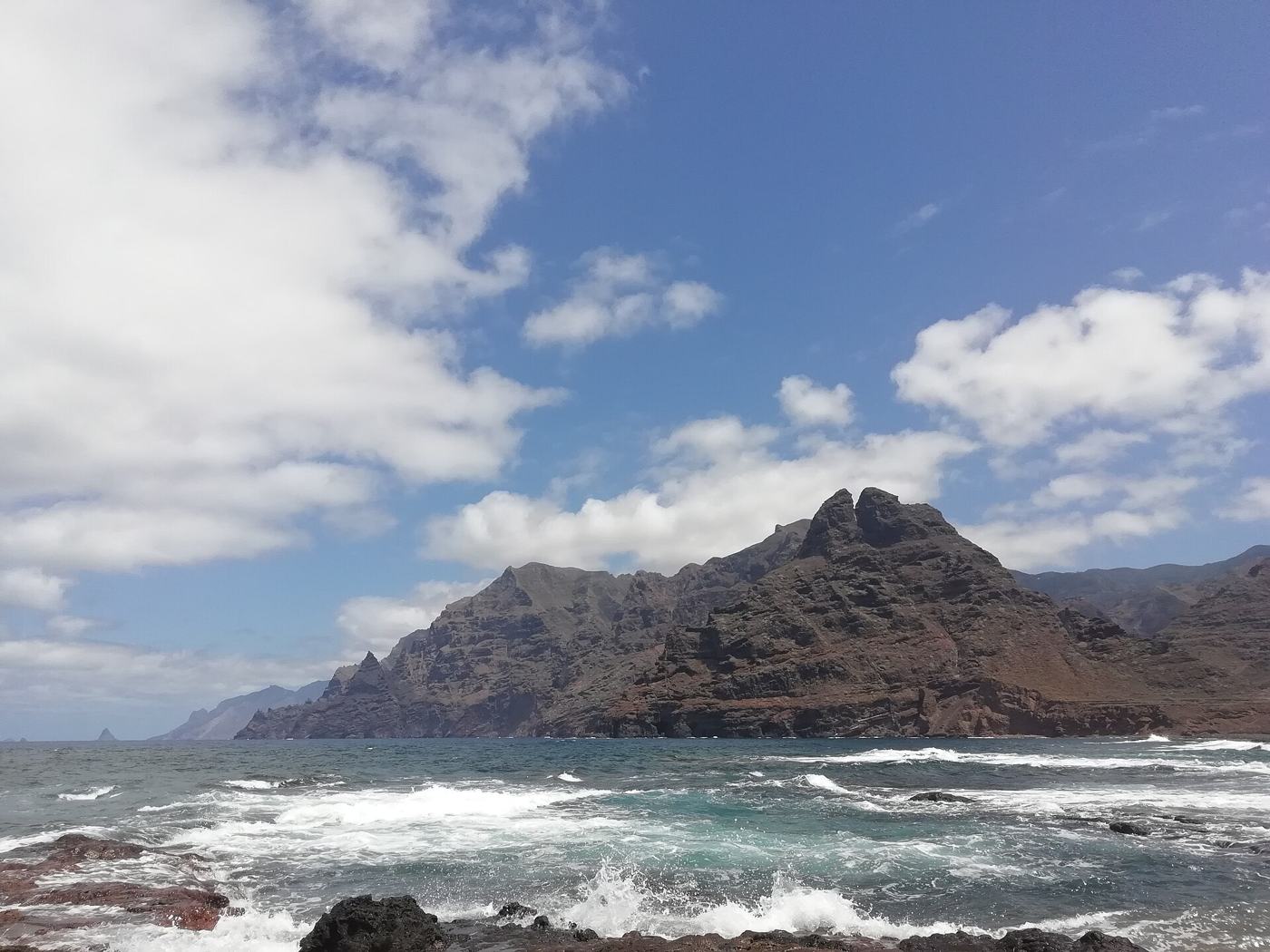
Bajamar and Punta del Hidalgo occupy the north-eastern coast of the municipality of La Laguna, between the ravine of Agua de Dios and the Anaga massif. The land here is two narrow coastal platforms, separated by a spur of Anaga called the Lomo de Enmedio or Aguacada. Bajamar sits on the first, about 800 metres wide and crossed by the ravines of Perdomo and San Juan; Punta del Hidalgo on the second, longer one.1 The coast of Punta del Hidalgo lies within the Anaga Biosphere Reserve.2
Guanches on the coast
The area belonged to the menceyato of Tegueste, one of the nine Guanche kingdoms of Tenerife.1 It was densely occupied. Archaeologists have found the natural caves along the coast of Punta del Hidalgo used both as homes and as burial places, together with groups of huts and shell middens (concheros), the heaps of shells left by people who lived off the shore.2 One old fishing technique survived long after them: stunning fish and octopus in rock pools with the milky latex of the cardón, the Canarian spurge, a practice known locally as embarbascar.2
Farmers, fishermen and a chapel
After the conquest the district was settled mainly by Portuguese colonists and by Guanches from La Gomera.2 Bajamar itself began at the mouth of the ravine of San Juan, around a chapel that is now the Ermita de Jesús del Gran Poder and which grew out of an older chapel of San Juan Bautista dating from the seventeenth century.1 For centuries the landscape was agricultural, changing with each of the island's farming cycles. From the early nineteenth century small-scale fishing became a second income for families who worked on the estates, and that mix of field and sea is what consolidated both Bajamar and Punta del Hidalgo as villages.1
A municipality of its own
It is easy to forget that Punta del Hidalgo was once a municipality. It became one after the Cortes of Cádiz of 1812. In 1847 it asked to be joined to Tejina, and since 1850 it has been part of the municipality of La Laguna.2
The road, the bananas and the summer houses
The coast changed when it was connected to the city. In the early twentieth century a road was built from La Laguna to Punta del Hidalgo, wanted by the estates that had started growing export crops, above all bananas. The road also opened the way for Bajamar to become a summer resort.1 Bananas themselves arrived in earnest around 1952.1
Hotels, Germans and surfers
The great change came in the 1960s and 1970s, when tourism reached Bajamar. Hotels and apartments were built, and many foreigners, above all German retirees, settled in the area for decades.14 The population of Bajamar multiplied by five between 1950 and 1981, while Punta del Hidalgo stood still; in the following decade the trend reversed.1 Surfing arrived in the 1970s, and the reef breaks of Punta del Hidalgo, such as El Roquete and La Bajeta, have given the coast a distinct identity among Tenerife's surfers and bodyboarders ever since.3
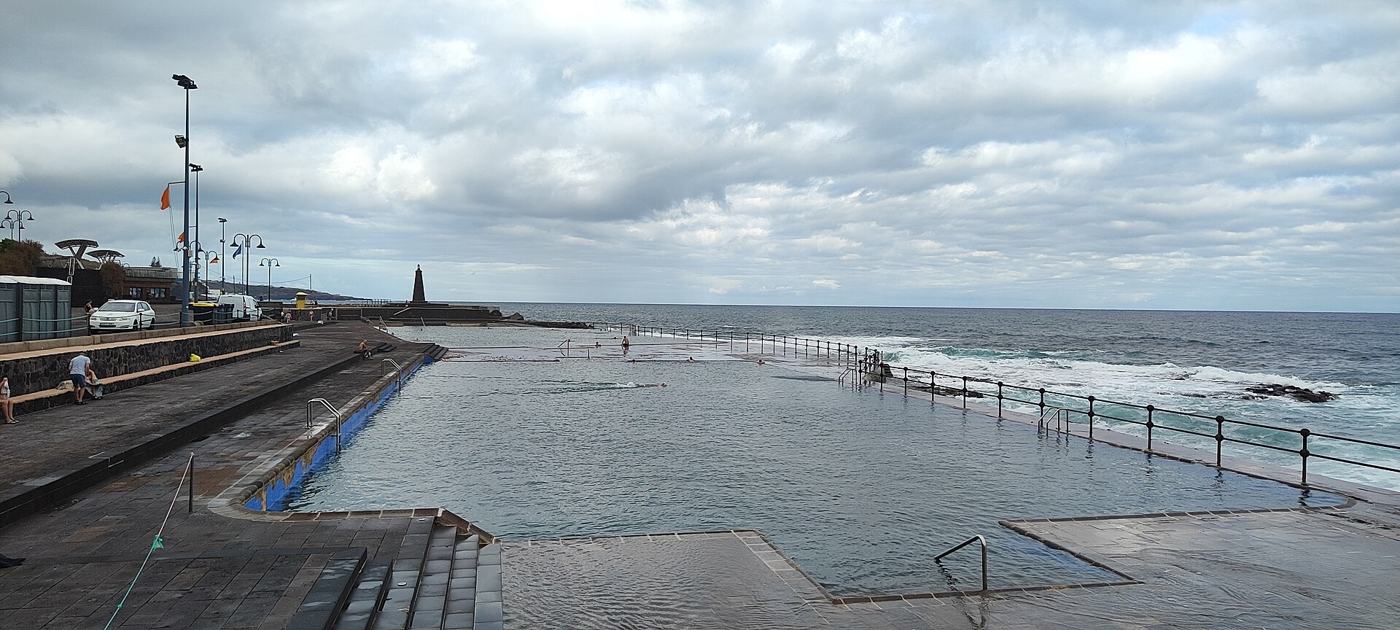
The boom did not last. Some of the old hotels found new uses: the Delfín worked for some years as a centre for people with Alzheimer's, while the Neptuno has stood abandoned since 2007.34 Today Bajamar is a small, mostly seasonal place of about 2,600 residents (2007), organised around its natural pools, a small artificial beach and the promenade that links them.1
Fiestas of the sea
Fishing is still alive. The fishermen's guild of Punta del Hidalgo, the Cofradía de Pescadores de Nuestra Señora de la Consolación, counted 26 members and 19 boats in 2023, fishing with pots, longlines and other traditional gear for vieja (parrotfish), cabrillas, bocinegros and samas.2 Every year, around 16 July and depending on the sea, the Virgen del Carmen leaves her chapel in Punta del Hidalgo aboard a fishing boat and sails along the coast to Bajamar, where she is greeted with fireworks before returning. On the feast of San Juan the saint is carried in procession from the church of San Mateo down to the little Ermita de San Juanito on the shore.2
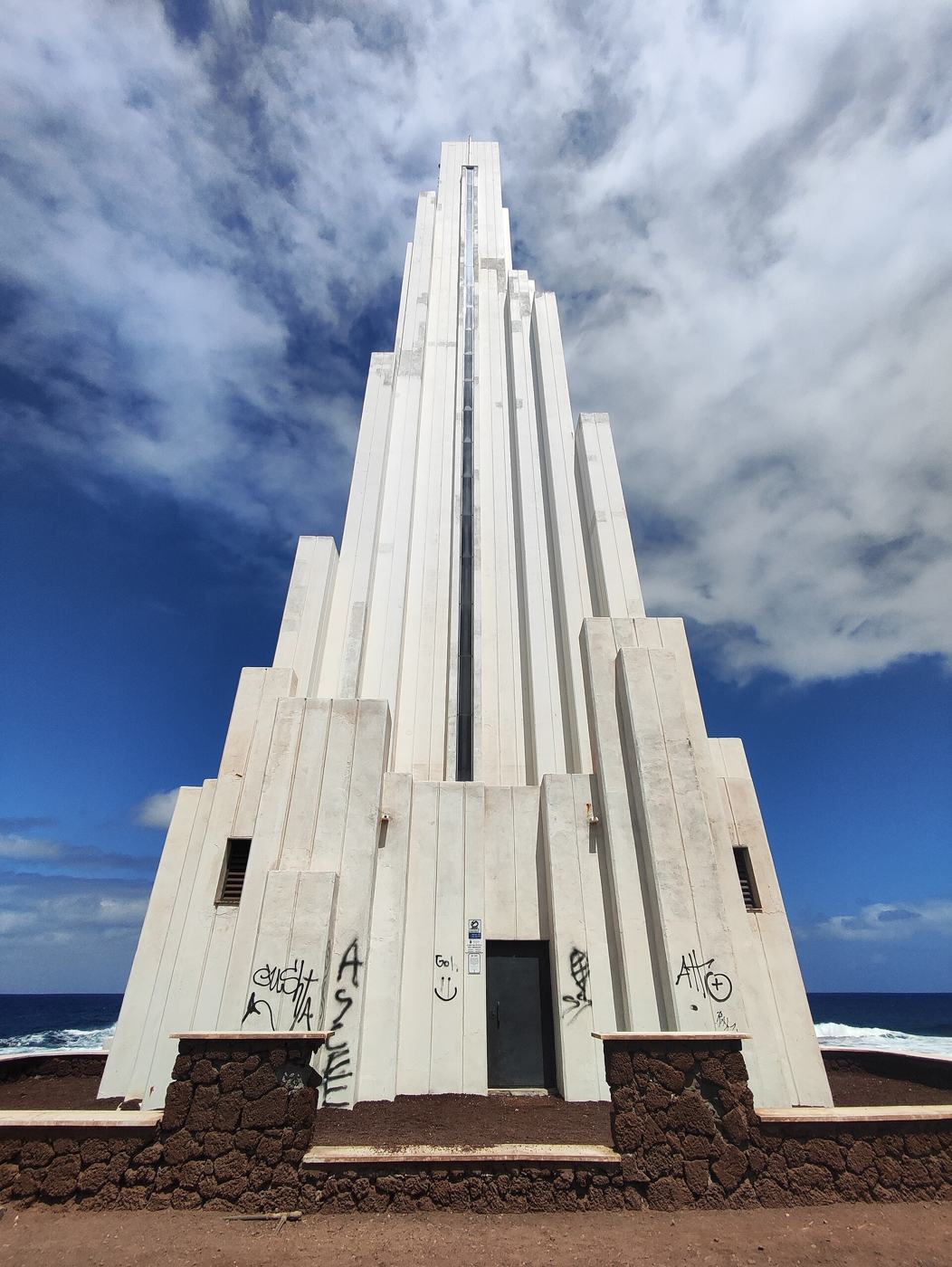
The modern landmark of the coast is younger than many residents. The lighthouse of Punta del Hidalgo, a white tower designed by the engineer Ramiro Rodríguez-Borlado, was finished in 1992 and began working two years later.2 Offshore, the Roque de los Dos Hermanos carries the coast's best-known legend: two lovers who discovered, by matching the two halves of a handkerchief, that they were the brother and sister separated as orphans, and threw themselves into the sea.2
For the story of the city that this coast belongs to, read San Cristóbal de La Laguna: a town planned for peace.
Notes and sources
- 1.Ayuntamiento de San Cristóbal de La Laguna, Plan General de Ordenación, Avance, Tomo II: B2 Bajamar (historical note, general description and socio-economic analysis). urbanismolalaguna.es
- 2.Ayuntamiento de San Cristóbal de La Laguna, Guía interpretativa de los recursos pesqueros del litoral de Punta del Hidalgo. Biodiversidad y patrimonio (2023). turismo.aytolalaguna.es
- 3.C. T. Cabrera Plata, El producto turístico de Bajamar y Punta del Hidalgo (Tenerife): una aproximación al perfil del turista surfista, Trabajo de Fin de Grado, Universidad de La Laguna, 2022, citing Diario de Avisos (16 July 2015) on the Hotel Neptuno. riull.ull.es
- 4.Ayuntamiento de San Cristóbal de La Laguna, Plan General de Ordenación 2014, documento J3: Turismo (on the Delfín and Neptuno hotels). urbanismolalaguna.es