


Shopping
Why a parcel from Madrid can cost more than one from China
Half of Spain's online shops will not ship to the Canaries, most of the rest charge extra, the magic number is 150 euros and since July 2026 every non-EU parcel pays a new 3-euro duty. How IGIC, customs declarations and courier fees really work, and how to stop paying twice.
6 min read · 10 sources · Updated October 2026
Illustrative image generated by Canarian Pulse
In short
- The Canaries are in the EU's customs union but outside its VAT area. Goods arriving from the Peninsula are treated as imports for tax purposes and pay the Canarian tax, IGIC, instead of Spanish VAT.1,2
- Orders worth up to 150 € including shipping are exempt from IGIC; above that you pay IGIC (7% on most goods) plus a customs declaration that couriers often charge for, up to about 30 €.3,4
- In 2025, 54% of Spanish online shops did not ship to the Canaries at all, and 87% of those that did charged extra.5
- Since 1 July 2026 every parcel up to 150 € from outside the EU (Shein, Temu, AliExpress) pays a new EU duty of 3 € per product type, also in the Canaries. The IGIC exemption itself is under political pressure.6,7
Same country, different tax
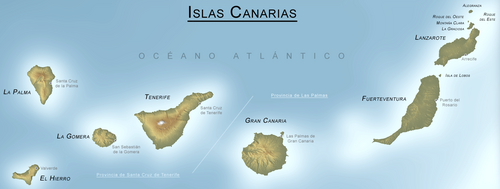
To understand the parcel problem you need one fact that surprises many people: the Canary Islands are part of the EU and of its customs union, but not of the EU's VAT area. Instead of Spanish VAT (IVA, 21% general rate), the islands have their own indirect tax, the IGIC, with a general rate of 7%.1,2
The consequence is that a parcel sent from Madrid to La Laguna crosses a tax border. For the tax authorities the shop in Madrid is exporting and you are importing. The Spanish shop should not charge you Spanish VAT on goods sent to the Canaries, and you may owe IGIC on arrival instead.2,8
The magic number: 150 euros
Since 2017 Canarian law exempts from IGIC imports whose total value does not exceed 150 euros.3 Below that line, the parcel enters with a simplified declaration called H7, which since 2021 has replaced the old customs document (DUA) for low-value goods and which you can even file yourself with an electronic ID.4,9 Guides for consumers explain that the 150 € includes shipping when it is charged separately.4
Above 150 € things change. The parcel needs a full import declaration, you pay IGIC (7% for most goods, 0% for paper books, 15% for jewellery), and the courier usually charges a handling fee for doing the paperwork: Amazon publishes a figure of up to 30.09 € depending on the carrier.4 You can clear it yourself through the Canary Islands Tax Agency's simplified form, but the courier has to pass the documents on, and that is not always free or fast.4,10
Why so many shops simply say no
Faced with export paperwork, customs declarations and higher freight costs to an archipelago, many shops give up. A 2025 study by the price-comparison site idealo found that 54% of Spanish online shops do not ship to the Canaries, six points better than in 2021. Of those that do, only 13% ship for free; 87% add surcharges.5 An earlier survey by the Canary Islands telecommunications observatory found that 63% of online shoppers in the islands had had problems: delays, refusals or unexpected costs.5
Meanwhile, until mid-2026, a phone case from a Chinese platform could arrive with free shipping, no IGIC under 150 € and no customs fee. That is how a parcel from Madrid ended up costing more than one from China.
What changed in 2026
- The EU's 3-euro duty. From 1 July 2026, under Regulation (EU) 2026/382, the EU abolished the customs duty exemption for low-value parcels from outside the Union and introduced a flat 3 € per product category on each declaration, for shipments up to 150 €. The Spanish Tax Agency confirmed it also applies to consumers in the Canaries. Two phone cases and a charger, for example, count as two lines: 6 €.6,7
- The IGIC exemption is in question. In June 2026 the Canary Islands finance minister, Matilde Asián, told Parliament that the reasons for keeping the 150 € exemption "no longer hold", and local retailers and the Santa Cruz chamber of commerce are campaigning to end it, calling it unfair competition because shops on the islands pay IGIC from the first euro. Removing it requires a change to national law, and consumer groups warn it would bring back the paperwork and courier fees of a decade ago.7,6
How big is this? About 170,000 e-commerce parcels are delivered in the Canaries every day, roughly half of them worth less than 150 €.7
Parcels in numbers
Common myths
Myth
Buying from the Peninsula is "national", so no tax border.
Myth
Under 150 € you never pay anything.
Fact
There is no IGIC, but since July 2026 non-EU parcels pay the 3 € EU duty per product type.6
Myth
The courier's fee is a tax.
Myth
The exemption is permanent.
Fact
The Canary Islands government says its reasons no longer hold; ending it needs a change in national law.7
What to do
- Keep each order at or under 150 € including shipping, and split large purchases into genuinely separate orders when it makes sense.
- Before paying, check the shop ships to the Canaries and that the price shown does not include Spanish VAT (IVA).
- If a Peninsula shop charged you IVA on goods shipped here, ask for a corrected invoice: otherwise you may pay VAT and IGIC on the same item.
- For orders over 150 €, compare courier handling fees, or clear the parcel yourself with the H7 or the Canary Islands Tax Agency's simplified form using Cl@ve or an electronic certificate.
- Books on paper are taxed at 0% IGIC; jewellery at 15%.
- On Shein, Temu or AliExpress, expect the 3 € EU duty per product type to be added at checkout or on delivery.
Notes and sources
- 1.Council Directive 2006/112/EC on the common system of VAT, article 6 (territories excluded from the VAT area, including the Canary Islands). eur-lex.europa.eu
- 2.Ley 20/1991, de 7 de junio, de modificación de los aspectos fiscales del Régimen Económico Fiscal de Canarias (IGIC), consolidated text. boe.es
- 3.OCTSI (Canary Islands telecommunications and information society observatory), "Se eleva a 150 euros la exención al IGIC de importación" (Law 3/2017, art. 14.11 of Law 20/1991). octsi.es
- 4.Canarias.app, "Aduana en Canarias 2026: qué pagas, el DUA y tu paquete retenido" (consumer guide: threshold calculation, IGIC rates, Amazon's published fee). canarias.app
- 5.Marketing4ecommerce, "El 54% de las tiendas online españolas no realizan envíos a Canarias", 4 February 2025 (idealo study; OCTSI 2022 survey). marketing4ecommerce.net
- 6.Silvia Fernández Díaz, "Adiós a la exención del IGIC: Canarias da un giro en las compras online con el nuevo arancel de 3 euros", Canarias7, 8 May 2026 (AEAT confirmation for the Canaries). canarias7.es
- 7.Diario de Avisos / EFE, article on e-commerce, the EU duty and the IGIC exemption, 4 June 2026. diariodeavisos.elespanol.com
- 8.Ley 37/1992, de 28 de diciembre, del Impuesto sobre el Valor Añadido, article 21 (exemption of exports, including goods sent to the Canary Islands). boe.es
- 9.RTVC / Europa Press, "El Gobierno de Canarias mantendrá la exención de tributación a las importaciones inferiores a 150 euros", 8 July 2021 (introduction of the H7). rtvc.es
- 10.Agencia Tributaria Canaria, "Formulario simplificado de importación para mercancías de valor superior a 150 €". gobiernodecanarias.org
Keep reading

Water
Tenerife drinks from inside the volcano
Sewage
What goes into the sea
Housing
Housing in numbers

Politics
Who governs the Canaries, and what comes next

Teide
How to legally stand on top of Teide

Volcano
The volcano under watch

Traffic
TF-5: anatomy of a traffic jam
Population
Who lives on Tenerife

Hotels
Who owns Tenerife's hotels

Economy
What Tenerife lives on

Weather
Tenerife's weather, floor by floor
Food and restaurants
Tenerife at the table