
Water
Tenerife drinks from inside the volcano
1,701 kilometres of hand-dug tunnels, water sold in shares like a company, an aquifer that drops metres a year and fluoride in the taps of the north. How the island really gets its water, who owns it and why the clock is ticking.
11 min read · 12 sources · Updated October 2026
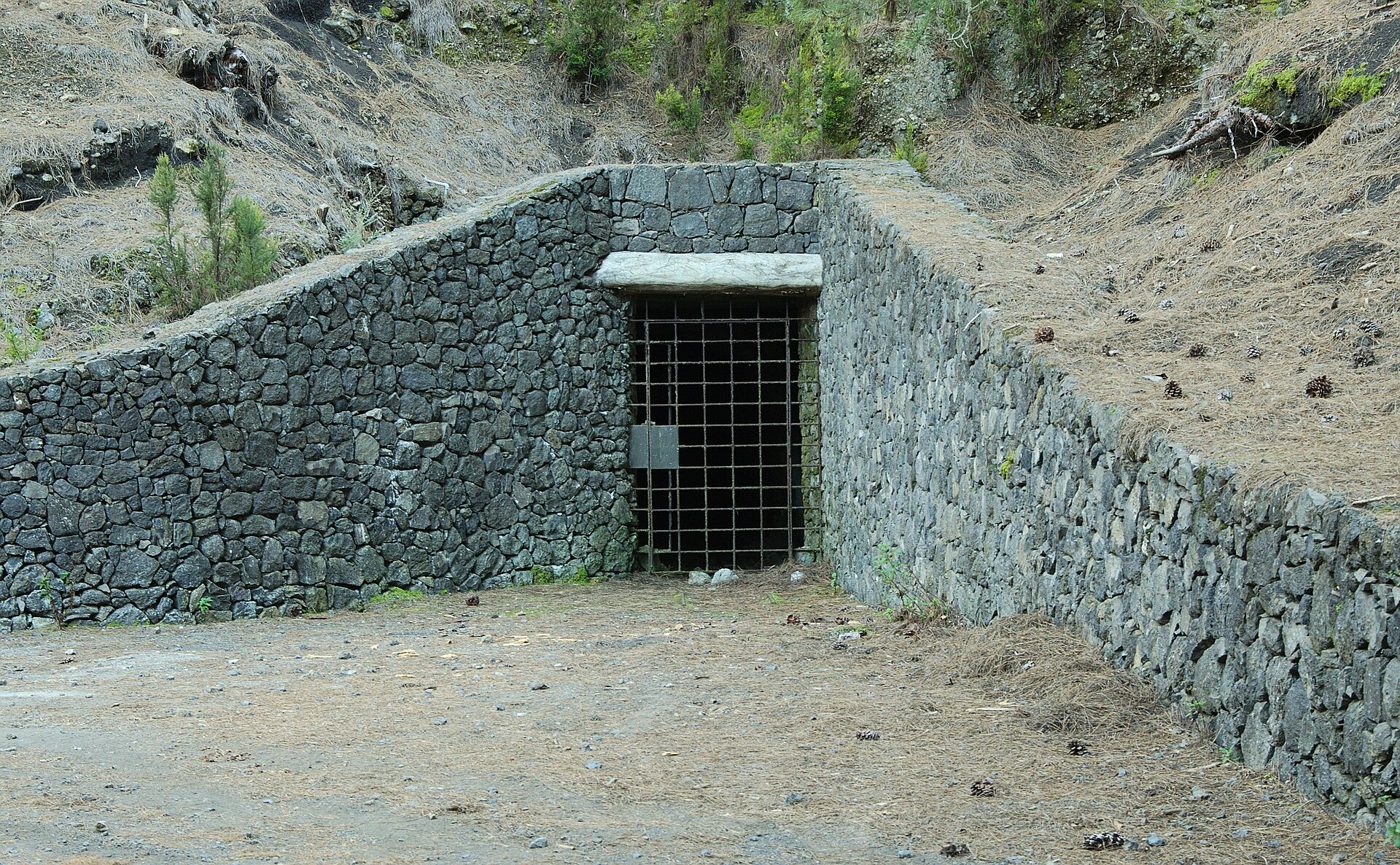
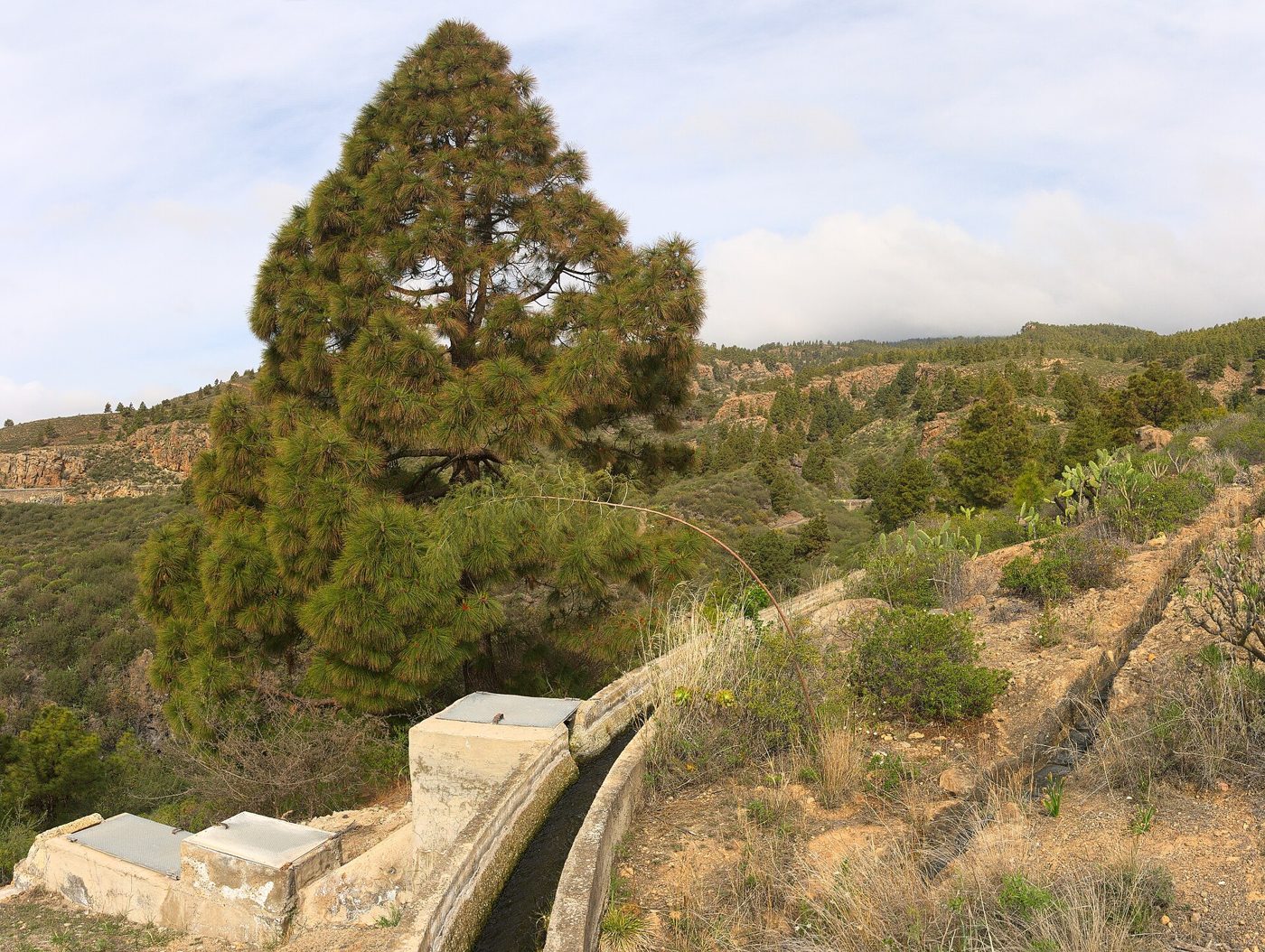
Galería Montaña Negra · El Grafo, CC BY-SA 4.0
In short
- Almost four out of every five litres used in Tenerife come from under the ground, mostly from horizontal tunnels called galerías dug into the volcano.1
- Most of that water is privately owned and traded in shares, a system its own owners call unique in the world.3,5
- The aquifer is being emptied faster than rain refills it: output has fallen by almost a third since 1985 and all four groundwater bodies are officially in poor quantitative condition.1
- Desalination and recycled water are growing, but they cost energy, and the legal clock on the old private water rights starts running out around 2040.1,6
An island without rivers
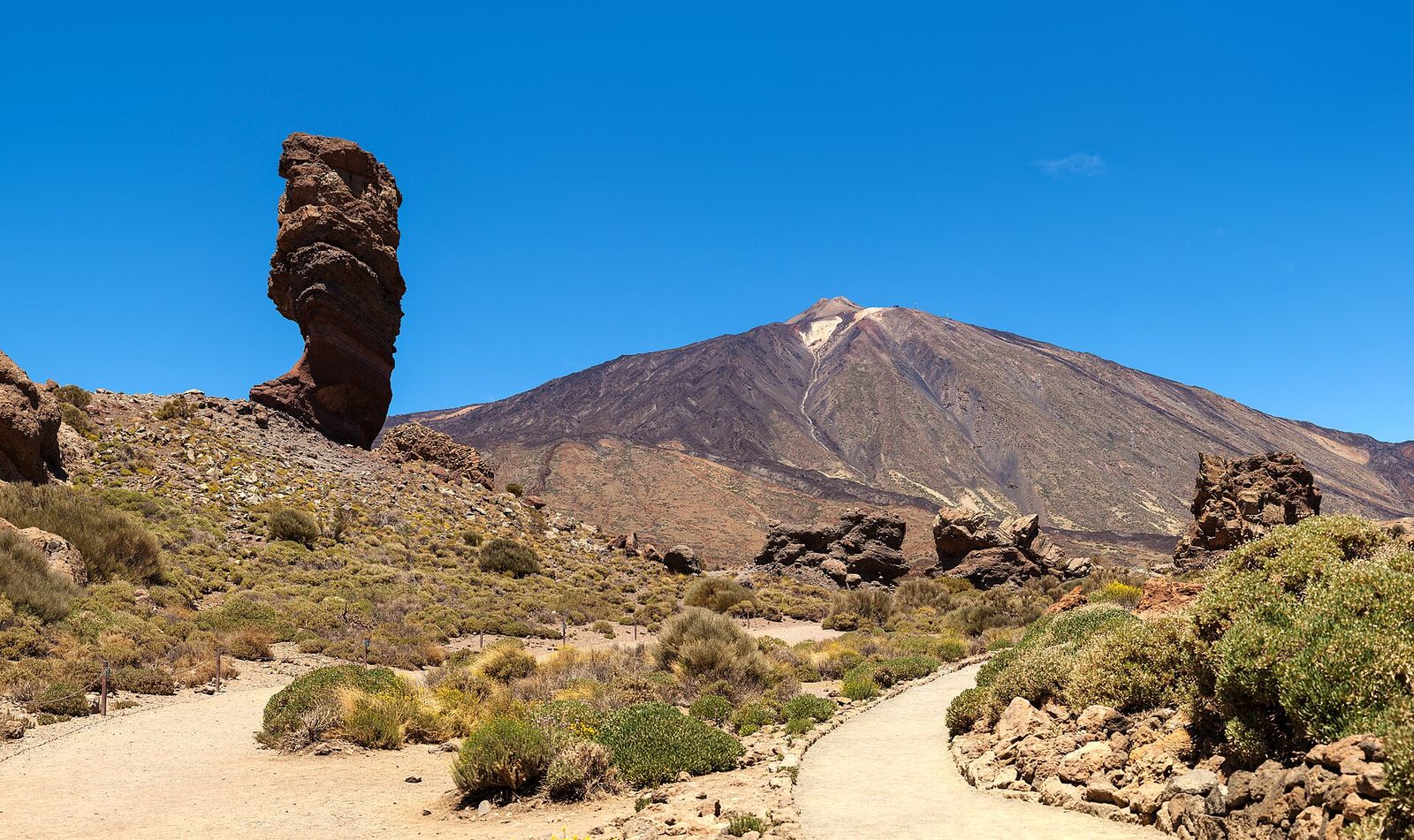
Tenerife has no permanent rivers and almost no lakes. Rain falls mostly between October and March, soaks quickly into young volcanic rock and disappears. The Island Water Council (Consejo Insular de Aguas de Tenerife, CIATF) estimates that on average about 283 hm³ a year filter deep enough to recharge the aquifer today, down from a long-term average of 348 hm³, and its hydrological plan records a steady fall in effective infiltration of around 1.4 mm a year.1 One hm³ is a billion litres, so we are talking about a huge underground store: a giant sponge of lava layers held in place by vertical walls of harder rock (dykes) that act like the sides of a tank.
For centuries islanders used the springs where that water came out by itself. When the springs were not enough, they went in after it.
1,701 kilometres of tunnels
A galería is a horizontal tunnel, roughly two metres high and two wide, driven into the mountain until it cuts the water table or breaks through a dyke that holds water behind it. Tenerife's latest official inventory, updated in 2019, counts 1,122 galleries with a combined length of 1,701 km, plus 402 wells (another 104 km).1 That is almost the straight-line distance from Tenerife to Madrid, all of it under one island of 2,034 km².
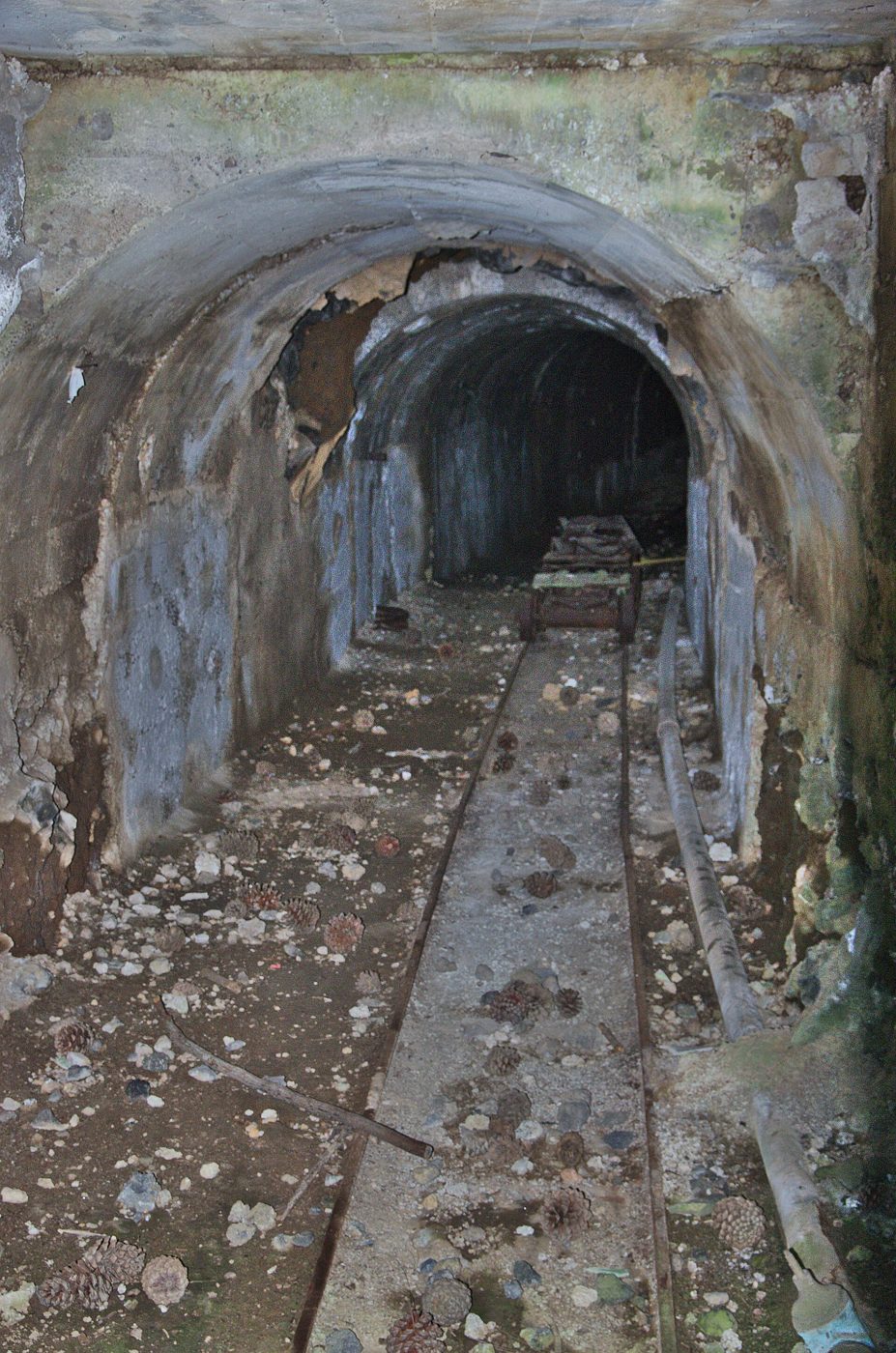
The length hides a harsher figure: only 475 of the 1,122 galleries still give water. The rest are dry, including 209 short socavones that never found any. The galleries that work average around 3 km and many pass 5 km; they alone supply 61% of the island's groundwater.1 Deep drilled wells reach an average of 380 metres.1
Export farming of bananas in the north and tomatoes in the south needed water all year round, and once dynamite replaced picks and gunpowder, owners could drive tunnels kilometres into the mountain.4 By the mid-1960s more than 90% of today's galleries had already been opened, according to the island's chamber of water owners.3 They were dug by cabuqueros, specialist miners working with hand tools and explosives far inside the mountain, in conditions that people interviewed for a University of La Laguna study called inhuman.4
That danger is real. Deep in a gallery the air can fill with volcanic carbon dioxide and lose its oxygen without any smell. In August 1950 five men died in two days at the Las Goteras gallery near Vilaflor, two of them during the rescue of the first victims.11 In February 2007 six hikers from a group of about thirty died of asphyxia inside the Piedra de los Cochinos galleries in Los Silos.12
Water you can buy shares in
Here is the part that surprises even people born on the island. Most of Tenerife's groundwater is not owned by the council or the State. It belongs to comunidades de aguas, private associations formed to finance each gallery. Traditionally the expected cost of a dig was split into shares (often 360 of them) and sold to neighbours; if water came out, it was divided in proportion to the shares.4 A 1956 state law gave these communities their own legal personality.3
In 2016 the island's Chamber of Water (Cámara Insular de Aguas) estimated that 82% of the water was in the hands of some 30,000 shareholders, with perhaps more than a million shares in total. In the chamber president's own words, the owner "decides where to put it" and is free to sell it as he likes.3 Figures differ: a 2017 CIATF count speaks of 180 water communities in 27 municipalities owning the galleries and setting prices,2 while the chamber talks of about a thousand.3 Shares still change hands in classified ads and at auctions, and the water itself is still often measured in pipas, an old unit of about 440 to 500 litres.4
The island's hydrological plan puts the average price of groundwater sold wholesale at 0.58 €/m³, with farm water typically between 0.41 and 0.80 €/m³.1 Critics, including former island water officials quoted in a University of La Laguna study, describe the market as opaque, with transport losses of 10-12% that buyers pay for anyway and big shareholders quietly buying up the shares of small ones.4 The owners' side answers that the shares are widely spread and that it was private money, not the State, that found the island's water.3
Public water, private rights
The Canary Islands Water Law of 1990 declared groundwater part of the public domain, as in the rest of Spain. But it did not expropriate the galleries. Owners of water "classed as private under the previous law" could register their use within three years; registration gives them the right to keep extracting the registered flow for fifty years, after which they can ask for a public concession.5 The same law warns that nobody can demand their registered flow when the aquifer as a whole is shrinking.5
Because those registrations date from the early 1990s, the fifty years run out around 2040. In October 2026 the Canary Islands government had a draft regulation on the public water domain out for public comment, and parties were already arguing about whether there should be any extension after 2040 and whether every private gallery and well should have a real-time meter.6 For an island that drinks mostly from private tunnels, that debate will decide who controls the tap.
An aquifer in the red
The official diagnosis is blunt. Groundwater output fell from 212 hm³ in 1985 to about 146 hm³ in 2016, a drop of 31%, even though the island now needs more water than ever.1 Extraction from galleries and wells exceeds what rain puts back, the gap is covered from reserves, and the water table falls.1 Near Los Rodeos two monitored wells dropped by 2.2 and 2.6 metres a year between 1996 and 2020; in Las Cañadas del Teide a borehole close to two productive galleries fell 24.7 metres in twenty years.1 All four of Tenerife's groundwater bodies are rated in poor quantitative condition, and the coastal body of the Orotava valley also fails on nitrates from farming.1
When the water table drops, a gallery is left "hanging" above it and must be dug deeper; when it reaches the impermeable base, digging further finds nothing.1 Coastal wells pull in seawater and get saltier. Every one of those problems costs energy, because deeper or saltier water has to be pumped and treated.1
Tenerife's water in numbers
1,701 km
of water galleries dug into the island: 1,122 tunnels, of which only 475 still give water.1
78%
of the water available in 2016 came from underground: galleries, wells and springs.1
-31%
fall in groundwater output from galleries and wells between 1985 and 2016.1
2.6 m
per year: how fast the water table fell at the Rodeo de la Paja well, near Los Rodeos, 1996-2020.1
82%
of the island's water held by some 30,000 private shareholders, according to the water owners' chamber (2016).3
0.58 €/m³
average wholesale price of groundwater in the island's hydrological plan.1
Where the water goes
In 2016 the island used about 185.6 hm³ of water. Farming and livestock took 76 hm³, around 41%, with bananas as the thirstiest crop: Guía de Isora alone used 14.1 hm³ and Arona 10.4 hm³.1 Homes used roughly 72 hm³ and tourism about 21 hm³.1 The gross supply per resident fell from 269.7 to 219.4 litres a day between 2005 and 2016, but the spread is huge: from 120.6 litres in Tacoronte to 667.6 in Vilaflor.1 The plan also admits that the island lacks reliable data on how much is lost in municipal pipes.1
Fluoride: the problem in the north's taps
Water that has travelled through volcanic rock picks up minerals, and in the north of Tenerife one of them is fluoride. Spanish law sets a maximum of 1.5 mg/l for drinking water. A University of La Laguna study published in 2015 found that tap water in 9 of the 11 northern municipalities it sampled exceeded that limit on average, with La Matanza de Acentejo the highest at 3.23 mg/l.8 Later local reporting cites readings of 7 mg/l in El Sauzal and more than 10 mg/l in the Orotava valley, and a dental survey in which three quarters of 12-year-olds in Icod de los Vinos showed fluorosis.9
The best-known source is the Vergara gallery in La Guancha, described in the press as the largest in the Canaries, with at least 6 mg/l.9 La Guancha treats its water with a reversal electrodialysis plant that costs around 400,000 € a year to run.9 When rain is scarce, the water comes from deeper and carries more fluoride. In October 2024, during the drought, water from Vergara mixed into the supply of La Gallega, Llano del Moro and El Sobradillo in Santa Cruz, and public health officials told parents not to give tap water to children under eight.10
Drought, emergency and the turn to the sea
After several dry winters the Cabildo declared a water emergency on 29 May 2024. It sped up portable desalination plants, new wells and water recycling, adding about 34,500 m³ a day by early 2026. A wet winter filled the reservoirs to 70%, the highest level in six years, and the emergency ended on 1 March 2026. The Cabildo president, Rosa Dávila, still warned that the problem had not gone away.7
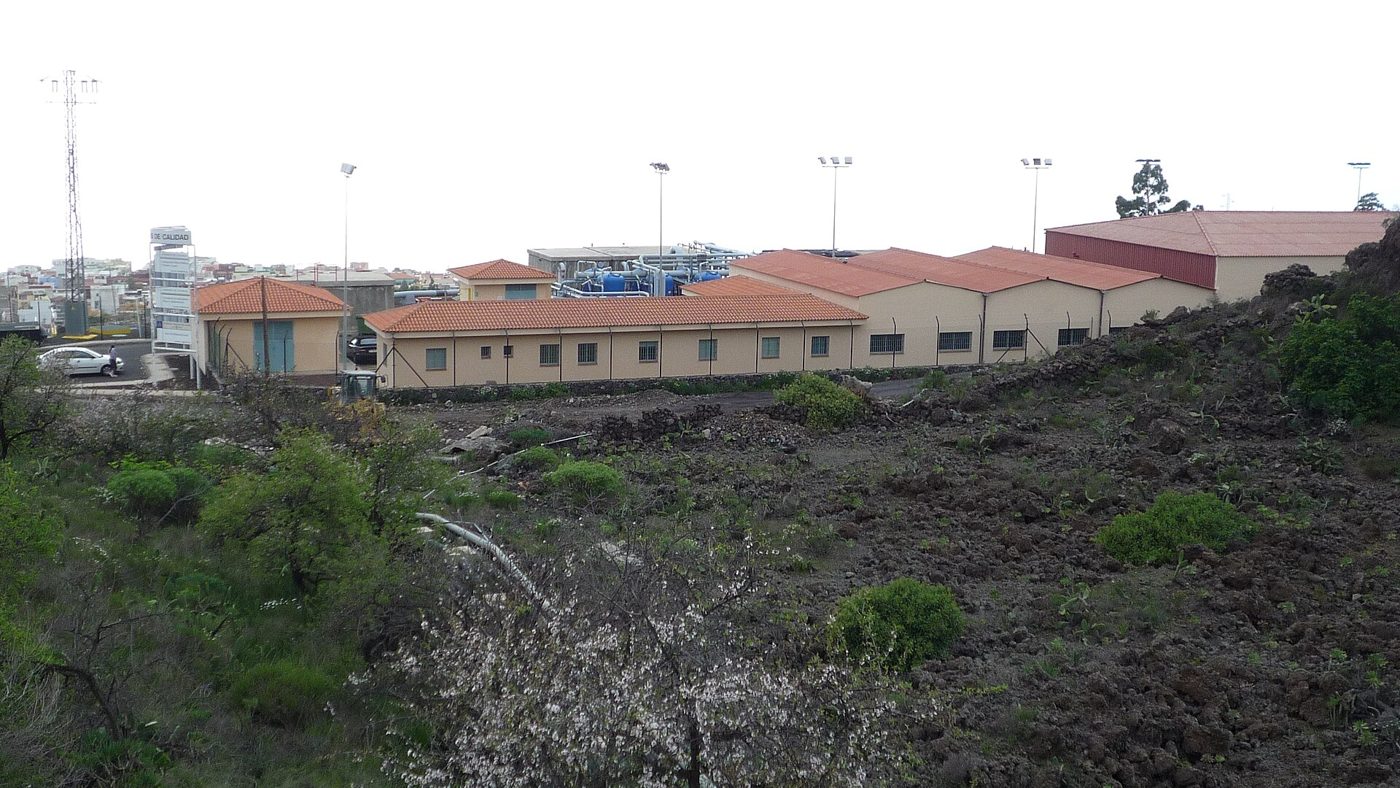
The long-term plan is to depend less on the volcano. In 2016 desalinated seawater already supplied about 16% of the island's water and recycled wastewater about 6%.1 The 2021-2027 plan aims to cut the share of groundwater from around 80% to 65%.1 Desalination, however, needs a lot of electricity on an island grid that still burns mostly fossil fuel, so every new plant is a trade-off between water security and energy.
Common myths
Myth
Tenerife's water comes from reservoirs and rain.
Fact
Almost four fifths comes from underground through galleries, wells and springs; surface water is under 1%.1
Myth
Water in Spain is public, so nobody can own it.
Myth
Desalination has solved the problem.
Fact
It covered about 16% in 2016. It is growing fast but costs energy, and the aquifer is still in deficit.1
What to do
- Check the quality of your tap water in the national drinking water system (SINAC, Ministry of Health) or in the notices of your municipal supplier.
- In the north, if you have children under eight, follow any fluoride notice and use low-fluoride bottled water for babies' bottles.
- Never enter a water gallery, even a dry one: there may be no oxygen and nobody will smell it.
- Report leaks in the street to your municipal water company. The island does not even know how much is lost on the way.
- If you buy a farm or land "with water", ask for the share certificates, the water community's rules and the record in the Registro de Aguas.
Notes and sources
- 1.Consejo Insular de Aguas de Tenerife, Plan Hidrológico de la Demarcación Hidrográfica de Tenerife, tercer ciclo 2021-2027. Memoria, February 2023, approved by Decree 372/2023 (BOC no. 191, 27 September 2023). Sections 1.2.3, 2.5, 3.2.4, 3.5.5-3.5.6 and the economic recovery tables; groundwater inventory updated to 2019. aguastenerife.org
- 2.Consejo Insular de Aguas de Tenerife, "Sólo el 41% de las galerías y pozos de agua de Tenerife están activos", 14 August 2017 (2015 census). aguastenerife.org
- 3.Cámara Insular de Aguas de Tenerife, "El agua de la Isla está en manos de 30.000 accionistas de un millar de comunidades", 28 March 2016. camaradeaguas.com
- 4.Adrián Mesa Delgado, La propiedad privada del agua en Tenerife. Historia de cómo unos pocos juegan con un bien básico, final degree project in Journalism, Universidad de La Laguna, 2019 (interviews with former water officials, academics and cabuqueros). riull.ull.es
- 5.Ley 12/1990, de 26 de julio, de Aguas de Canarias, consolidated text, transitional provisions two and three. boe.es
- 6.El Faro de La Palma, "Contigo La Palma pide que no haya prórrogas para el agua privada en Canarias a partir de 2040", 21 October 2026. elfarodelapalma.es
- 7.RTVC, "El 1 de marzo termina la emergencia hídrica en Tenerife", 26 February 2026. rtvc.es
- 8.N. González Sacramento, C. Rubio Armendáriz, Á. J. Gutiérrez Fernández et al., "El agua de consumo como fuente de exposición crónica a fluoruro en Tenerife; evaluación del riesgo", Nutrición Hospitalaria 31(4), 2015, pp. 1787-1794. aulamedica.es
- 9.Toni Ferrera, "Las recientes erupciones y el exceso de demanda reavivan la alerta de una traba histórica con el agua del norte de Tenerife", Canarias Ahora, 26 February 2023. eldiario.es
- 10.Canarias Ahora, "Salud Pública recomienda que los niños no beban agua del grifo en varios barrios de Santa Cruz de Tenerife", 18 October 2024. eldiario.es
- 11.José Antonio Felipe, article on the 1950 tragedy at the Las Goteras gallery, Vilaflor, Diario de Avisos, 26 August 2026. diariodeavisos.elespanol.com
- 12.Associated Press, "6 die in Canary Islands tunnel", 11 February 2007. nbcnews.com
Keep reading
Sewage
What goes into the sea
Housing
Housing in numbers
Politics
Who governs the Canaries, and what comes next
Teide
How to legally stand on top of Teide
Volcano
The volcano under watch
Traffic
TF-5: anatomy of a traffic jam

Shopping
Why a parcel from Madrid can cost more than one from China
Population
Who lives on Tenerife
Hotels
Who owns Tenerife's hotels
Economy
What Tenerife lives on
Weather
Tenerife's weather, floor by floor

Food and restaurants
Tenerife at the table