
Volcano
The volcano under watch
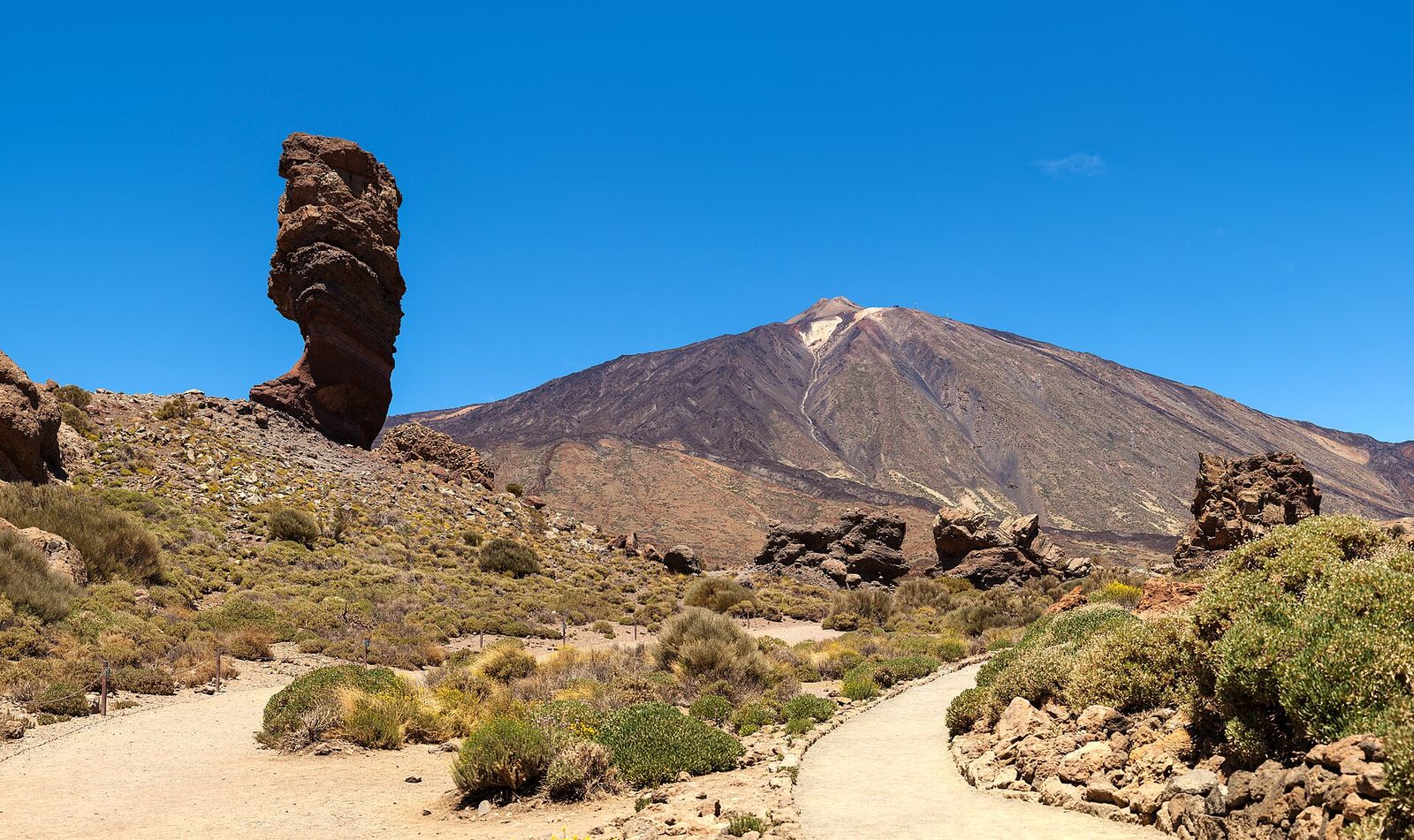
Hundreds of tiny earthquakes in a single night, the ground two centimetres higher in three years, more than a hundred instruments listening and a phone alert that went off across the island on 22 October. What is happening under Teide, who watches it and what each colour of the volcanic traffic light means for you.
7 min read · 9 sources · Updated October 2026
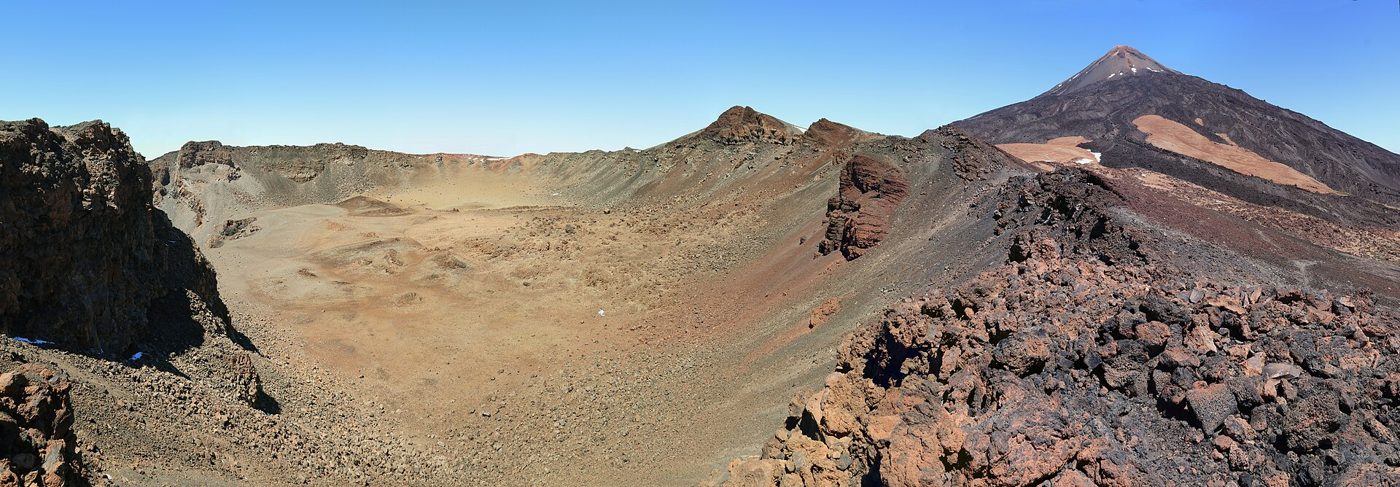
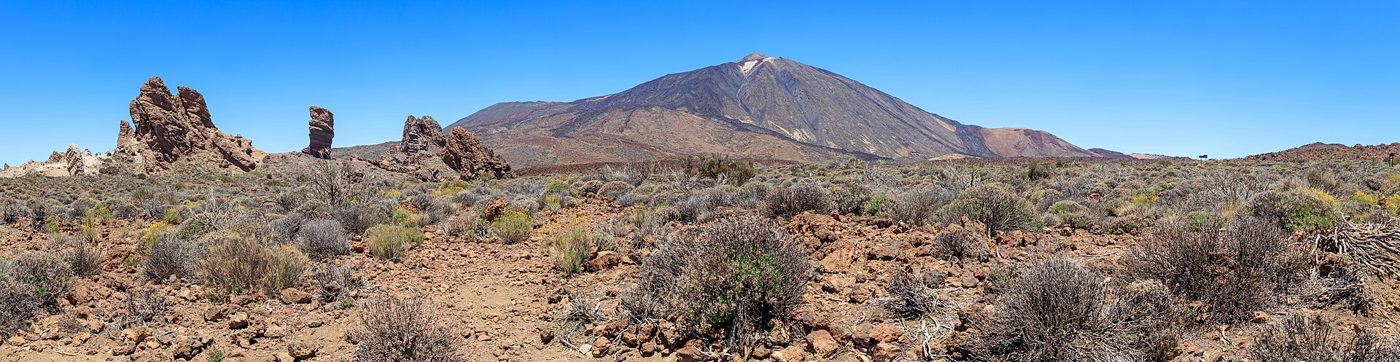
Teide and the crater of Pico Viejo · Ingo Mehling, CC BY-SA 4.0
In short
- Since February 2026 the area under Las Cañadas and Pico Viejo has been more active than usual: swarms of hundreds of very small earthquakes, low-frequency signals and slow uplift of about 2 cm in three years.1
- The scientists who advise the Canary Islands volcanic emergency plan (PEVOLCA) see no signs of an eruption in the short or medium term. Tenerife's volcanic traffic light is still green.1,2
- The most likely explanation is fluids moving at depth and pressurising the hydrothermal system. What would worry experts is quakes getting shallower and stronger, rapid deformation and big changes in gases, all at once.1
- On 22 October 2026 the whole island received a test ES-Alert on their phones as part of the VOLCANEX drill. Knowing what the colours mean is the practical part.3
An island that is still being built
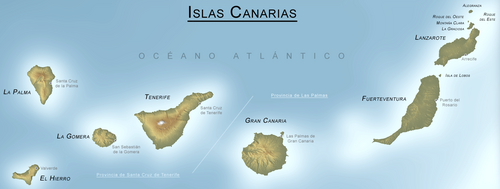
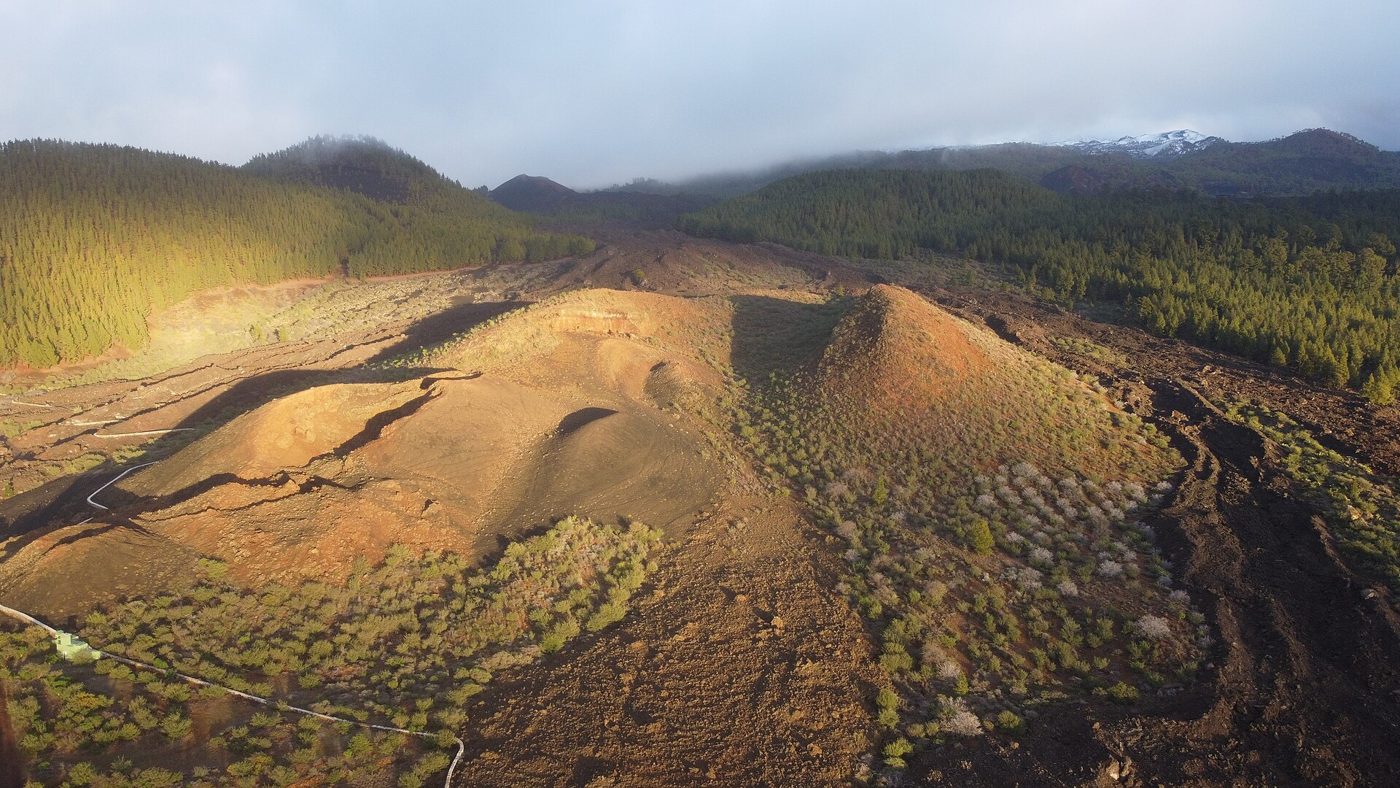
Tenerife is a volcanic island and Teide is an active volcano. Its most recent eruptions took place on its flanks: Chahorra, on Pico Viejo, in 1798, and Chinyero, on the north-western rift, in 1909.4 La Palma reminded the whole archipelago what that means in 2021: an eruption of 85 days, preceded by only eight days of intense earthquakes, that covered more than 1,000 hectares with lava, destroyed over 3,000 buildings, forced around 7,000 people from their homes and caused some 843 million euros of damage.5
So when the ground under Teide moves, people pay attention.
What the instruments are seeing in 2026
The National Geographic Institute (IGN), which runs the official volcano monitoring in Spain, has documented similar episodes under Tenerife in 2016, 2019, 2022, 2024 and 2025. One of them, in August 2025, gathered more than 700 tiny earthquakes about 10 km below the south-west of Pico Viejo, all below magnitude 1.1
Since February 2026 the activity has been clearly above that background:1
- 7-27 February: seven swarms of so-called hybrid events south-west of Pico Viejo, 6.5 to 8 km below sea level; the one on 18-19 February alone had about 950 events, none felt.
- 13-16 March: 59 earthquakes, all below magnitude 1.8, at depths of 8 to 21 km.
- July 2026: the IGN located 724 earthquakes in the Canaries, 611 of them in central Tenerife, mostly in Las Cañadas. In early July almost 500 micro-earthquakes were recorded in about ten hours.1,6
- Ground deformation: about 2 cm of uplift in the last three years in the centre of the island, a slow trend that started in 2023. No significant deformation was detected in July.1
- Gases: in August the committee reported a fall in some geochemical parameters, not a rise.1
The IGN's director in the Canaries and spokesman of the scientific committee, Itahiza Domínguez, summed it up: "We know we are above the level of activity of a year ago, and a year ago above that of ten years ago."1 The low-frequency events are interpreted as fluids moving at depth, signals detected in Tenerife since 2016.1 The Canary Islands Volcanological Institute (Involcan) goes a step further. It described the swarm that began on the night of 22 July 2026 as the longest hybrid swarm observed on the island so far: more than 4,500 events, at times over 300 an hour, about 10 km under Las Cañadas, and the 15th of its kind since October 2016. Its most likely explanation is the injection of hydrothermal gases of magmatic origin into the island's hydrothermal system, supported by a rise in diffuse CO₂ emissions at the summit crater studied since 2016 and slight deformation on the north-east of the volcanic complex. Its main message was the same: the data do not indicate that an eruption is approaching.7
What would change the picture
The scientific committee has been explicit about the signs that would raise the alarm, and they would have to appear together:1
- earthquakes getting shallower and stronger;
- a sustained increase in seismicity, not isolated swarms;
- rapid deformation of the ground;
- significant changes in volcanic gases.
In August 2026 none of these were being seen. The experts expect more swarms and possibly some small earthquakes felt around Las Cañadas, of low intensity and unable to cause damage, and they stress that one felt earthquake or one swarm does not predict an eruption.1,2 The committee meets every three months and can be called at any time if something changes; the IGN alone has more than a hundred stations, instruments and sampling points on the island.1
The traffic light, colour by colour
The Canary Islands' volcanic emergency plan, PEVOLCA, uses a four-colour traffic light. The decision to change colour belongs to the plan's management, on the advice of the scientific committee (IGN, CSIC, Involcan, IGME and others).8
- Green: the plan is not activated. Normal life, no protective measures. This is Tenerife's colour in October 2026.2,8
- Yellow (alert): indicators point to a possible eruption in the medium term. Time to prepare: have a personal evacuation plan, know where you would go outside the risk zone, and keep a bag with phone and charger, medicines and documents.8
- Orange: the short-term pre-eruptive phase, with stronger preventive measures and possible preventive evacuations.8
- Red (emergency): the eruption is confirmed and threatens people or key infrastructure. Evacuation of the affected zones is mandatory.8
Even after an eruption the light does not go straight back to green, because carbon dioxide, unstable ground and heat remain dangerous for months.8 La Palma still had a yellow light in early 2026 because of high CO₂ levels in some neighbourhoods.9
The volcano under watch, in numbers
4,500+
events in the hybrid swarm that began on 22 July 2026, the longest recorded on the island.7
611
earthquakes located in central Tenerife in July 2026 alone.1
2 cm
of ground uplift in the centre of the island in three years.1
100+
IGN stations, instruments and sampling points watching the island.1
1909
year of the last eruption on Tenerife, at Chinyero.4
8 days
of warning before La Palma's 2021 eruption, which lasted 85 days.5
22 October 2026: the drill on your phone
On the morning of 22 October the 112 emergency service sent three test ES-Alert messages as part of VOLCANEX Tenerife 2026, organised by the Cabildo. The first simulated a move to an orange light for the whole island; the second, a preventive evacuation of Chirche and Aripe in Guía de Isora and Santiago del Teide; the third ended the exercise. They were marked "PRUEBA", needed no action and some reached nearby islands too.3 ES-Alert messages arrive with their own sound and vibration, so the drill was also a test of whether people recognise them.3
Common myths
Myth
Hundreds of earthquakes mean an eruption is coming.
Fact
Swarms like these have been recorded under Tenerife since 2016; the experts look for shallower, stronger quakes plus deformation and gas changes together.1
Myth
Teide is extinct.
Fact
It is an active volcano; the last eruptions on its flanks were in 1798 and 1909.4
Myth
If something happened we would find out too late.
Myth
An ES-Alert means you must evacuate.
Fact
Read the message: the 22 October alerts were tests, and a real one will say exactly which zone and what to do.3
What to do
- Follow official sources only: 112 Canarias, the Canary Islands government and the IGN's monthly volcano report. Ignore viral videos and "predictions".
- Keep ES-Alert enabled on your phone (emergency alerts in your settings).
- Prepare a small bag that would serve any emergency: phone and charger, medicines, copies of documents, some cash, water.
- Know where you would go: a relative's or friend's home outside your area, and two routes to get there.
- In an earthquake: drop, cover under a solid table or a door frame away from windows, do not use lifts.
- If ash falls: stay indoors, avoid exercise outside and wear a mask if you must go out.
Notes and sources
- 1.Diario de Avisos, "Qué está pasando bajo el Teide: todo lo que se sabe de la actividad anómala en Tenerife", 7 August 2026 (analysis of the PEVOLCA scientific committee and IGN monthly report). diariodeavisos.elespanol.com
- 2.Diario de Avisos, "El PEVOLCA avisa: podrían sentirse terremotos en Tenerife, pero descarta una erupción del Teide a corto plazo", August 2026; Canarias7, "El semáforo volcánico sigue en verde en Tenerife: sin riesgo, pero con preparación", 22 February 2026. diariodeavisos.elespanol.com
- 3.Canarias7, "Tenerife ensaya una evacuación por erupción volcánica en El Teide: el simulacro hará sonar las alertas móviles en varias islas", 16 October 2026. canarias7.es
- 4.Wikipedia (en), "Teide" (eruptions of 1798 and 1909), consulted October 2026. en.wikipedia.org
- 5.Wikipedia (en), "2021 Cumbre Vieja volcanic eruption" (duration, area, buildings, evacuees, precursory swarm, damage estimate), consulted October 2026. en.wikipedia.org
- 6.Canarias7, "Las Cañadas del Teide vuelve a temblar: casi 500 microseísmos en apenas 10 horas", 4 July 2026. canarias7.es
- 7.Diario de Avisos, report on Involcan's update about the hybrid swarm of 22-23 July 2026, 25 July 2026. diariodeavisos.elespanol.com
- 8.Diario de Avisos (Canarias en Red), "Qué hacer en cada color del semáforo volcánico en Canarias y cuándo hay que evacuar". diariodeavisos.elespanol.com
- 9.As note 2 (Canarias7, 22 February 2026: La Palma on yellow because of CO₂ in specific areas).
Keep reading
Water
Tenerife drinks from inside the volcano
Sewage
What goes into the sea
Housing
Housing in numbers
Politics
Who governs the Canaries, and what comes next
Teide
How to legally stand on top of Teide
Traffic
TF-5: anatomy of a traffic jam
Shopping
Why a parcel from Madrid can cost more than one from China
Population
Who lives on Tenerife
Hotels
Who owns Tenerife's hotels
Economy
What Tenerife lives on
Weather
Tenerife's weather, floor by floor
Food and restaurants
Tenerife at the table