

Population
Who lives on Tenerife
One resident in four was born abroad, but the biggest groups are not the ones most people guess. More Italians than Britons, 60,000 people born in Venezuela who are mostly Spanish, towns where locals are the minority and a population that only grows thanks to newcomers. The official figures, nationality by nationality.
6 min read · 7 sources · Updated October 2026
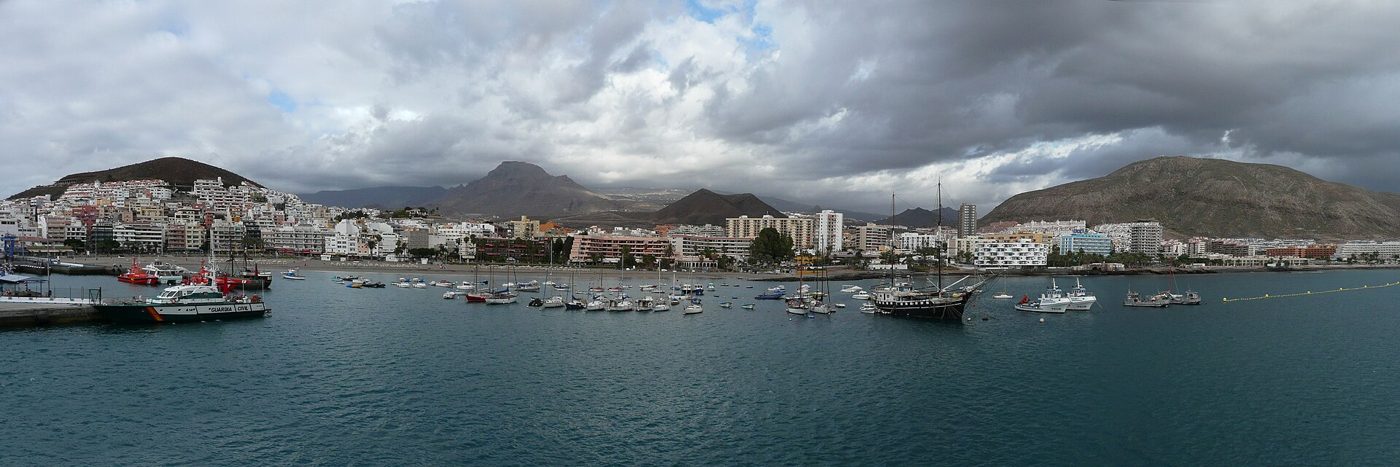
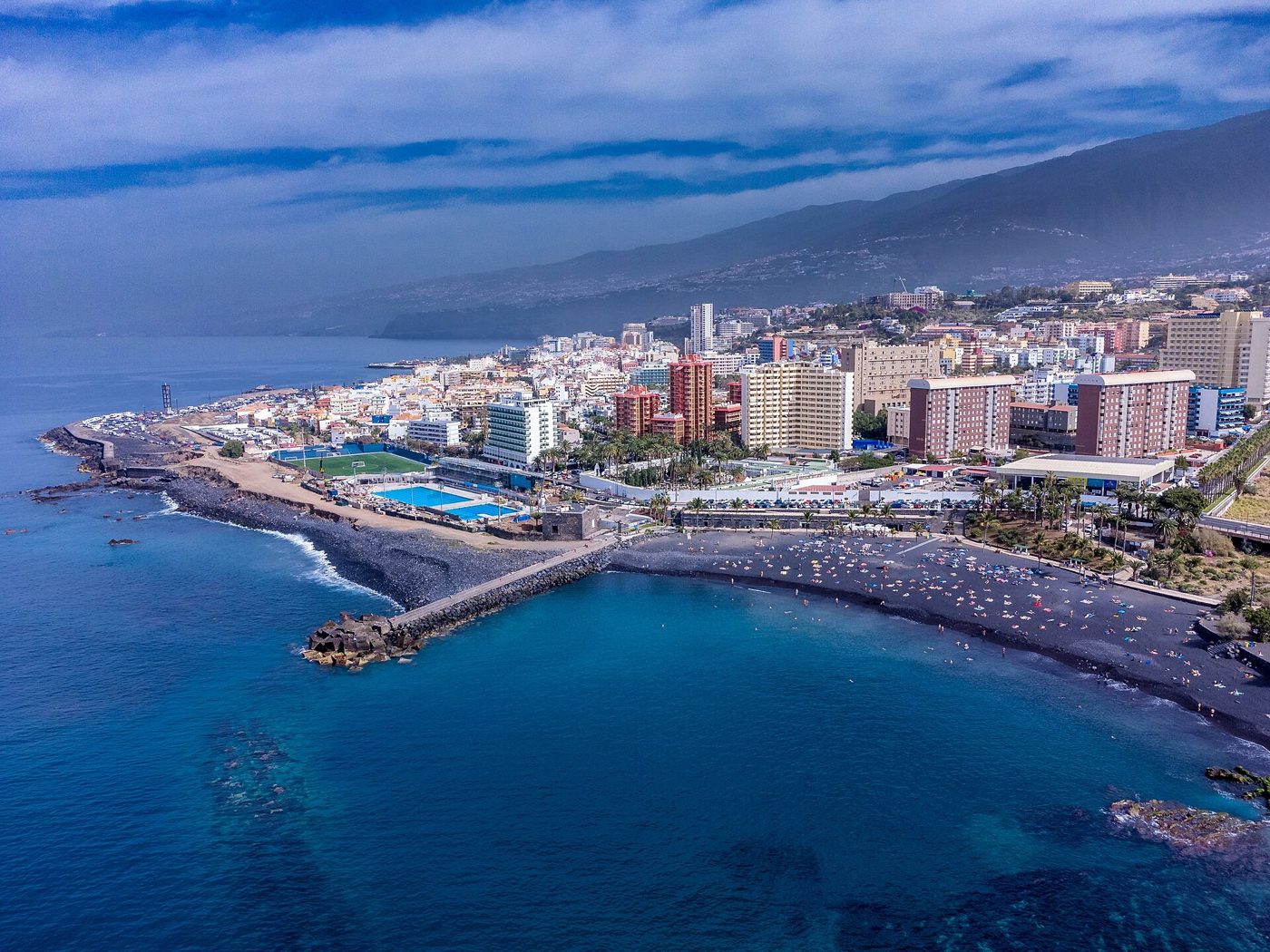
Los Cristianos · Raenmaen, CC BY 3.0
In short
- On 1 January 2025 Tenerife had 966,469 registered residents. One in four (25.5%) was born abroad, and one in six (15.9%) holds a foreign nationality.1
- The largest foreign nationality is Italian (28,295), followed by Venezuelan, British and German. The British are the only big group that is shrinking.1
- By place of birth the picture flips: 59,837 residents were born in Venezuela and 30,349 in Cuba, many of them Spanish citizens and descendants of Canarian emigrants.1,2
- Since 2021 all of the island's growth has come from people born abroad; the number of residents born in Spain has fallen by almost 4,000.1
Two ways to count "foreigners"
Statistics on immigration can mean two different things, and the gap between them is the most interesting part of the story. The Canary Islands statistics institute (ISTAC), working from the municipal registers (padrón), counts residents both by nationality and by country of birth.1
- By nationality, Tenerife had 153,696 foreign residents in 2025, 15.9% of the population.1
- By country of birth, 246,712 residents were born abroad, 25.5% of the population.1
The difference is made up mostly of Spaniards born in other countries: 101,222 residents of Tenerife hold Spanish nationality but were born abroad. Going the other way, only 8,206 foreign nationals were born in Spain.1 So when someone says "a quarter of the island is foreign", they are counting tens of thousands of Spanish citizens.
The figures only include people registered on the padrón. Residents who never register, and the island's 7.6 million yearly tourists, do not appear in them.1,3
The top nationalities
These were the largest foreign nationalities on Tenerife on 1 January 2025, compared with 2021:1
- Italy: 28,295 (26,207 in 2021)
- Venezuela: 16,407 (13,107)
- United Kingdom: 12,714 (14,558), the only large group that has shrunk
- Germany: 10,677 (9,207)
- Colombia: 8,236 (4,384), almost double in four years
- Cuba: 7,709 (6,577)
- Morocco: 4,668; Romania: 4,547; China: 4,532; Russia: 4,375; Poland: 4,002; France: 3,770
By continent, Europeans (other than Spaniards) are the majority of foreign nationals, 93,361, followed by people with a nationality from the Americas, 42,704. Africa (9,193) and Asia (8,350) are far behind.1
The Italian community is the largest in the whole archipelago, 55,553 people, and more than half of it lives on Tenerife. Arona alone has 7,637 Italian residents and Adeje 5,501.4 Interestingly, more people on Tenerife hold Italian nationality (28,295) than were born in Italy (21,275): Italian passports are common among Latin Americans of Italian descent.1
The British are the opposite case. Their number fell from 14,558 to 12,714 between 2021 and 2025, a drop of 12.7%, at the same time as the United Kingdom remained Tenerife's biggest tourist market.1,3 Since the UK left the EU, British citizens need a residence permit to live in Spain and as visitors can stay only 90 days in any 180.5
Born in Venezuela, Spanish on paper
By country of birth the ranking looks completely different:1
- Venezuela: 59,837 (51,061 in 2021)
- Cuba: 30,349 (21,332), up 42% in four years
- Italy: 21,275
- Colombia: 14,528 (9,800)
- United Kingdom: 12,893
- Germany: 10,766
- Argentina: 10,000 (8,532)
- Morocco: 7,006; Uruguay: 5,229
Only 16,407 residents hold Venezuelan nationality, against almost 60,000 born there. The explanation is a century of emigration in the other direction. Tens of thousands of Canarians left for Venezuela and Cuba in the twentieth century; the Canary Islands government still counts around 60,000 Canarians living in Venezuela and some 65,000 in Cuba.2 Their children and grandchildren have been coming back, often as Spanish citizens, a movement a 2022 doctoral thesis at the University of La Laguna describes as the "long return" of island emigration.6 By birthplace, the Americas account for 136,406 residents of Tenerife, far more than the rest of Europe (86,614).1
Towns where locals are a minority
The weight of the foreign-born population is very uneven. In the tourist south it is the majority; in the north it is small.1
- Adeje: 56.5% born abroad (28,614 of 50,612 residents); 48.1% hold a foreign nationality.
- Arona: 52.4% born abroad (46,667 of 89,036); 39.1% foreign nationals.
- Santiago del Teide: 52.1% born abroad; 44.1% foreign nationals.
- San Miguel de Abona: 47.1% born abroad; Granadilla de Abona: 44.1%.
- Santa Cruz de Tenerife: 18.8% born abroad; 7.9% foreign nationals. La Laguna: 15.8% and 7.0%.
- Tegueste, at the other end: 8.8% born abroad and 3.9% foreign nationals, the lowest on the island.
All the growth comes from abroad
Between 2021 and 2025 Tenerife's population grew from 930,570 to 966,469, about 36,000 more people. In the same period the number of residents born abroad grew by almost 40,000, while the number born in Spain fell from 723,742 to 719,757.1 Over a longer span, the island's observatory on immigration, OBITen, calculates that the foreign-born population has multiplied by almost four since 2001, from 66,767 to 246,712, and accounts for two thirds of all the population growth of this century.7
That growth is also why the debates on housing, water, traffic and services in this section all come back to the same question: how many people can the island hold, and with which jobs and homes.
Who lives on Tenerife, in numbers
25.5%
of residents were born abroad: 246,712 of 966,469 (2025).1
28,295
Italian nationals, the largest foreign community on the island.1
59,837
residents born in Venezuela; only 16,407 hold Venezuelan nationality.1
101,222
Spanish citizens on Tenerife born in another country.1
56.5%
of Adeje's residents were born abroad, the highest share on the island.1
-12.7%
British residents since 2021, while every other large group grew.1
Common myths
Myth
Most foreigners on Tenerife are British.
Fact
Italians are the largest foreign nationality, and the British, third, are the only big group that is shrinking.1
Myth
Immigration here means people arriving by boat from Africa.
Fact
Residents born in Africa are 13,166, about 5% of those born abroad; the largest groups were born in Venezuela, Cuba and Italy.1
Myth
Everyone born abroad is a foreigner.
Myth
The island grows because Canarians have big families.
Fact
Since 2021 the number of residents born in Spain has fallen; all the growth has come from people born abroad.1
What to do
- If you live here, register on the padrón at your town hall: you need it for the health card, the resident discounts on flights and ferries, school places and to vote.
- EU citizens who want to vote in the May 2027 municipal elections must register by 30 December 2026 (see our article on who governs the Canaries).
- Non-EU residents, including the British, need a valid residence permit (TIE); without it, stays are limited to 90 days in any 180.
- Check the latest official figures for your own municipality on the ISTAC website, which publishes them every year by nationality and by country of birth.
Notes and sources
- 1.Instituto Canario de Estadística (ISTAC), population according to the municipal registers, datasets E30243A_000010 (nationalities in detail), E30243A_000012 (countries of birth in detail), E30243A_000002/000004 (municipalities) and E30243A_000008 (nationality by country of birth), Tenerife, 2021 and 2025, consulted October 2026. istac
- 2.RTVC, "Canarias pide que se agilicen las ayudas a los emigrantes que regresan a España" (Canarians living abroad, by country). rtvc.es
- 3.Turismo de Tenerife, Balance de situación turística de Tenerife 2025 (7,561,659 tourists from mainland Spain and abroad; the United Kingdom as main market). webtenerife.com
- 4.Diario de Avisos, "Más de 55.000 italianos viven ya en Canarias: estos son los municipios que más eligen", August 2026 (ISTAC data). diariodeavisos.elespanol.com
- 5.UK Government, "Living in Spain" (residence, the TIE card and the 90/180-day rule for visitors). gov.uk
- 6.María Esther Dorta Burelli, La inmigración de origen venezolano en Tenerife a principios del siglo XXI o el largo retorno de la emigración insular dirigida a Venezuela, doctoral thesis, Universidad de La Laguna, 2022. riull.ull.es
- 7.Alberto Ley, "La población extranjera de Tenerife se multiplica por cuatro en lo que va de siglo", Atlántico Hoy, 5 January 2026 (OBITen data). atlanticohoy.com
Keep reading
Water
Tenerife drinks from inside the volcano
Sewage
What goes into the sea
Housing
Housing in numbers

Politics
Who governs the Canaries, and what comes next

Teide
How to legally stand on top of Teide

Volcano
The volcano under watch
Traffic
TF-5: anatomy of a traffic jam

Shopping
Why a parcel from Madrid can cost more than one from China
Hotels
Who owns Tenerife's hotels
Economy
What Tenerife lives on

Weather
Tenerife's weather, floor by floor
Food and restaurants
Tenerife at the table