
Adeje · Towns of Tenerife
Adeje: the kingdom, the fortress and the marquises
The Guanche kingdom that legend made the first on the island, a revolt after the conquest, a Genoese family's fortified sugar estate where an English slaver came to dinner, a lordship that lasted until the nineteenth century, and the coast that became Costa Adeje.
7 min read · 7 sources · Updated October 2026
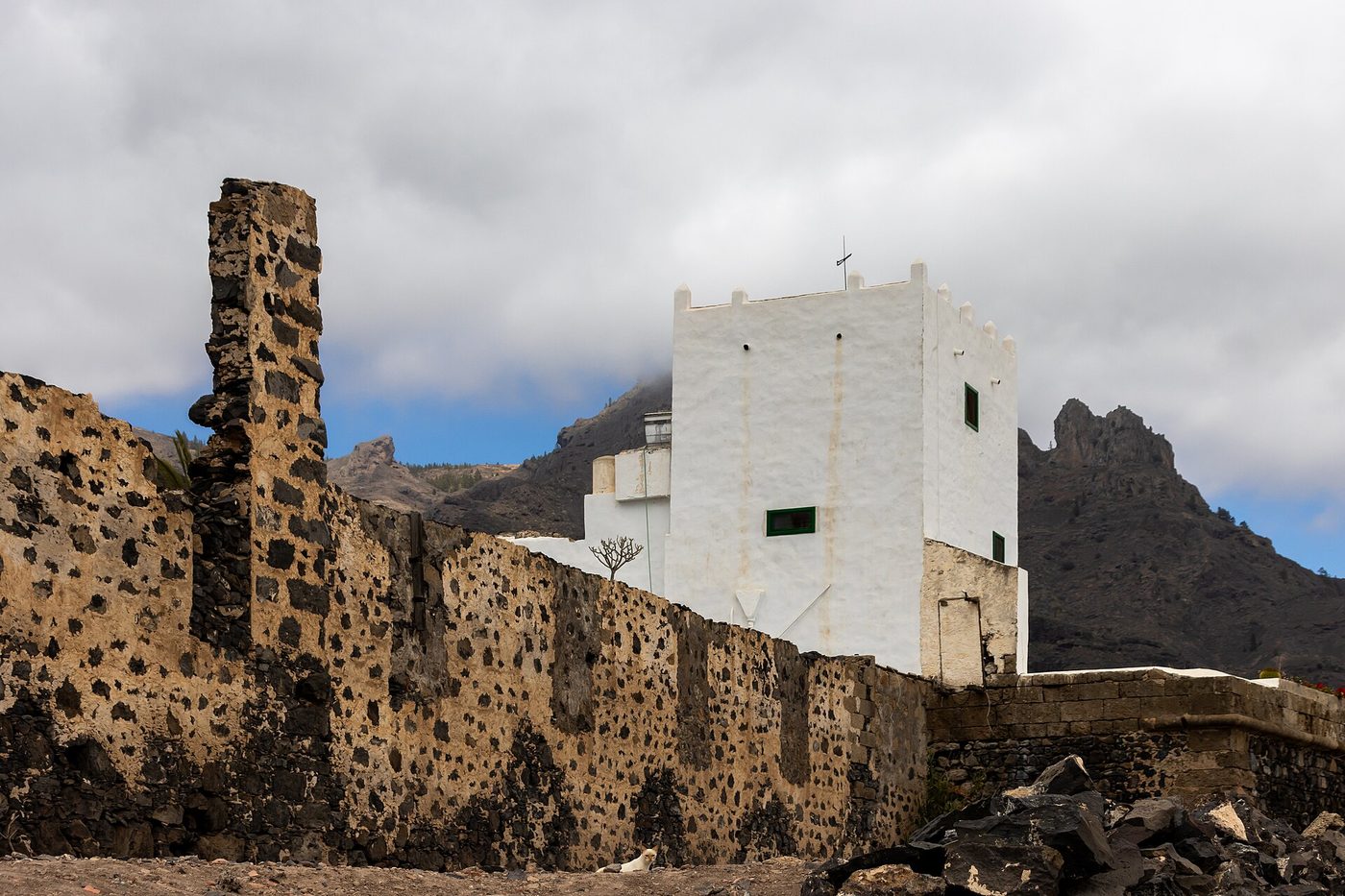
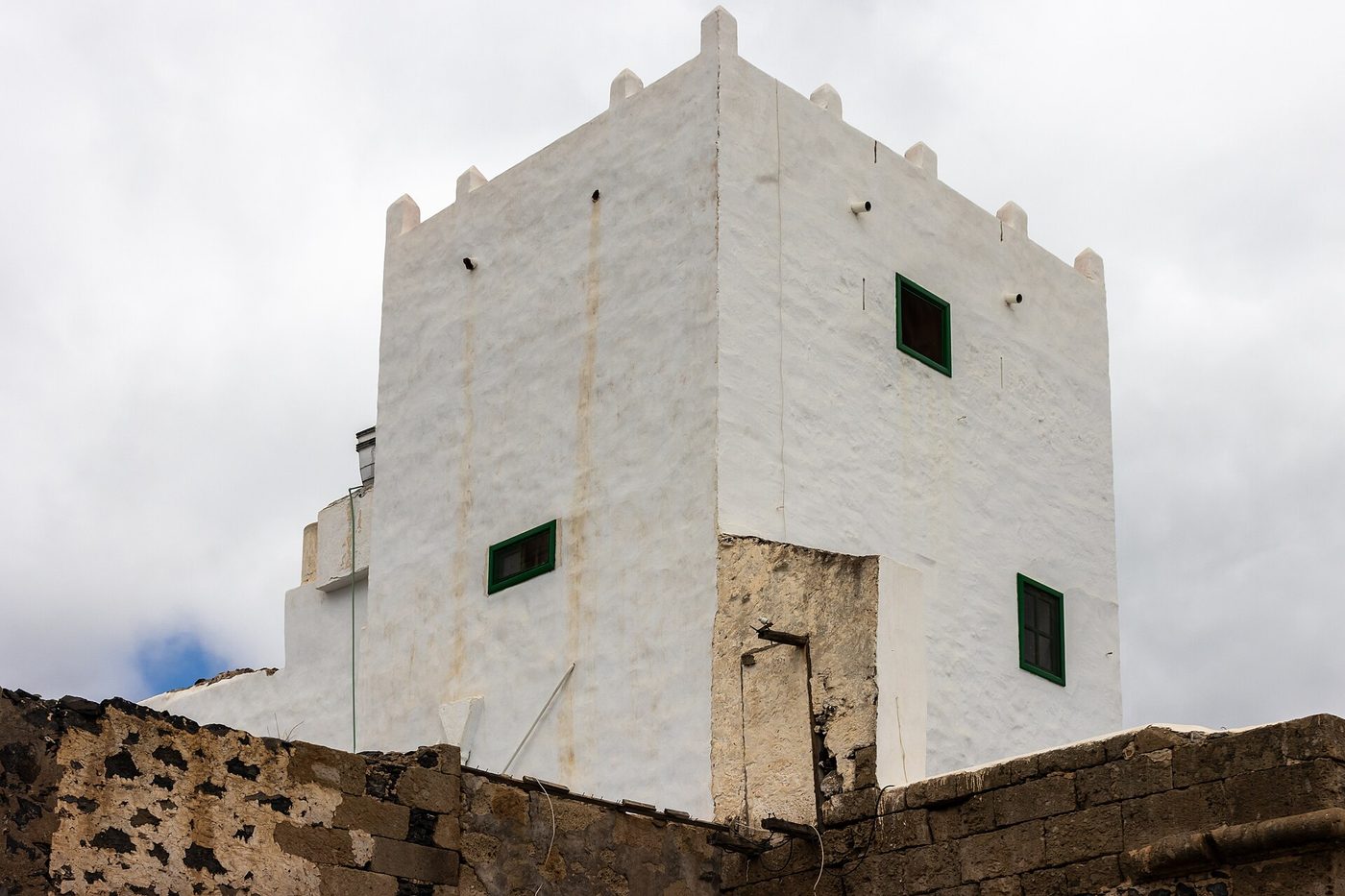
Casa Fuerte de Adeje · Mike Peel, CC BY-SA 4.0
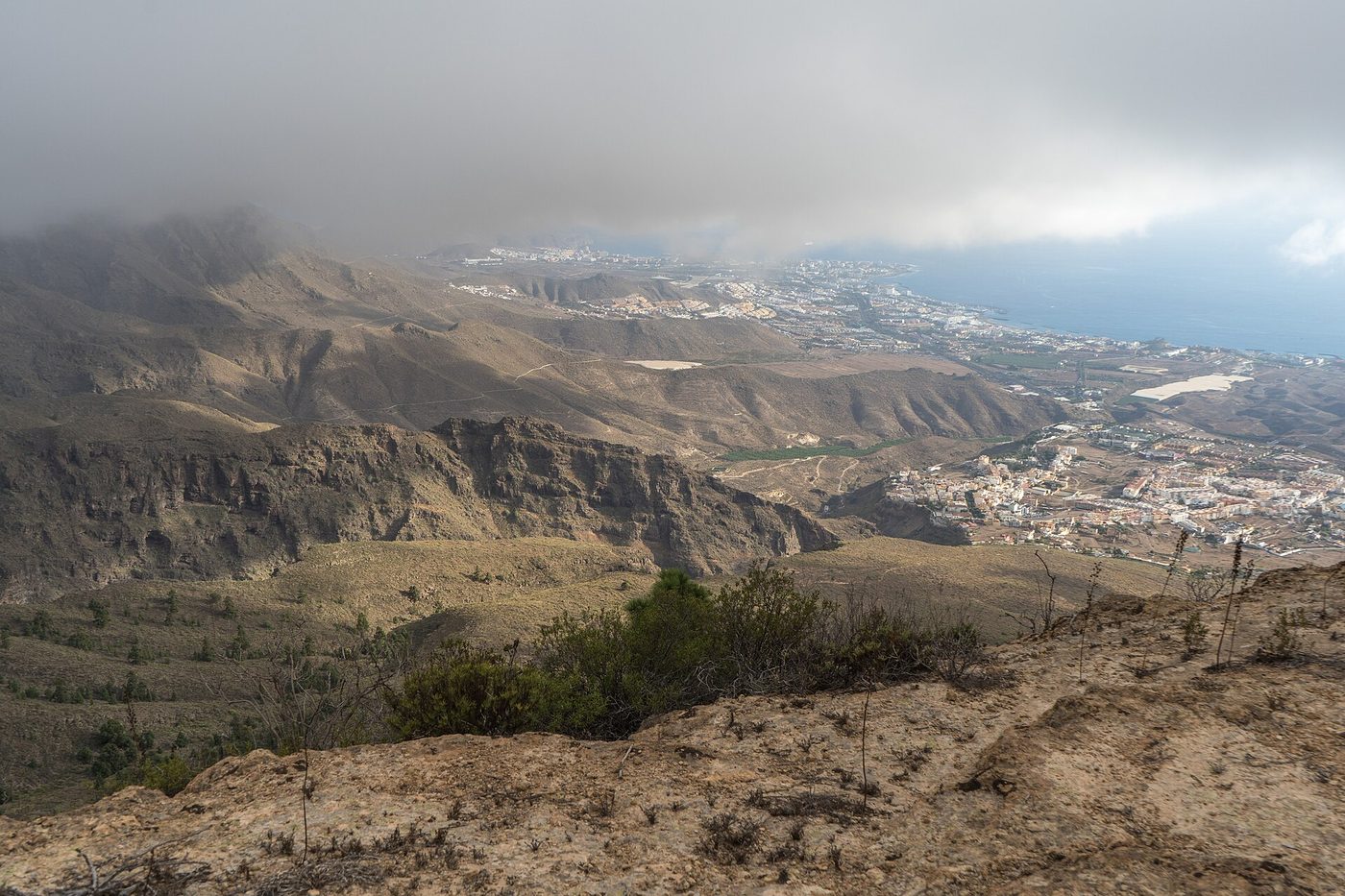
Today most people know Adeje by its coast, a string of hotels from Playa de las Américas to La Caleta. The town itself sits higher up, at about 300 metres, at the mouth of a ravine with a waterfall that never runs dry.5 For most of its history that ravine, and the water in it, was what mattered. It made Adeje the seat of a Guanche kingdom, then of a sugar estate, then of a noble lordship that lasted until the nineteenth century.
A kingdom with a long memory
Adeje was one of the nine menceyatos of Tenerife, and one of the largest; its exact borders are still argued over, but it probably reached from the area of Arona to the lava fields of Isora.2 Later writers gave it a special place. Seventeenth-century chroniclers wrote that the whole island had once been ruled by a single king who lived in Adeje and that the nine kingdoms were formed when his sons divided it; one author places a meeting between Majorcan sailors and a Guanche king at the port of Adeje in 1347. Archaeologists treat these stories as tradition rather than history, though they suggest that Adeje remembered itself as an old and important kingdom.2
The archaeology is real enough. Mummified bodies have been found in caves in the ravines around the town since the nineteenth century, including a child from the Barranco del Infierno dated to the fourteenth century AD. One mummy found in 1876 or 1877 was sold for four gold onzas, shipped to Havana in January 1878 and spent decades in a Cuban museum labelled as a Peruvian miner, until recent genetic tests showed it was not South American.1 Surveys between 1988 and 2009 catalogued more than a hundred archaeological sites in the municipality, among them an obsidian workshop on the beach of El Duque and many panels of rock engravings.1
Revolt and sugar
The mencey of Adeje made peace with the Castilians, and his family received land after the conquest: in 1504 "don Diego, who was King of Adeje" was granted thirty fanegas with water.2 But the south was not quiet. In November 1502 the island council referred to "the land of the kingdom of Adeje where the rebels roam". According to the physician and ethnographer Juan Bethencourt Alfonso, who drew on eighteenth-century papers, the rebels proclaimed a new mencey, Ichasagua, who held out on the Roque del Conde and took his own life when his supporters gave up; the surname García Chasagua still appears in Adeje in the 1640s.2
Water decided what came next. In February 1505 Alonso Fernández de Lugo granted "the river of water that is in Adeje" and all the land it could irrigate to a group of brothers and sisters from Gran Canaria, on condition that they built a mill to grind sugar cane.2 By the middle of the century the Ponte, a family of Genoese merchants settled in Garachico, had a sugar mill in Adeje. After his father's death in 1552 Pedro de Ponte moved there and asked the Crown for leave to build a fortified house to protect his sugar mill from pirates; permission came on 2 May 1555 and work began the following year.24 The Casa Fuerte combined a residence, a keep, the mill, stables, caves and a dungeon. In 1560 Ponte also obtained a parish for Adeje, separated from Daute, and paid to enlarge its church.24
An English guest
The Casa Fuerte has a remarkable place in Atlantic history. Pedro de Ponte went into partnership with the English seaman John Hawkins, supplying a pilot and information for his voyages to sell enslaved Africans in the Spanish Caribbean. Hawkins's first fleet called at Adeje in late 1562 for water and wine; in November 1564 he stayed at the Casa Fuerte for a week as the guest of Ponte's eldest son while his flagship's masts were repaired; and in 1567 he met Ponte there again.2 Other English visitors were less welcome. In July 1586 some forty English pirates landed on the coast, sacked the hermitage of the Incarnation and broke into the Ponte sugar mill while the villagers took refuge in the Casa Fuerte; the local militia killed eighteen of them as they retreated.2
The lordship
The Ponte wanted more than a fortified farm. In 1567 Pedro de Ponte and his wife founded an entailed estate, the mayorazgo of Adeje. In 1655 their descendant Juan Bautista de Ponte Fonte y Pagés obtained from Philip IV the jurisdiction over Adeje, which made it a señorío, and in 1666 Charles II made him Marquis of Adeje.3 Other towns resented it: the island council fought these lordships, and several villages offered money to buy back the jurisdiction.4 In 1679 the first marquis founded a Franciscan convent dedicated to Our Lady of Guadalupe and St Paul; only its church survives, because the cloister was later demolished to build the town hall.4
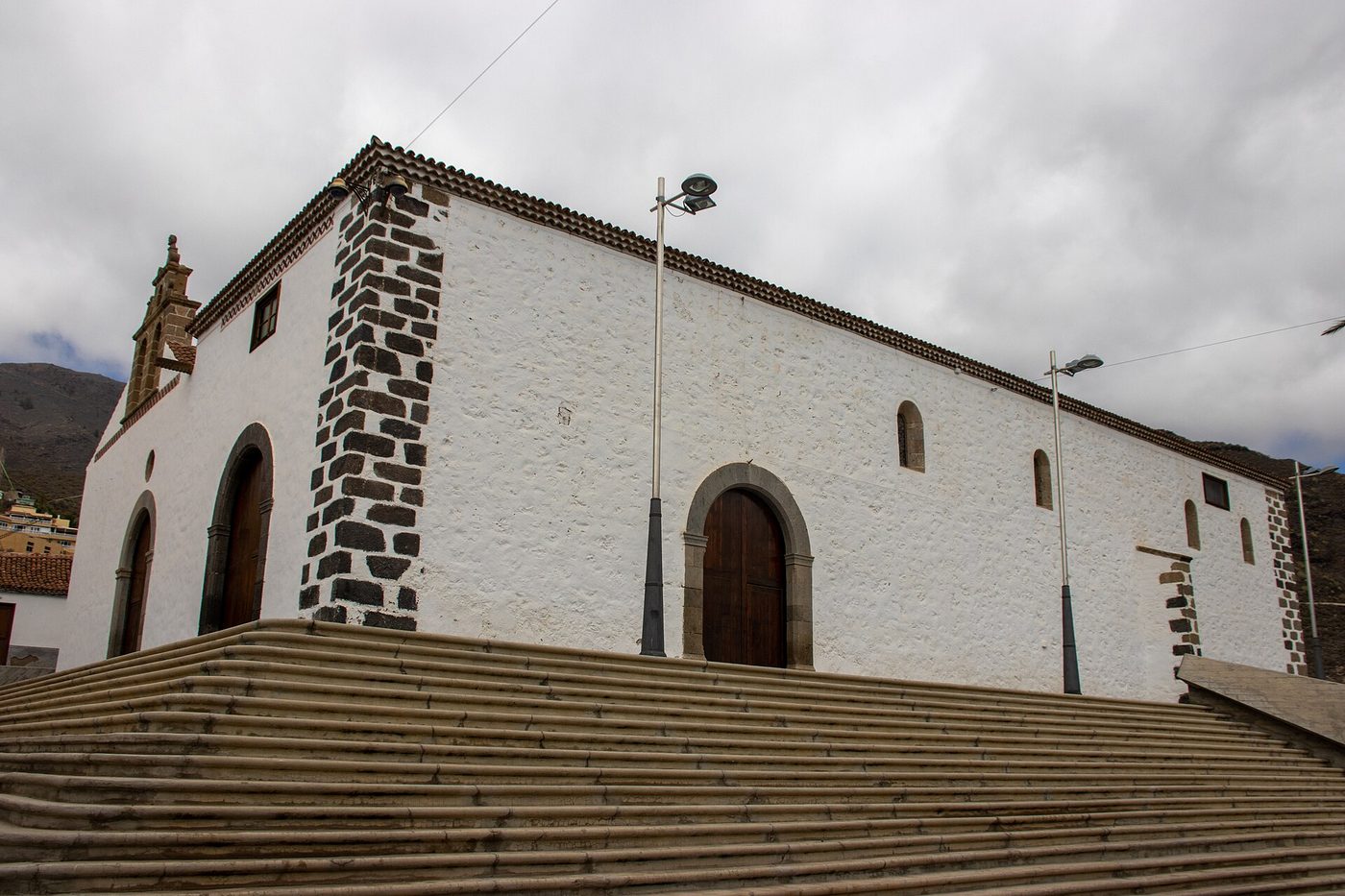
Through marriage the title soon passed to the Herrera, Counts of La Gomera and Lords of El Hierro, and from the early eighteenth century the Casa Fuerte became the administrative centre of all their Canarian lordships. The last holder to live there regularly was Domingo de Herrera in the middle of the century.3 The parish church of Santa Úrsula, which owes its present form to the marquises and still bears their arms, keeps a late sixteenth-century altarpiece with a copy of the Virgin of Candelaria; the date of the statue itself is disputed among art historians.246 When the old Candelaria image was lost to the sea in 1826, the friars of Candelaria remembered this copy and asked to borrow it for the feast.6
Adeje became a municipality in 1812, and the liberal reforms of the nineteenth century went on to abolish lordships and entails.35 The Casa Fuerte kept managing the family's estates for another century, in slow decline. In 1933 its owners, the Curbelo family, gave the papers of the house to El Museo Canario in Las Palmas, which still holds them: thirty-eight metres of documents from 1445 to 1931.3
Bananas, an anthropologist and the coast
The economy followed the island's cycles: wheat, sugar, cochineal, then tomatoes and bananas.5 In 1915 the Harvard anthropologist Earnest Hooton stayed on the Fyffes banana estate at Hoya Grande and dug into burial caves without a permit until the civil governor, prodded by the Santa Cruz press, sent the Guardia Civil to stop him. The bones he had collected reached Boston anyway, smuggled out, according to the estate manager's memoirs, after being swapped for camel bones.1
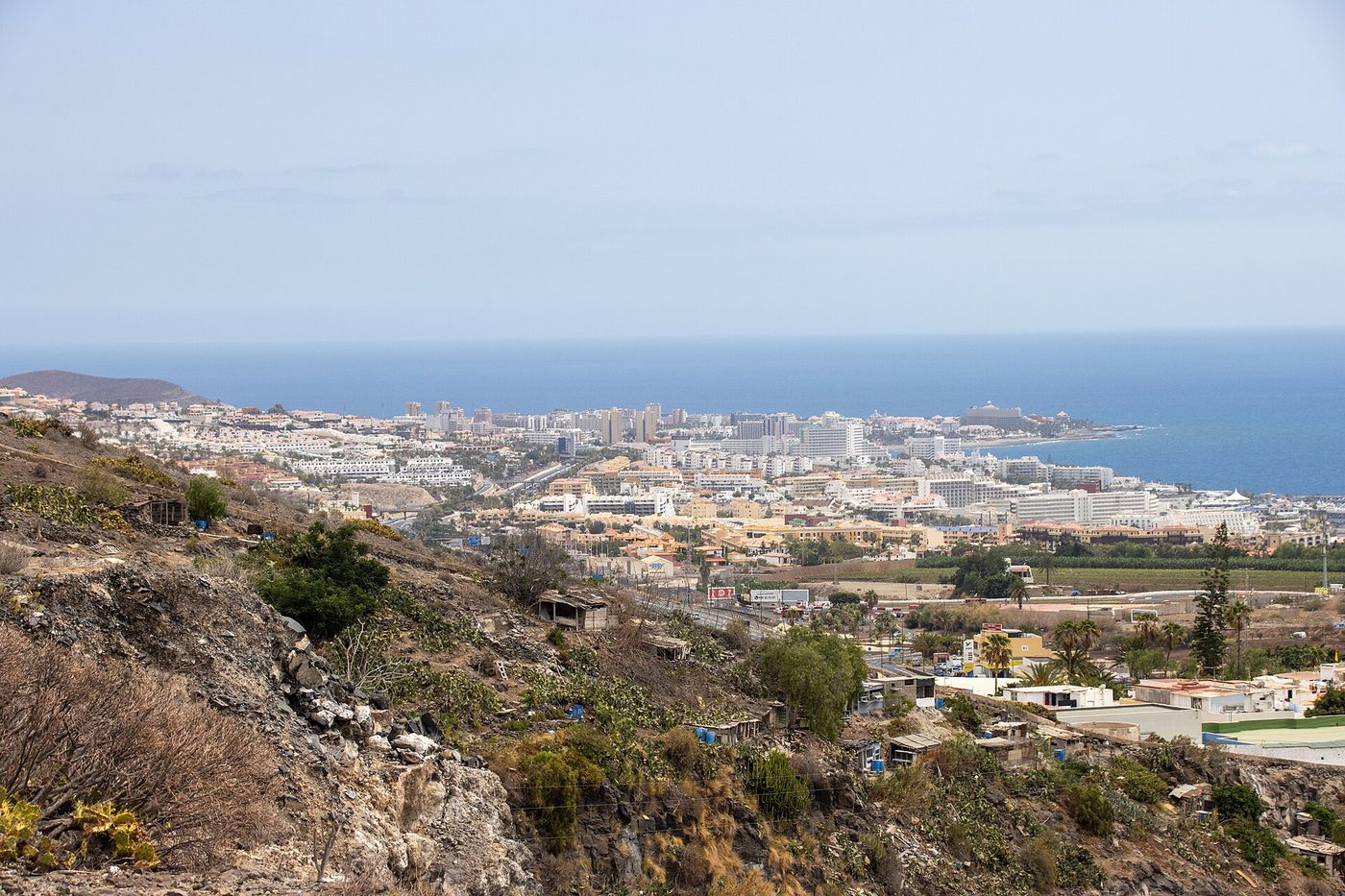
Until the 1960s farming was concentrated on the middle slopes and the coast was almost untouched. Between 1968 and 1973 Adeje approved fourteen tourist plans, twelve of them on rural estates under a 1968 circular of the provincial planning commission meant for towns without a general plan.7 By the 1990s the municipality had become, with Arona, the heart of tourism in southern Tenerife; since about the 1970s its economy has rested above all on sun and beach holidays.57 The town above has kept its Casa Fuerte, its convent church and its ravine, a reminder that Adeje was a capital long before it was a resort.
Notes and sources
- 1.A. Mederos Martín, G. Escribano Cobo and V. Valencia Afonso, "Hábitat aborigen y grabados rupestres en el municipio de Adeje (Tenerife, islas Canarias). (I). Historia de la investigación", Anuario de Estudios Atlánticos 70 (2024), 070-001, pp. 1-25. DOI 10.36980/11019/aea. revistas.grancanaria.com
- 2.A. Mederos Martín and G. Escribano Cobo, "Prospección arqueológica de La Caleta de Adeje (Tenerife, Islas Canarias)", Revista de Historia Canaria 198 (2016), pp. 177-229. Includes the land grants of 1504-1505, the Cabildo minute of 1502, the accounts of Hawkins's voyages (after Rumeu de Armas) and the Inquisition records of the 1586 raid. riull.ull.es
- 3.El Museo Canario, archival description (ISAD-G) of the "Archivo de la Casa Fuerte de Adeje", 1445-1931, including the list of holders of the entail and marquisate. archivo.adeje.es
- 4.Cabildo de Tenerife, Patrimonio Histórico de Tenerife. Catálogo de Bienes de Interés Cultural, 2018 (entries for the Casa Fuerte, Santa Úrsula, the Franciscan convent and the Casa del Patio). tenerife.es
- 5.INVOLCAN, Geoturismo urbano de Tenerife: Adeje casco, 2019. tfgeoturismo.involcan.org
- 6.M. J. Riquelme Pérez, La Virgen de Candelaria y sus santuarios, doctoral thesis, Universidad de La Laguna, 1988. riull.ull.es
- 7.C. García-Blanco Chávez, "Turismo y territorio. La transformación del sur de Tenerife (1960-2018)", Territorios en Formación 23 (2025), DOI 10.20868/tf.2025.23.5625, summarising V. O. Martín Martín's doctoral thesis on the south of Tenerife (1997). polired.upm.es
What's on in Adeje now →
Fiestas, concerts and events from the town hall agenda, updated daily.
More towns in the series
La Laguna · Towns of Tenerife
San Cristóbal de La Laguna: a town planned for peace
Garachico · Towns of Tenerife
Garachico: the port the volcano took
Bajamar · Towns of Tenerife
Bajamar and Punta del Hidalgo: La Laguna's shore
Candelaria · Towns of Tenerife
Candelaria: the shrine on the shore
Santa Cruz de Tenerife · Towns of Tenerife
Santa Cruz: from army camp to capital
La Orotava · Towns of Tenerife
La Orotava: a town drawn with a cord
La Caleta · Towns of Tenerife
La Caleta: Adeje's old harbour
Los Cristianos · Towns of Tenerife
Los Cristianos: the south's harbour
Las Galletas · Towns of Tenerife
Las Galletas: salt, fish and a garden city
Playa de las Américas · Towns of Tenerife
Playa de las Américas: a resort from scratch
Callao Salvaje · Towns of Tenerife
Callao Salvaje: a resort by decree
Playa Paraíso · Towns of Tenerife
Playa Paraíso: a paradise on paper
Guía de Isora · Towns of Tenerife
Guía de Isora: from Teide to the sea
Playa San Juan · Towns of Tenerife
Playa San Juan: Guía de Isora's harbour
Alcalá · Towns of Tenerife
Alcalá: a fishing village on the lava
Puerto Santiago · Towns of Tenerife
Puerto Santiago and Los Gigantes: life below the cliffs
El Médano · Towns of Tenerife
El Médano: the harbour under the red mountain
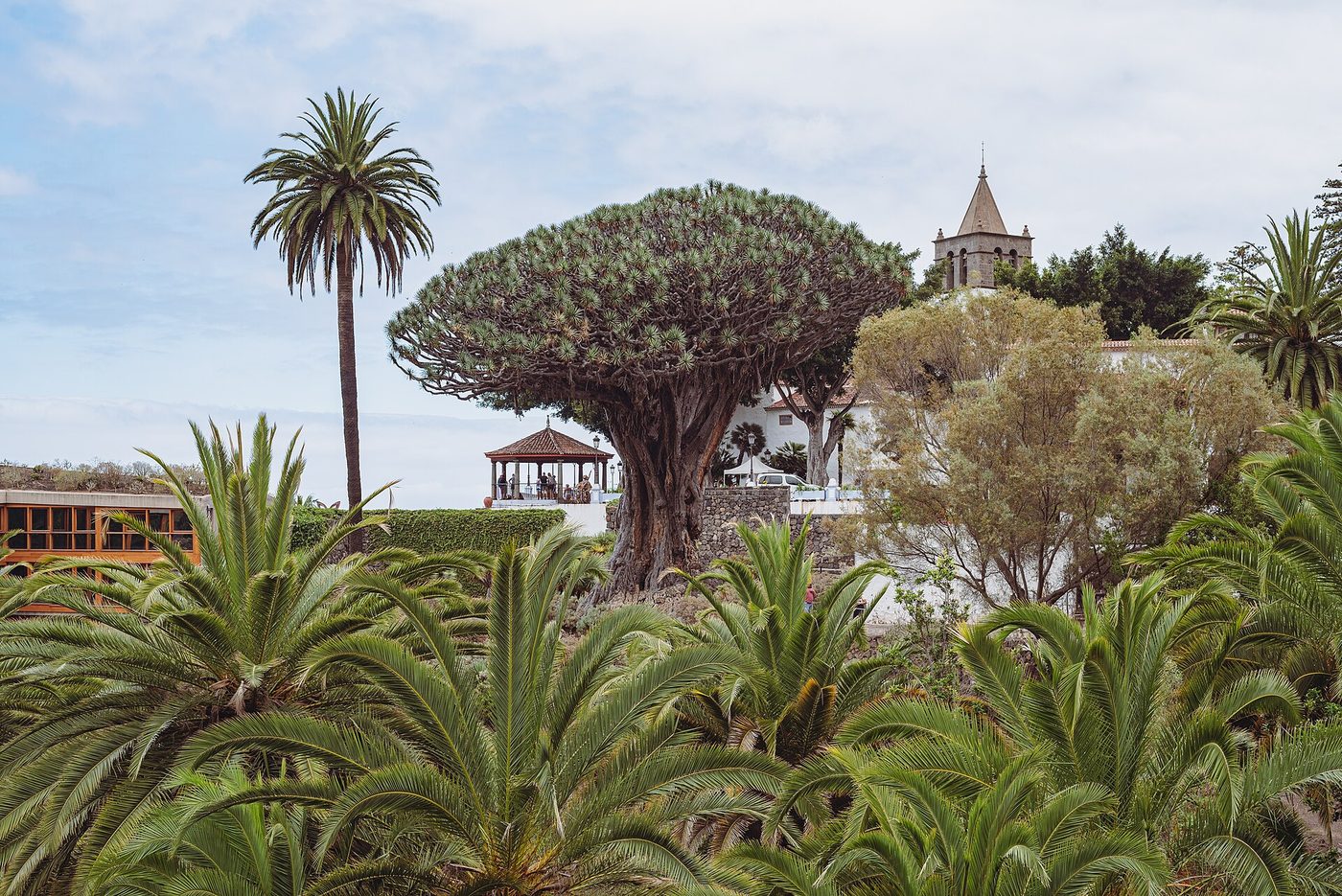
Icod de los Vinos · Towns of Tenerife
Icod de los Vinos: the dragon tree and the cove of San Marcos
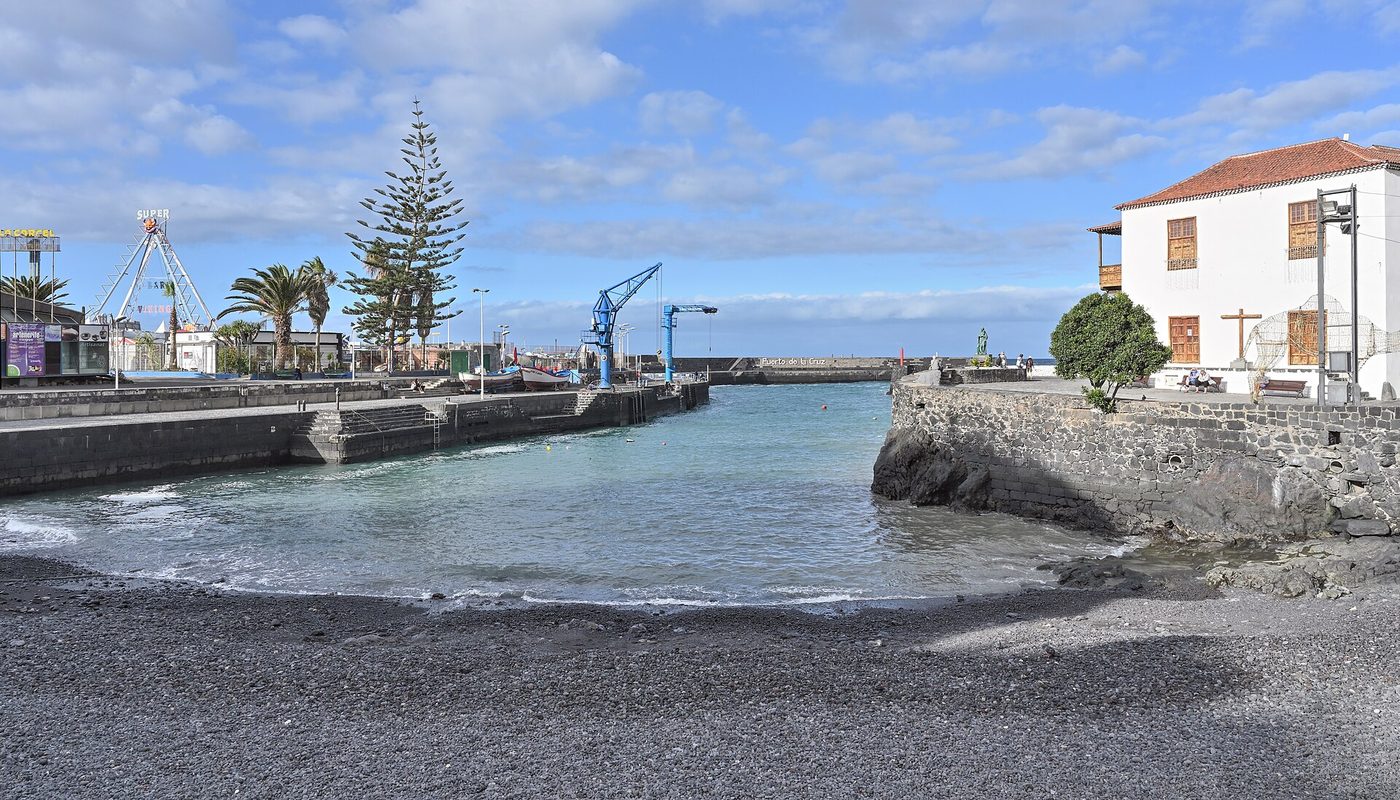
Puerto de la Cruz · Towns of Tenerife
Puerto de la Cruz: from wine port to the first resort
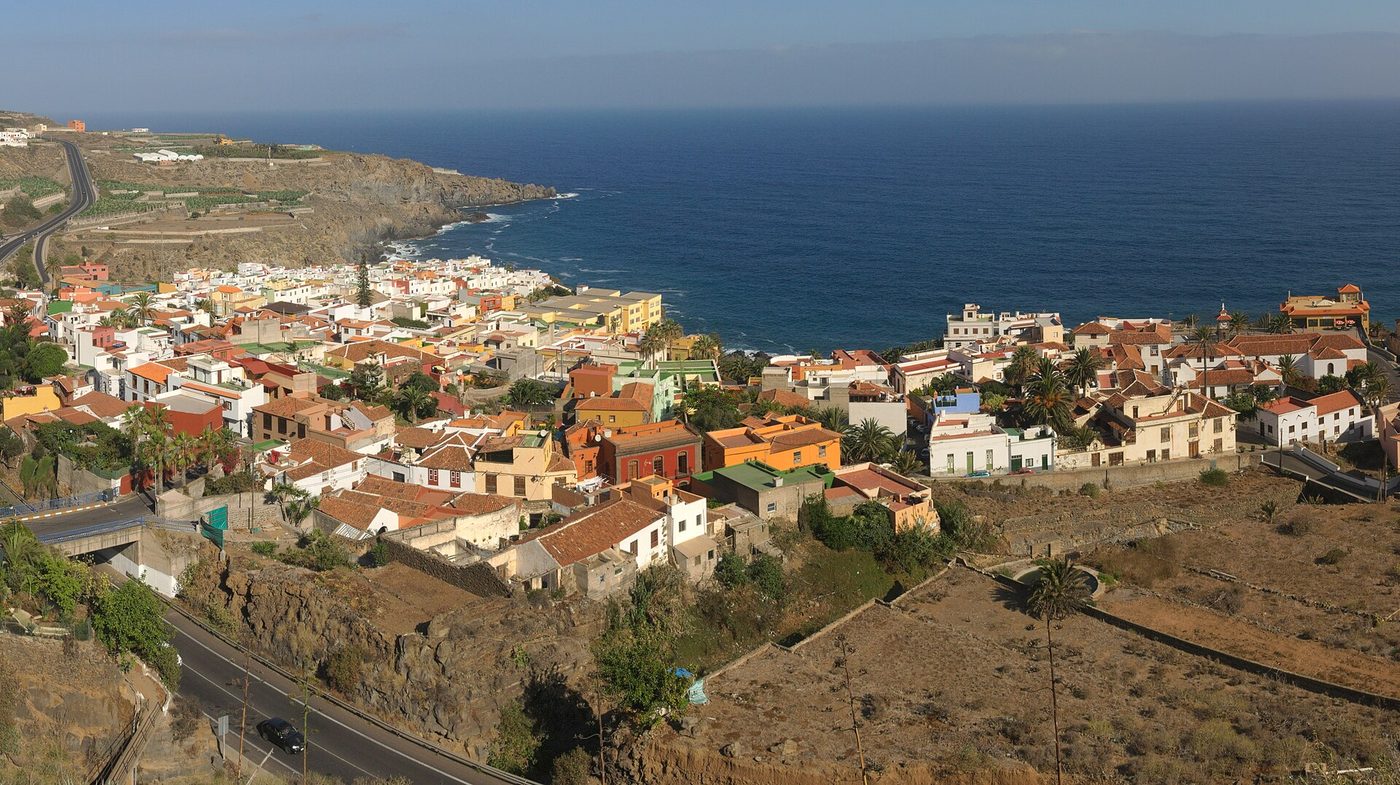
San Juan de la Rambla · Towns of Tenerife
San Juan de la Rambla: a village on the badlands
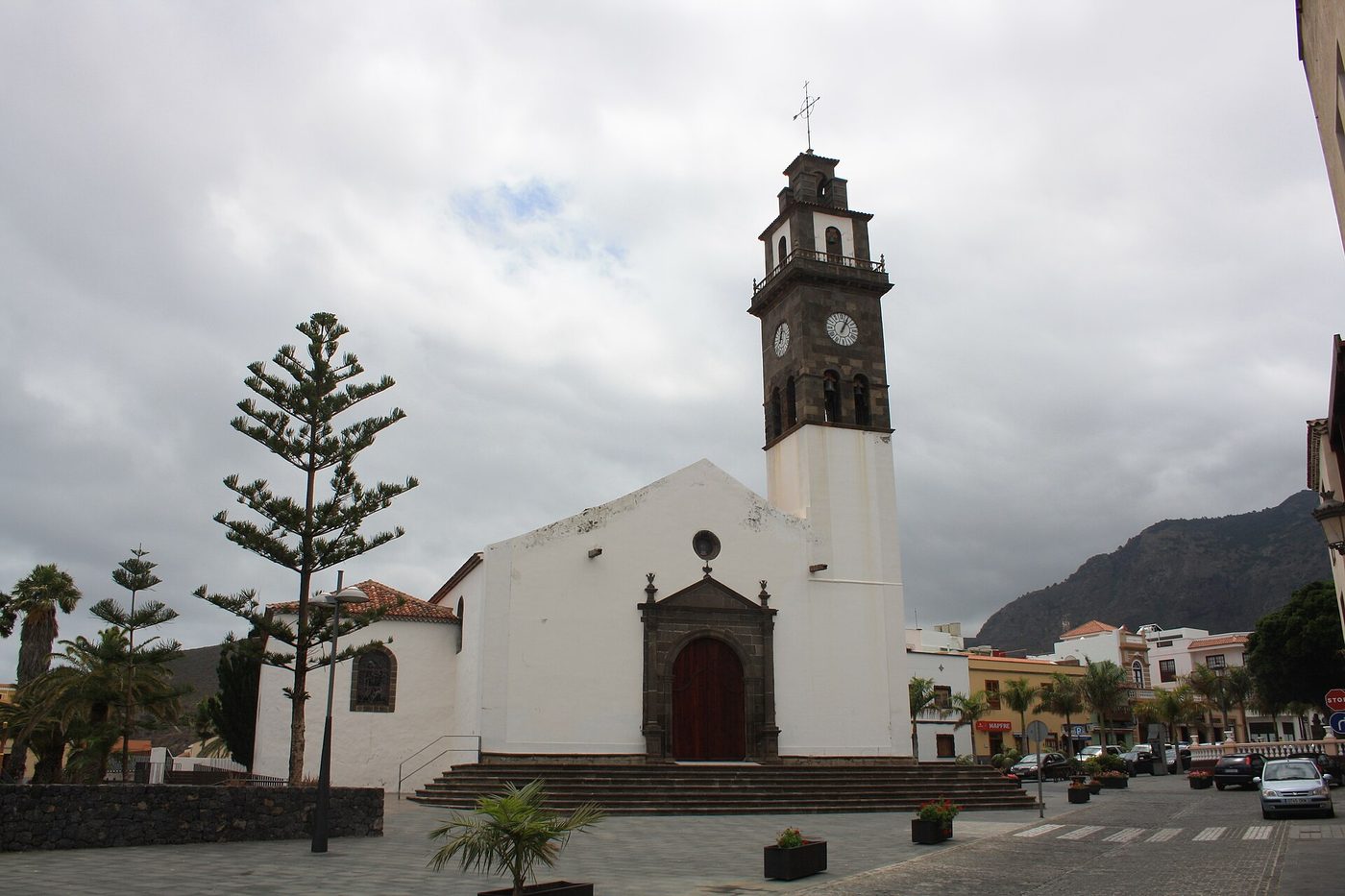
Buenavista del Norte · Towns of Tenerife
Buenavista del Norte: a planned town at the end of the island