
Puerto Santiago · Towns of Tenerife
Puerto Santiago and Los Gigantes: life below the cliffs
A frontier of herders between two Guanche kingdoms, a lordship bought from the Crown, a small fishing port that traded honey with La Gomera, the last eruption on Tenerife in 1909 and a tourist resort born from a 1964 decree. The story of the coast of Santiago del Teide.
6 min read · 8 sources · Updated October 2026
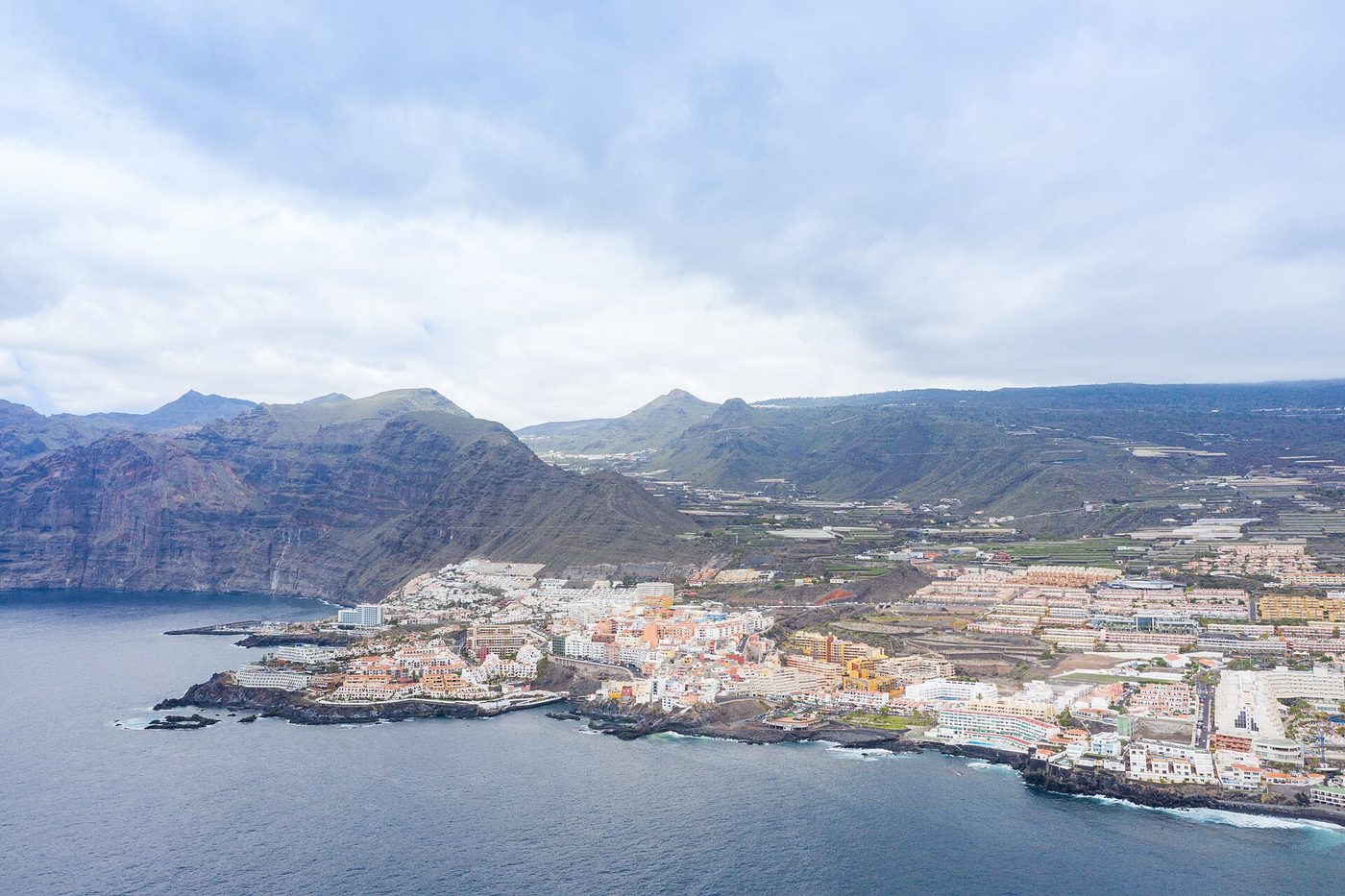
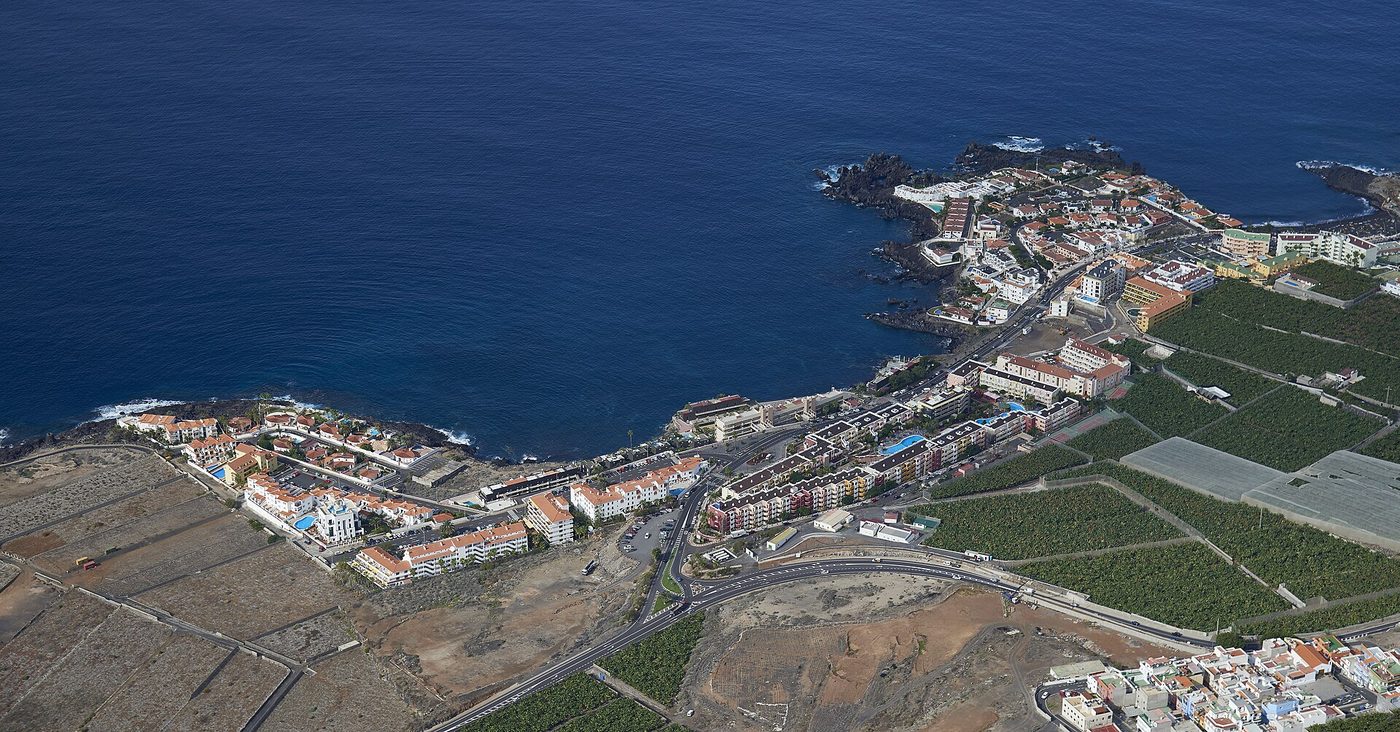
Los Gigantes and Puerto Santiago · dronepicr, CC BY 2.0
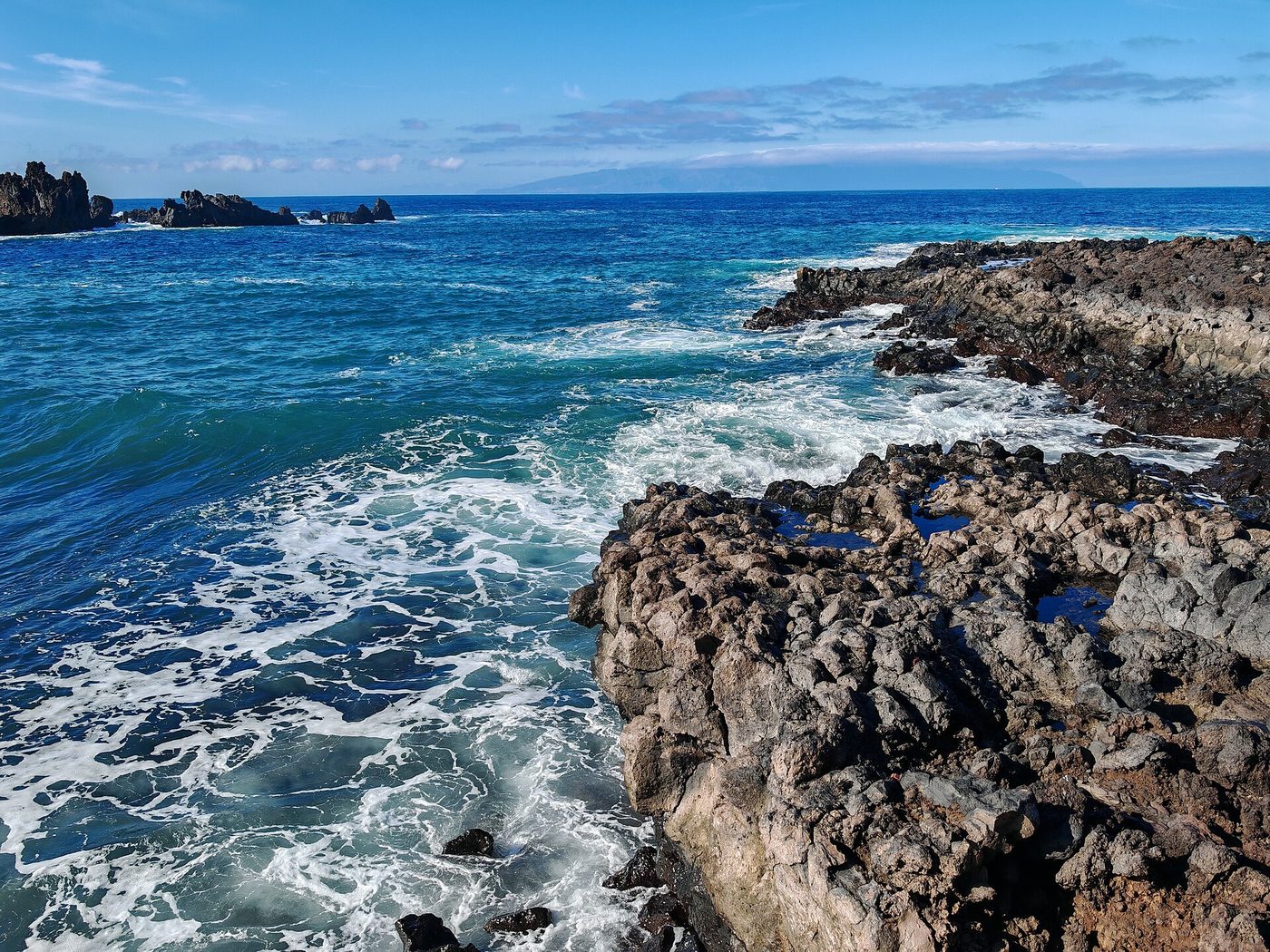
Puerto Santiago lies on a strip of black lava on the west coast of Tenerife, between the beach of La Arena and the marina of Los Gigantes, where the cliffs of the Teno massif drop several hundred metres straight into the sea. Today the three places run into one another as a single resort. For most of their history, though, this shore was the lonely sea edge of a poor inland valley, and the story of the coast cannot be told without the valley above it.
A frontier of herders
Before the conquest the Santiago valley lay on a border. Early land grants place it in the district of Daute, in the north-west, but several Guanche place names and later traditions tie its villages to the kingdom of Adeje in the south. After reviewing the documents, the archaeologists Alfredo Mederos and Gabriel Escribano conclude that the line between the two is hard to fix, and that the valley was above all a frontier zone: perhaps not yet a place of settled homes, but an important reserve of pasture, which was the main purpose of a border.2 The local place names Arguayo, Bilma, Chinyero, Tamaimo and many others survive from that time.1
After the conquest the land was handed out in the usual way. In 1503 Don Diego, the former mencey of Adeje, received 100 fanegas of dry farmland in the valley, then called Taxo; the poet Antonio de Viana later imagined him living out his days here.1 In 1552 the Santiago valley counted only twelve inhabitants.1 Its main early product was pitch from the pine forests of Arguayo and the valley, used to caulk ships and sold through the ports of Garachico and Adeje to Lisbon and Cádiz.1
A lordship and a fishing port
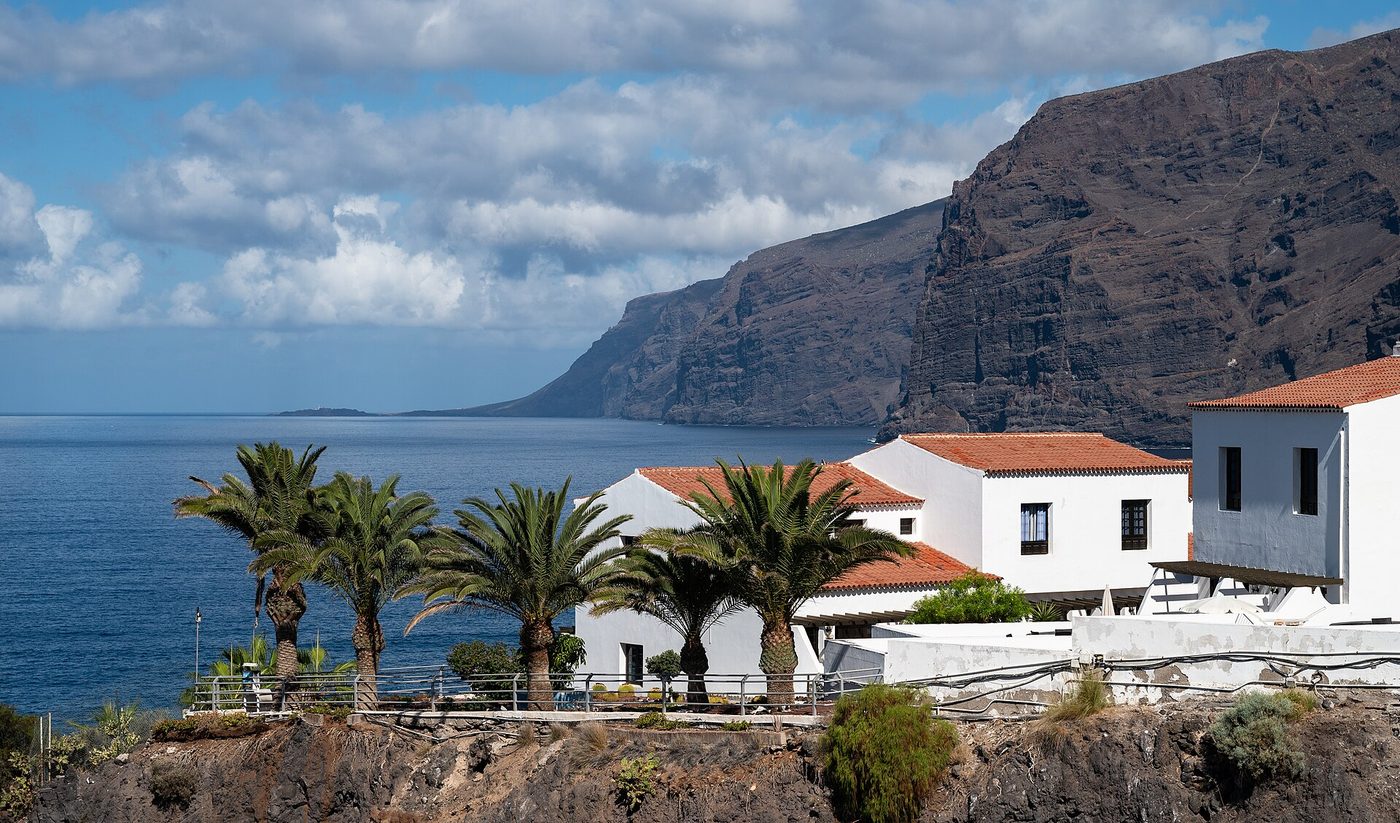
In 1663 the valley became a private lordship. The soldier Fernando del Hoyo Solórzano offered the Crown 3,200 silver ducats for it and received full civil and criminal jurisdiction, with the right to set up gallows and a pillory.1 Between 1665 and 1668 he built the Casa del Patio, the family's farm and manor house, today the most important historic building in the municipality. The island council opposed the creation of the lordship, which lasted until the Cortes of Cádiz abolished such jurisdictions in 1812, although its effects were only felt from 1830.13 In 1776 the historian José de Viera y Clavijo summed up the place in a line: a lordship of vineyards, burnt land and a cold climate.4
The coast below began to matter in the same period. The municipal chronology records that the engineer Leonardo Torriani, sent by Philip II to plan the fortification of the islands, landed at what is now Puerto Santiago in 1587. By the eighteenth century there was a fishing community here and regular traffic of people and goods across the channel to La Gomera: in 1778 the port collected 1,334 reales in duties on honey brought from the neighbouring island.1 The same chronology preserves a local tradition that on 5 September 1797 English ships attempting a landing were driven off by villagers throwing stones from the top of the cliffs.1
The last eruption
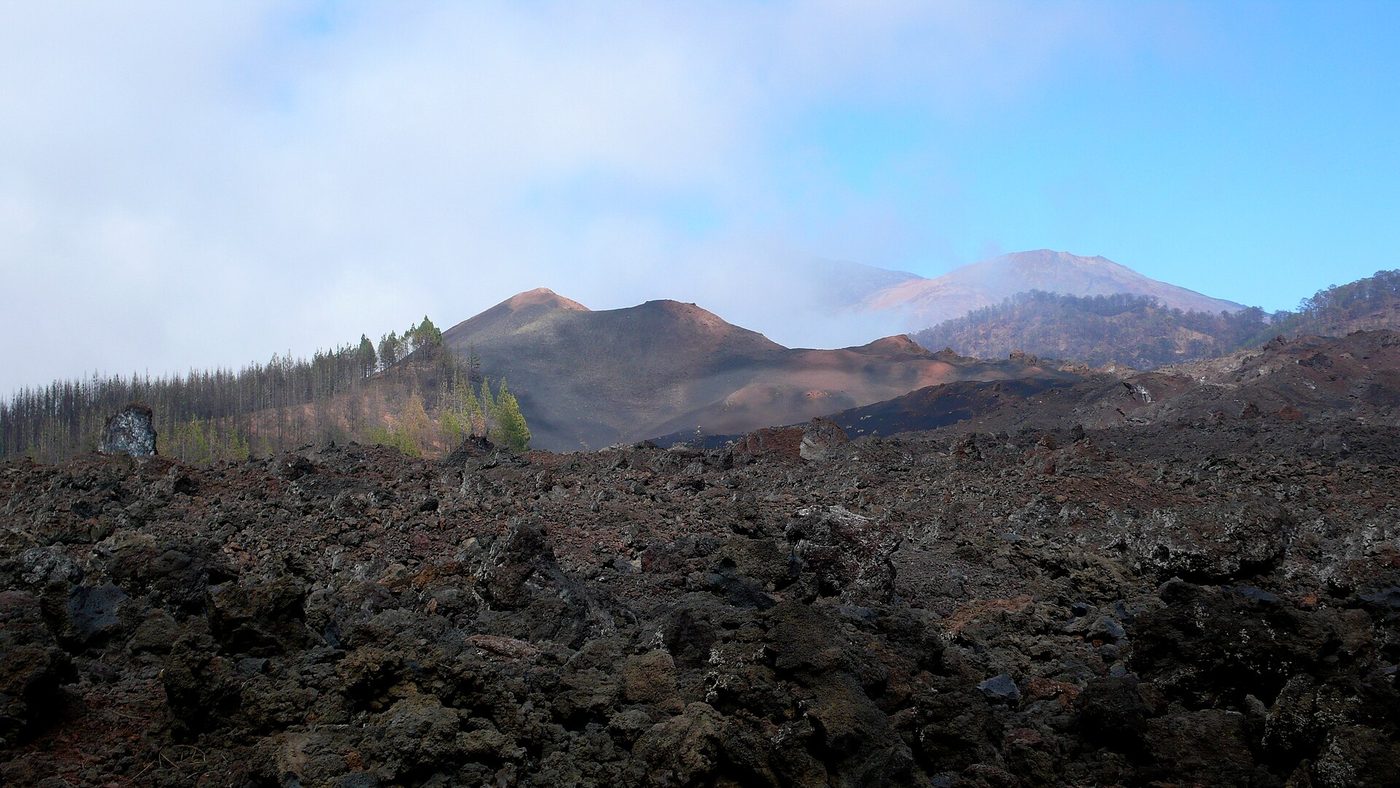
The land here is young. The main village of Santiago del Teide stands on the lavas of Montaña Bilma, and two eruptions in historical times, Boca Cangrejo and Chinyero, have affected the municipality.4 The second began on 18 November 1909 and lasted ten days. Its ash reached La Laguna, La Orotava and Icod de los Vinos, and by the third day there were nine active vents.5 The villagers carried their saints out in procession: the Señor del Valle in Santiago, San Joaquín and Santa Ana in Tamaimo.5 A calvary above the village marks the spot where, according to local belief, faith stopped the lava.4 The geologist Lucas Fernández Navarro of the Museo Nacional de Ciencias Naturales published a detailed study of the eruption in 1911, and news of its progress was sent by carrier pigeon to the telegraph office at Garachico.5 Chinyero remains the last eruption on Tenerife.1
The name of the municipality changed a few years later, for a practical reason. Until 1916 it was known as Valle de Santiago; letters sent home by emigrants in Cuba kept ending up at Playa de Santiago on La Gomera, so on 2 July 1916 it became Santiago del Teide.14 Emigration to Cuba remained strong around 1920, and in the 1950s many left for Venezuela.1
Water, tomatoes and tourists
The twentieth century reached the valley late. The island's ring road arrived in 1930, and in 1957 the San Fernando water gallery in Valle de Arriba began to yield water, which made export farming possible, especially tomatoes at Tamaimo; a farmers' cooperative was founded there in 1966.1
Tourism followed almost at once. The municipal chronology credits the Navarrese Juan Manuel Capdevielle San Martín with discovering the cliffs of Los Gigantes for tourism in August 1960.1 In 1964 a government decree granted tax breaks, including a 50% cut in property transfer tax and a 90% cut in import duties on building machinery, to anyone investing under the plan of the "Acantilado de los Gigantes" Centre of National Tourist Interest, promoted by the company AGIGANSA.6 Other centres of this kind in Tenerife were El Guincho and Callao Salvaje, but they accounted for only a small share of the island's tourist building.7 In 1970 the ministry approved AGIGANSA's plan to enlarge the centre.8 The second phase of the Hotel Los Gigantes, the first hotel in the municipality, was opened on 3 March 1973 by the then Prince and Princess of Spain.1 The marina at the foot of the cliffs followed in the next wave of building, as tourism spread along the south and west coasts.7
Today
Puerto Santiago, La Arena and Los Gigantes now form the tourist coast of Santiago del Teide, with apartments, hotels and a marina at the foot of the cliffs. Up the hill, the old valley keeps its church of San Fernando, the Casa del Patio and the calvary that faced the lava in 1909.34
Notes and sources
- 1.Ayuntamiento de Santiago del Teide, "Breve referencia histórica" and "Cronología histórica del municipio" (institutional page). santiagodelteide.es
- 2.A. Mederos Martín and G. Escribano Cobo, "Prospección arqueológica de La Caleta de Adeje (Tenerife, Islas Canarias)", Revista de Historia Canaria 198 (2016), pp. 177-229 (section on the borders of the kingdom of Adeje). riull.ull.es
- 3.Cabildo de Tenerife, Patrimonio Histórico de Tenerife. Catálogo de Bienes de Interés Cultural, 2018 (entry for the Casa del Patio). tenerife.es
- 4.INVOLCAN, Geoturismo urbano de Tenerife: Santiago del Teide, 2019 (includes the quotation from Viera y Clavijo, 1776). tfgeoturismo.involcan.org
- 5.Press: "116 años desde la erupción del volcán Chinyero, la última en Tenerife", RTVC, November 2025 (drawing on L. Fernández Navarro, Erupción volcánica del Chinyero (Tenerife) en noviembre de 1909, 1911). rtvc.es
- 6.Decree granting tax benefits to the Centre of National Tourist Interest "Acantilado de los Gigantes, S. A." (AGIGANSA), Boletín Oficial del Estado 244, 10 October 1964, pp. 13266-13267. boe.es
- 7.C. García-Blanco Chávez, "Turismo y territorio. La transformación del sur de Tenerife (1960-2018)", Territorios en Formación 23 (2025), DOI 10.20868/tf.2025.23.5625, citing L. Galiana Martín and D. Barrado Timón (2006). polired.upm.es
- 8.Order of 4 November 1970 approving the tourist promotion plan drawn up by AGIGANSA for the enlargement of the Centre of National Tourist Interest "Acantilado de los Gigantes", Boletín Oficial del Estado 12, 14 January 1971 (summary, p. 582). boe.es
What's on in Santiago del Teide now →
Fiestas, concerts and events from the town hall agenda, updated daily.
More towns in the series
La Laguna · Towns of Tenerife
San Cristóbal de La Laguna: a town planned for peace
Garachico · Towns of Tenerife
Garachico: the port the volcano took
Bajamar · Towns of Tenerife
Bajamar and Punta del Hidalgo: La Laguna's shore
Candelaria · Towns of Tenerife
Candelaria: the shrine on the shore
Santa Cruz de Tenerife · Towns of Tenerife
Santa Cruz: from army camp to capital
La Orotava · Towns of Tenerife
La Orotava: a town drawn with a cord
Adeje · Towns of Tenerife
Adeje: the kingdom, the fortress and the marquises
La Caleta · Towns of Tenerife
La Caleta: Adeje's old harbour
Los Cristianos · Towns of Tenerife
Los Cristianos: the south's harbour
Las Galletas · Towns of Tenerife
Las Galletas: salt, fish and a garden city
Playa de las Américas · Towns of Tenerife
Playa de las Américas: a resort from scratch
Callao Salvaje · Towns of Tenerife
Callao Salvaje: a resort by decree
Playa Paraíso · Towns of Tenerife
Playa Paraíso: a paradise on paper
Guía de Isora · Towns of Tenerife
Guía de Isora: from Teide to the sea
Playa San Juan · Towns of Tenerife
Playa San Juan: Guía de Isora's harbour
Alcalá · Towns of Tenerife
Alcalá: a fishing village on the lava
El Médano · Towns of Tenerife
El Médano: the harbour under the red mountain
Icod de los Vinos · Towns of Tenerife
Icod de los Vinos: the dragon tree and the cove of San Marcos
Puerto de la Cruz · Towns of Tenerife
Puerto de la Cruz: from wine port to the first resort
San Juan de la Rambla · Towns of Tenerife
San Juan de la Rambla: a village on the badlands
Buenavista del Norte · Towns of Tenerife
Buenavista del Norte: a planned town at the end of the island