
Puerto de la Cruz · Towns of Tenerife
Puerto de la Cruz: from wine port to the first resort
The harbour of the Orotava valley, which shipped its malmsey to England, fed itself on grain from Fuerteventura, won its independence in 1813, welcomed Victorian travellers and invalids, opened the first tourist company in the Canaries in 1886 and became a meeting place of British and German visitors. The story of Puerto de la Cruz.
6 min read · 7 sources · Updated October 2026
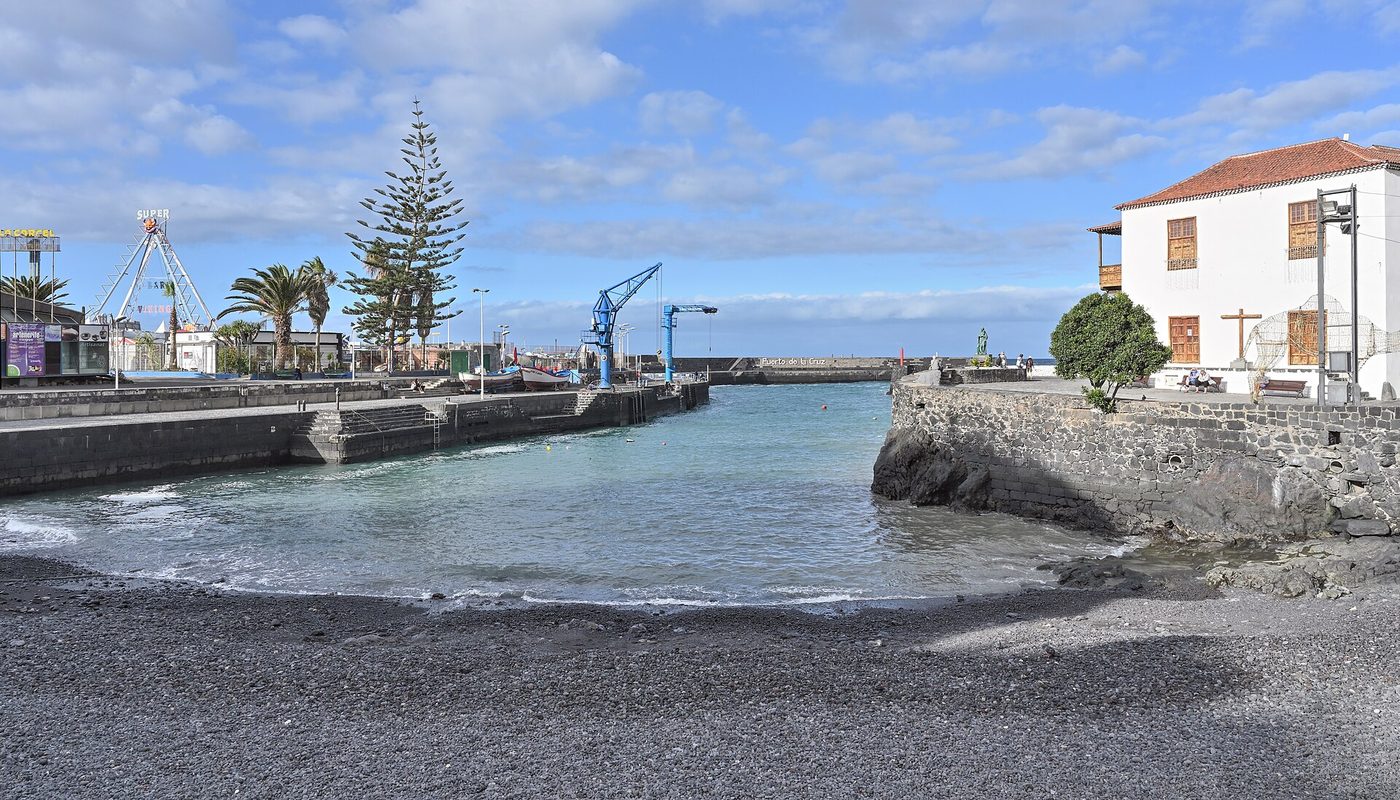
The harbour of Puerto de la Cruz · Cayambe, CC BY-SA 4.0
Puerto de la Cruz covers only 8.7 square kilometres on the coast of the Orotava valley.6 For most of its history it was not a town in its own right but the harbour of La Orotava, the "Puerto de la Orotava". Two great waves of trade shaped it: first the wine of the valley, and then, from the 1880s, visitors in search of a mild winter.
The harbour of the valley
The valley of La Orotava produced more export wine than any other part of the Canaries under the old regime, and its harbour grew with the vineyards. The historian Carmelo Torres, drawing on earlier studies, shows how the port's share of the royal revenues collected in Tenerife rose from 26.2% in 1625 to 80.2% in 1681, before falling back to 54.5% in 1718. The mole of Santa Bárbara, the first attempt at an artificial harbour, was begun in the 1640s.1 The main buyer of the valley's malmsey was England, whose convoy usually arrived in March and April to load wine and brandy. After the episode known as the derrame del vino, when wine was spilt at Garachico in 1666, English import policy changed and, with other factors, sales to England fell.1
The wine trade had a price. Vines took over land from other crops, and Tenerife came to depend on grain from the eastern islands. Torres studied every ship that arrived at the Puerto in 1694 and 1695: of 117 arrivals from other islands and ports, the largest share came from Fuerteventura, which supplied almost 87% of the grain unloaded here.1
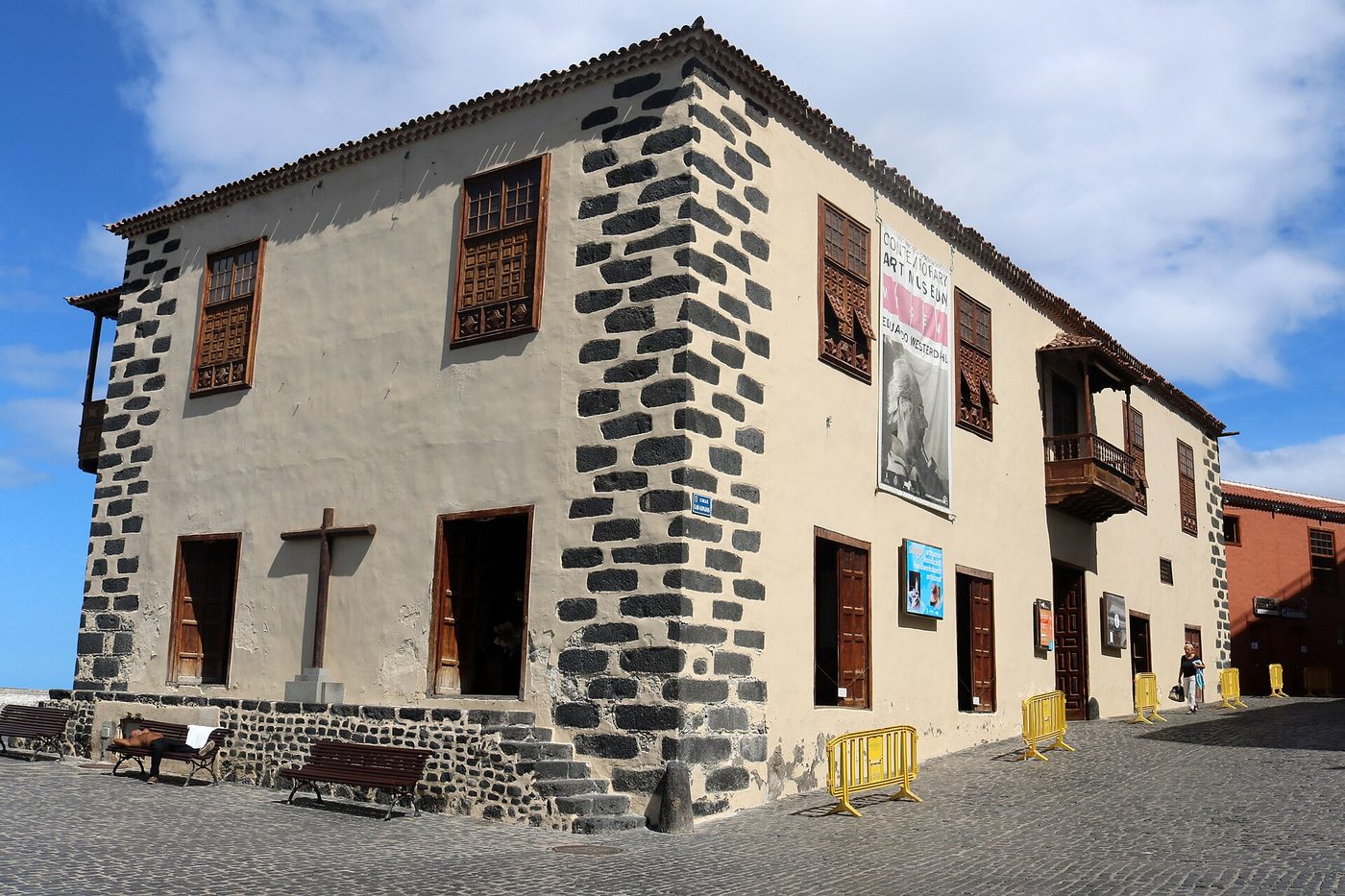
The town grew within the walls of this trade. Its streets were laid out in a grid in the early seventeenth century, in the time of the councillor Antonio Franchy Lutzardo, around the quay and the square of El Charco, and the humble fishermen's quarter of La Ranilla.2 In 1599 the customs officer Juan de Tejera built a hermitage to Saint John the Baptist for the "forty or fifty" households of the harbour, which then had no priest of their own; it later passed to the Franciscans. The church of Nuestra Señora de la Peña de Francia grew from a hermitage of 1603, and the seafarers had their own chapel of San Telmo.2 The pentagonal Castillo de San Felipe guarded the shore, and the Casa de la Aduana, the customs house, stood on the quay.2
A town of its own
The Puerto was part of the jurisdiction of La Orotava until 1813, when it became an independent municipality.3 By then it was also a place of science. In 1788 a royal order of Charles III created the Jardín de Aclimatación, the botanical garden on the slope above the town, so that plants of commercial interest from the colonies could be acclimatised in one place; the task fell to the Marqués de Villanueva del Prado.2 Alexander von Humboldt passed through in 1799 and complained that the exuberant vegetation around the town made geological work difficult.6
Invalids and Victorian travellers
In the second half of the nineteenth century foreign visitors began to arrive for their health, above all British people suffering from tuberculosis and other lung diseases. The historian Nicolás González Lemus has reconstructed their world. When the Irish travel writer Olivia Stone and her husband John reached the Puerto in September 1883, they stayed at the boarding house of the Scottish couple John and Elizabeth Turnbull, hired horses from Lorenzo Morisco, the town's only official guide for the ascent of Teide, and visited the botanical garden, then run by the Swiss gardener Hermann Wildpret.4 Their Tenerife and its Six Satellites (1887), two volumes of nearly a thousand pages, was much more than the guidebook its publisher seems to have wanted.4
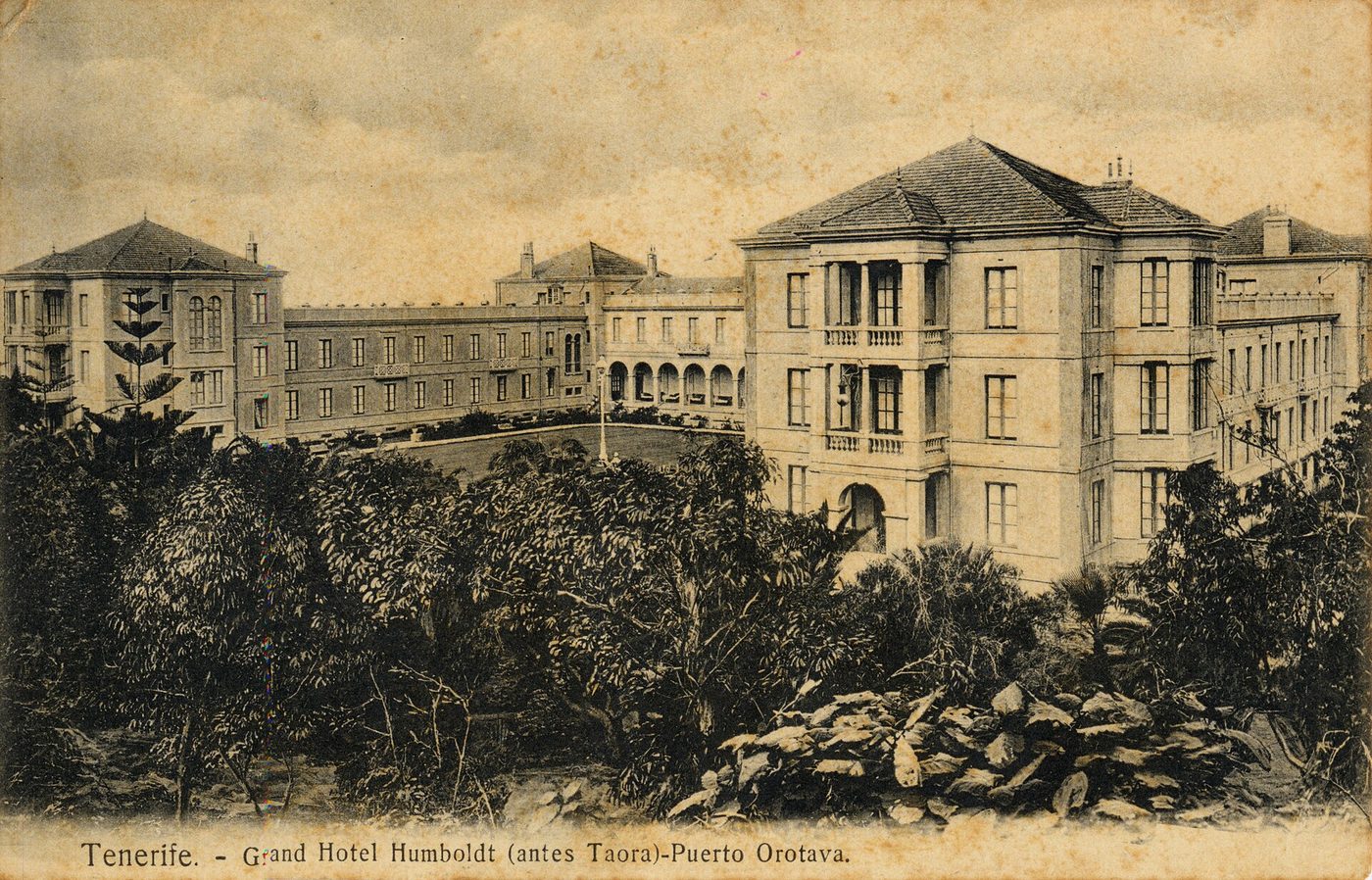
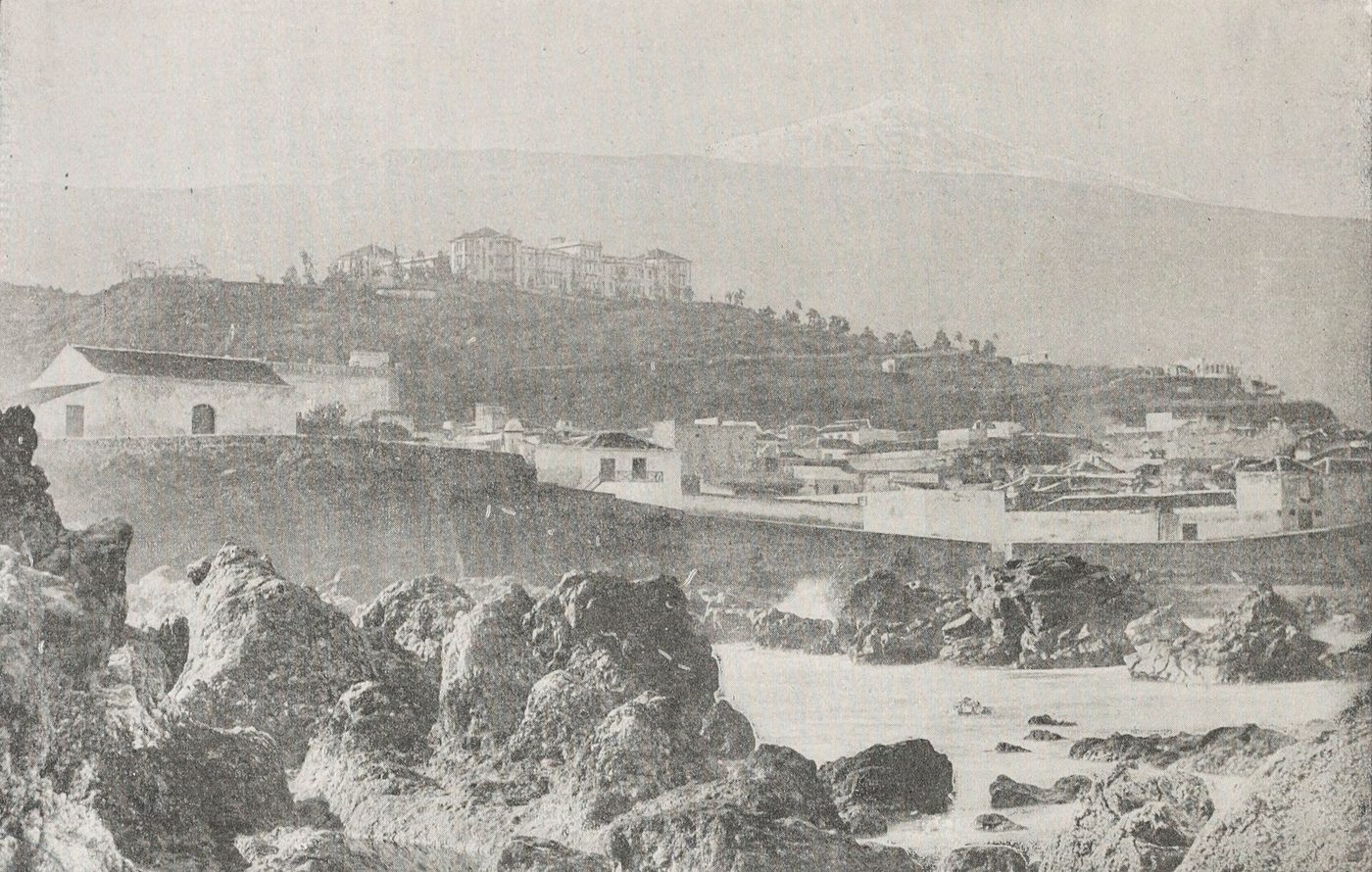
On 11 April 1886 local landowners and British residents founded the Compañía de Hoteles y Sanatorium del Valle de La Orotava, also known as The Orotava Grand Hotel Company, with a capital of 20,000 pounds sterling. González Lemus calls it the first tourist company in the Canaries. In September 1886 it opened the Orotava Grand Hotel in a rented villa on the plain of Martiánez, for invalid guests.5 After quarrels among the partners, a new company was formed and built the Taoro on a lava field above the town then called Monte Miseria, designed by the French architect Adolphe Coquet. Its central block opened with a great party on 22 December 1890, and in its time it was the largest building in the Canaries.5
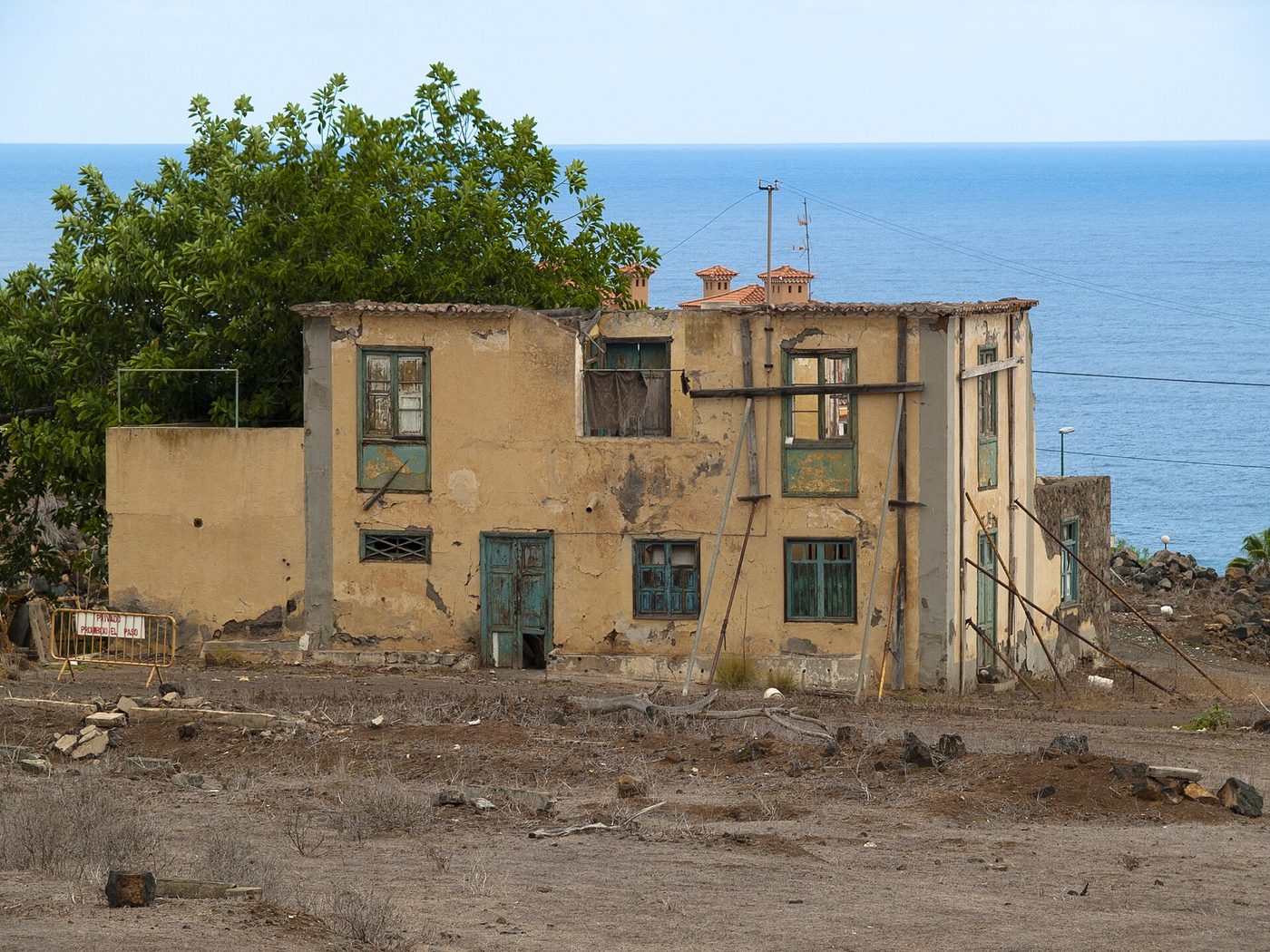
The hotel was a social success and a financial failure. Its high-season occupancy was low, the cholera epidemic of 1894 cut communications with Europe, the arrival of tuberculin changed the treatment of tuberculosis, and many visitors preferred cheaper villas and boarding houses.5 In 1905, amid fears in the British community that it would fall into German hands, the company leased the Taoro to a German firm led by the doctor Gotthold Pannwitz, and it became the Humboldt Kurhaus until 1911.57 A German scientific commission of about thirty professors arrived in March 1909, and Germans and Swiss opened a small school the same year.7 The Casa Amarilla, on the edge of the town, became a research station for the study of primates in 1910.2
Bananas and the modern resort
German families settled for good. Jacob Ahlers from Hamburg arrived in 1900 to recover from a lung illness and stayed on as a shipping agent and fruit exporter; bananas played a central part in the German presence in the town.7 The Taoro burned on 9 May 1929; from 1932 it was run by Enrique Talg, born near Hamburg in 1894, who later opened the Hotel Tigaiga in 1959.7 Later in the century the German businessman Wolfgang Kiessling built the Hotel Botánico and Loro Parque in the town.7 Today Puerto de la Cruz mixes its old streets, chapels and customs house with the hotels and the Lago Martiánez lidos designed by César Manrique.26
Notes and sources
- 1.C. C. Torres Torres, "El comercio interinsular del grano en Canarias. El caso del Puerto de la Cruz (1694-1695)", XV Coloquio de Historia Canario-Americana (2002), pp. 835-844 (the revenue figures after A. Guimerá Ravina, 1985; the mole after J. A. Álvarez Rixo). revistas.grancanaria.com
- 2.Cabildo de Tenerife, Patrimonio Histórico de Tenerife. Catálogo de Bienes de Interés Cultural, 2018 (entries for the historic centre of Puerto de la Cruz, its churches and chapels, the Castillo de San Felipe, the Casa de la Aduana, the Jardín de Aclimatación, the Casa Amarilla and the Lago Martiánez). tenerife.es
- 3.Ayuntamiento de La Orotava, Plan Especial de Protección del Conjunto Histórico de la Villa de La Orotava. Memoria, final approval document, 2009, chapter "Origen y evolución del centro urbano". laorotava.es
- 4.N. González Lemus, "El Puerto de la Cruz de Olivia y John Stone", Catharum 19 (2022). dialnet.unirioja.es
- 5.N. González Lemus, "La Compañía de Hoteles y Sanatorium del Valle de La Orotava. Primera compañía turística de Canarias", XV Coloquio de Historia Canario-Americana (2002). revistas.grancanaria.com
- 6.INVOLCAN, Geoturismo urbano de Tenerife: Puerto de la Cruz, 2019 (area of the municipality and the quotation from Humboldt, 1799). tfgeoturismo.involcan.org
- 7.C. Fraga González, "Familias alemanas en el acontecer del Puerto de la Cruz. Proyección artística", Catharum 22 (2026), pp. 73-83. iehcan.com
What's on in Puerto de la Cruz now →
Fiestas, concerts and events from the town hall agenda, updated daily.
More towns in the series
La Laguna · Towns of Tenerife
San Cristóbal de La Laguna: a town planned for peace
Garachico · Towns of Tenerife
Garachico: the port the volcano took
Bajamar · Towns of Tenerife
Bajamar and Punta del Hidalgo: La Laguna's shore
Candelaria · Towns of Tenerife
Candelaria: the shrine on the shore
Santa Cruz de Tenerife · Towns of Tenerife
Santa Cruz: from army camp to capital
La Orotava · Towns of Tenerife
La Orotava: a town drawn with a cord
Adeje · Towns of Tenerife
Adeje: the kingdom, the fortress and the marquises
La Caleta · Towns of Tenerife
La Caleta: Adeje's old harbour
Los Cristianos · Towns of Tenerife
Los Cristianos: the south's harbour
Las Galletas · Towns of Tenerife
Las Galletas: salt, fish and a garden city
Playa de las Américas · Towns of Tenerife
Playa de las Américas: a resort from scratch
Callao Salvaje · Towns of Tenerife
Callao Salvaje: a resort by decree
Playa Paraíso · Towns of Tenerife
Playa Paraíso: a paradise on paper
Guía de Isora · Towns of Tenerife
Guía de Isora: from Teide to the sea
Playa San Juan · Towns of Tenerife
Playa San Juan: Guía de Isora's harbour
Alcalá · Towns of Tenerife
Alcalá: a fishing village on the lava
Puerto Santiago · Towns of Tenerife
Puerto Santiago and Los Gigantes: life below the cliffs
El Médano · Towns of Tenerife
El Médano: the harbour under the red mountain
Icod de los Vinos · Towns of Tenerife
Icod de los Vinos: the dragon tree and the cove of San Marcos
San Juan de la Rambla · Towns of Tenerife
San Juan de la Rambla: a village on the badlands
Buenavista del Norte · Towns of Tenerife
Buenavista del Norte: a planned town at the end of the island