
Playa de las Américas · Towns of Tenerife
Playa de las Américas: a resort from scratch
A dry coast of tomato fields and Guanche engravings on the border between two municipalities, a Catalan businessman who saw a resort in it in 1965, five thousand palm trees and a hotel with pools by César Manrique. How Playa de las Américas was invented.
5 min read · 10 sources · Updated October 2026
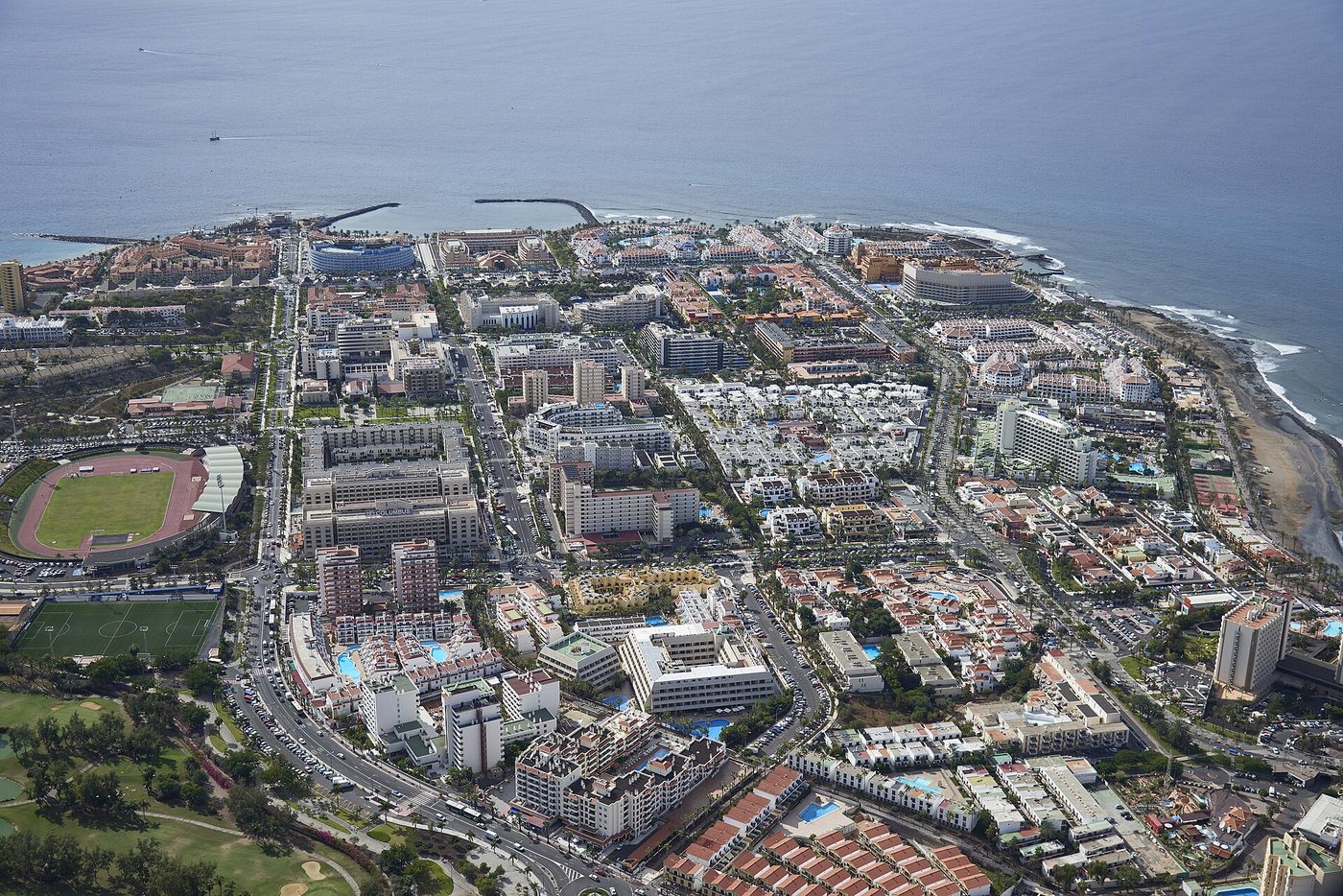
Playa de las Américas · Wouter Hagens, CC BY-SA 4.0
Playa de las Américas is the opposite of the old towns of Tenerife. It has no founding legend, no parish church at its centre and no ancient name: it was planned on paper in the 1960s, on land that until then had grown tomatoes or nothing at all. Yet the ground it stands on has a long history, and the way it was built tells a great deal about how the south of the island changed in a single generation.
A frontier ravine
The resort straddles the Barranco del Rey, which in its lowest stretch is called the Barranco de Troya and reaches the sea at the beach of the same name. Today the ravine marks the boundary between the municipalities of Arona and Adeje. Some historians believe it already marked a frontier before the conquest, between the Guanche kingdoms of Abona and Adeje, although the archaeologists Alfredo Mederos and Gabriel Escribano place that border further east.1 The ravine's banks are lined with rock engravings: within its protected area there are six archaeological complexes and a dozen panels of carvings at La Rajona, and on the slopes nearby, at Las Toscas, a vast network of channels and cups cut into pumice that may be the largest site of its kind on the island.2 The ravine and the nearby Caldera del Rey, "the King's crater", are linked by tradition with Ichasagua, the rebel mencey proclaimed in Adeje in 1502, who is said to have died there.1
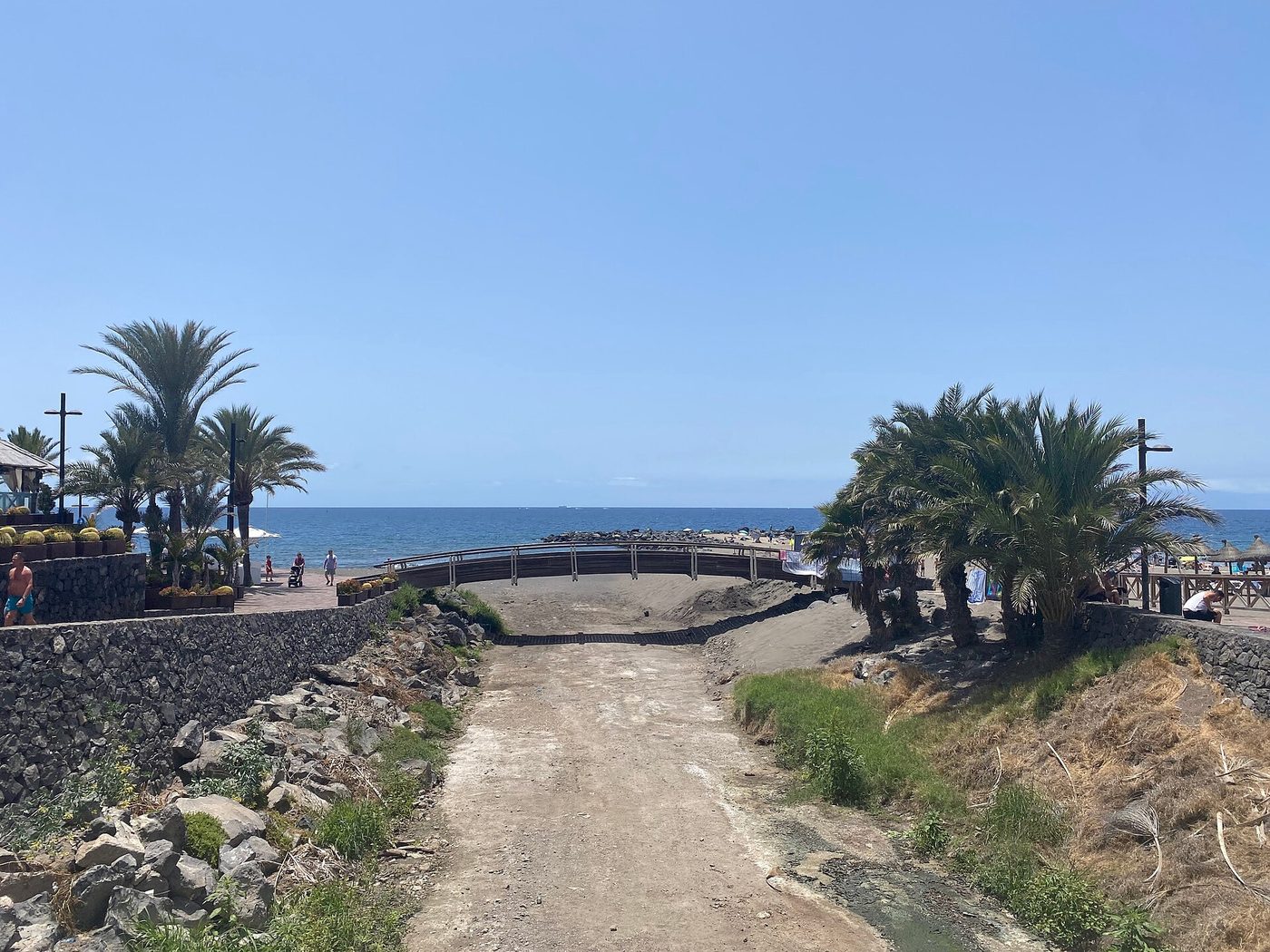
The coast itself is young and bare. At Playa del Bunker the shore preserves a raised fossil beach and the remains of an ancient dune system, protected as a palaeontological site.23 For centuries the land was dry pasture and later, with irrigation, farmland. In the nineteenth century much of it changed hands as the old lordships sold off their estates, and by the twentieth century families such as the Domínguez Alfonso of Arona owned large stretches of it and ran the municipality.6 The water brought by the Canal del Sur in the 1940s turned some of it into tomato fields.6
The idea
The story of the resort, as the Tenerife newspaper Diario de Avisos has told it, begins in 1965, when a Catalan businessman, Rafael Puig Llivina, and his son Santiago Puig arrived on the island. Encouraged by Barcelona bankers and by local partners, among them the builder Luis Díaz de Losada and the landowner Antonio Domínguez Alfonso, they saw a holiday town where there was only scrub and farmland. The company Playa de Las Américas S.A. was set up in June 1966 and began laying water mains, street lighting, telephone lines and roads, and planting some 5,000 palm trees brought from Elche.8 The architects working on Ten Bel, a few kilometres east, later remembered that Playa de las Américas began four or five years after their own project.7
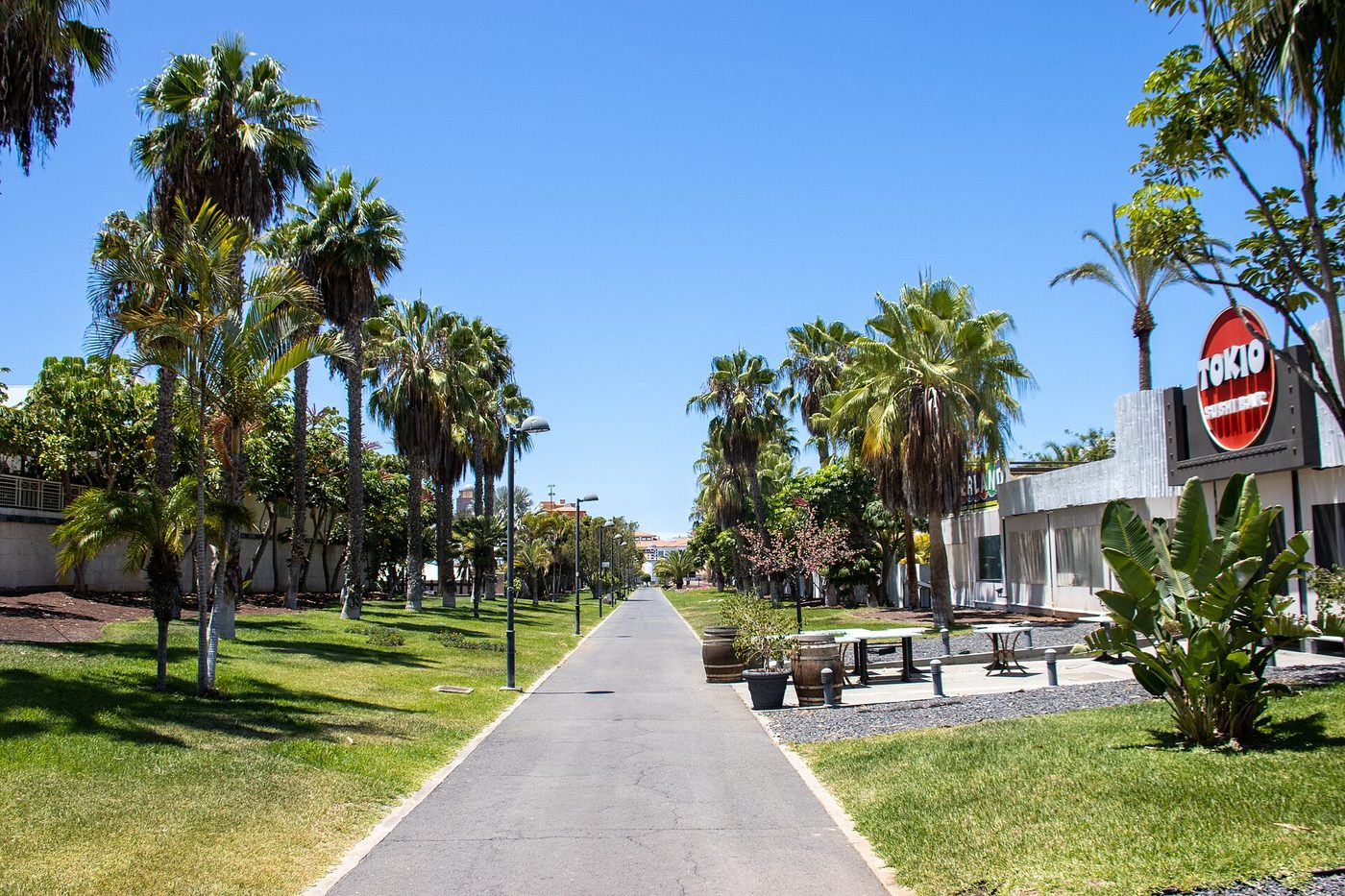
The planning rules of the time made it easy. Arona's general plan of 1966 declared the entire municipality available for development, and in Adeje a circular of the provincial planning commission of 1968 allowed tourist plans on rural estates without a general plan; the first two phases of the special plan for Playa de las Américas, on the Adeje side, were approved that year.48 The press account lists the first apartment complexes: Acapulco, Copacabana, Viña del Mar, Bungamérica, Troya and Paraíso del Sol.8
The first hotels
The first great hotel, the Gran Tinerfe, opened in 1972 with 360 rooms, four stars and two lake-shaped swimming pools designed by the Lanzarote artist César Manrique; months later it was visited by Prince Juan Carlos and Princess Sofía and their children. The Troya followed in 1973 and the Europe in 1974.89 The geographer Víctor Martín Martín identified two short building booms, from 1969 to 1973 and from 1986 to 1989, as the periods when most of the resorts of the south were built.5
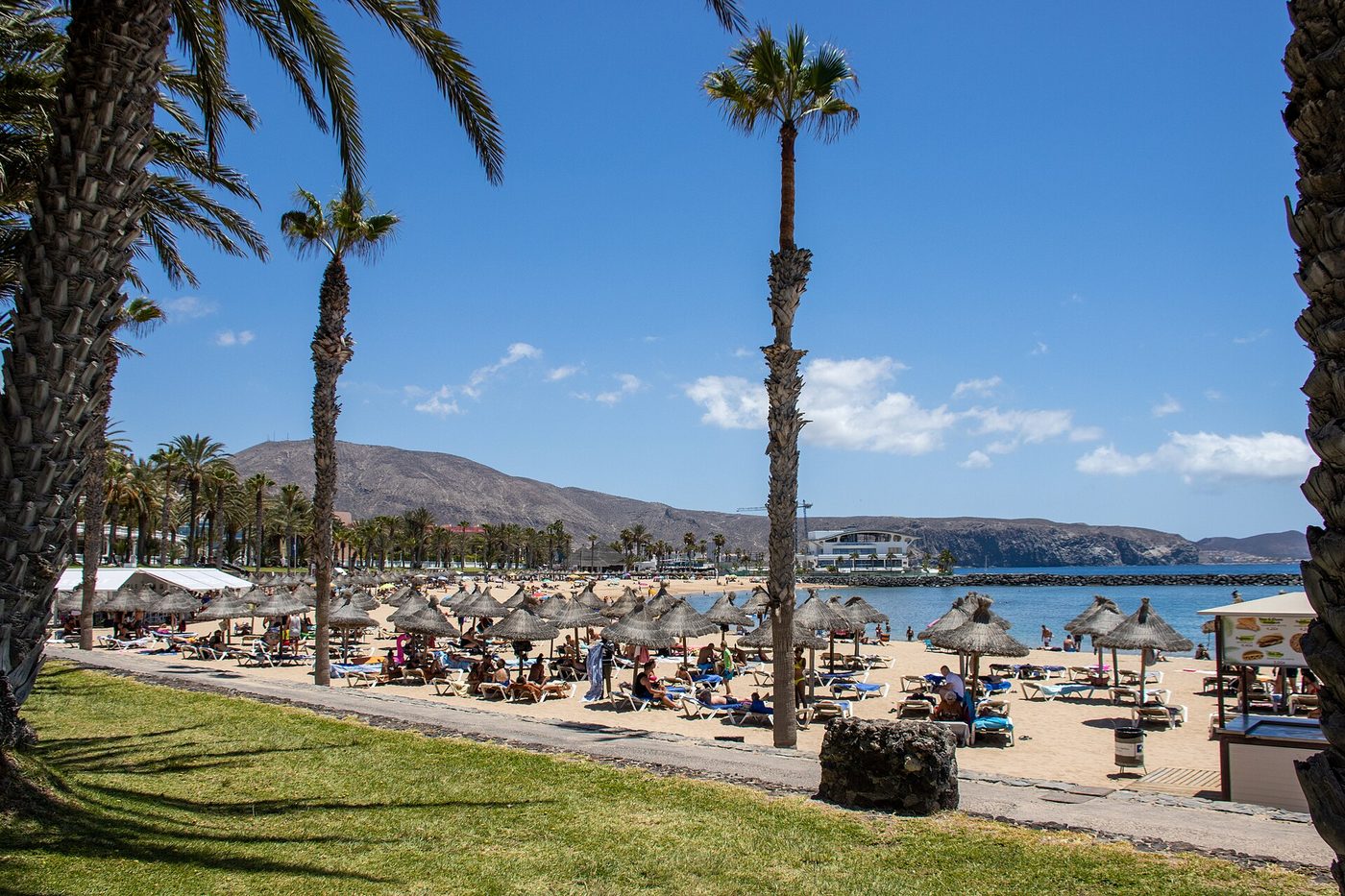
What really made the resort was transport. The southern motorway was finished in 1975 and the Reina Sofía airport, Tenerife South, opened in 1978, after the air disaster at Los Rodeos in the north the previous year.10 Charter flights from northern Europe did the rest. By the 1990s Arona's coastal strip, from Las Américas to Los Cristianos, was the centre of the island's tourist economy, and in the following decade the municipality had all but run out of land for new hotels.4
A town without a past?
Playa de las Américas is often described as a place without history, and in a sense that is true: nobody lived here before the developers came. But it is a historical document in its own right. Its grid of apartment blocks, its golf course on old farmland and its palm walks record the moment when the south of Tenerife exchanged tomatoes for tourists, and when, as the urban planning researcher Cristina García-Blanco argues, planning on the island worked in favour of expansion rather than restraint.4 Under the hotels and the nightlife, the engraved rocks of the Barranco del Rey are still there.2
Notes and sources
- 1.A. Mederos Martín and G. Escribano Cobo, "Prospección arqueológica de La Caleta de Adeje (Tenerife, Islas Canarias)", Revista de Historia Canaria 198 (2016), pp. 177-229 (the borders of the menceyato of Adeje and the revolt of 1502). riull.ull.es
- 2.Cabildo de Tenerife, Patrimonio Histórico de Tenerife. Catálogo de Bienes de Interés Cultural, 2018 (entries for the Barranco del Rey, Las Toscas and Playa del Bunker). tenerife.es
- 3.INVOLCAN, Geoturismo urbano de Tenerife: Arona-Adeje costa, 2019. tfgeoturismo.involcan.org
- 4.C. García-Blanco Chávez, "Turismo y territorio. La transformación del sur de Tenerife (1960-2018)", Territorios en Formación 23 (2025), DOI 10.20868/tf.2025.23.5625. polired.upm.es
- 5.V. O. Martín Martín, "Tenerife: coyuntura económica y transformación espacial en una isla turística", Cuadernos de Turismo 3 (1999), pp. 69-91. revistas.um.es
- 6.M. M. Chinea Oliva, "Las bases sociales del poder local. Algunos apuntes para su estudio en Arona (sur de Tenerife), 1900-1936", XIV Coloquio de Historia Canario-Americana (2000). revistas.grancanaria.com
- 7.Materia contemporánea. Javier Díaz-Llanos y Vicente Saavedra. 50 años de arquitectura, exhibition catalogue, TEA Tenerife Espacio de las Artes (interview with the architects). teatenerife.es
- 8.Press: J. C. Mateu, "Medio siglo del primer hotel en Playa de Las Américas", Diario de Avisos, 9 July 2022. diariodeavisos.elespanol.com
- 9.Press: "El Gran Tinerfe: así nació el primer gran hotel en Playa de las Américas", Diario de Avisos, 9 January 2026. diariodeavisos.elespanol.com
- 10.Opinion article: I. Vasallo, "Historia y desarrollo del turismo en el sur de Tenerife", Tourinews, 27 September 2021. tourinews.es
What's on in Arona now →
Fiestas, concerts and events from the town hall agenda, updated daily.
More towns in the series
La Laguna · Towns of Tenerife
San Cristóbal de La Laguna: a town planned for peace
Garachico · Towns of Tenerife
Garachico: the port the volcano took
Bajamar · Towns of Tenerife
Bajamar and Punta del Hidalgo: La Laguna's shore
Candelaria · Towns of Tenerife
Candelaria: the shrine on the shore
Santa Cruz de Tenerife · Towns of Tenerife
Santa Cruz: from army camp to capital
La Orotava · Towns of Tenerife
La Orotava: a town drawn with a cord
Adeje · Towns of Tenerife
Adeje: the kingdom, the fortress and the marquises
La Caleta · Towns of Tenerife
La Caleta: Adeje's old harbour
Los Cristianos · Towns of Tenerife
Los Cristianos: the south's harbour
Las Galletas · Towns of Tenerife
Las Galletas: salt, fish and a garden city
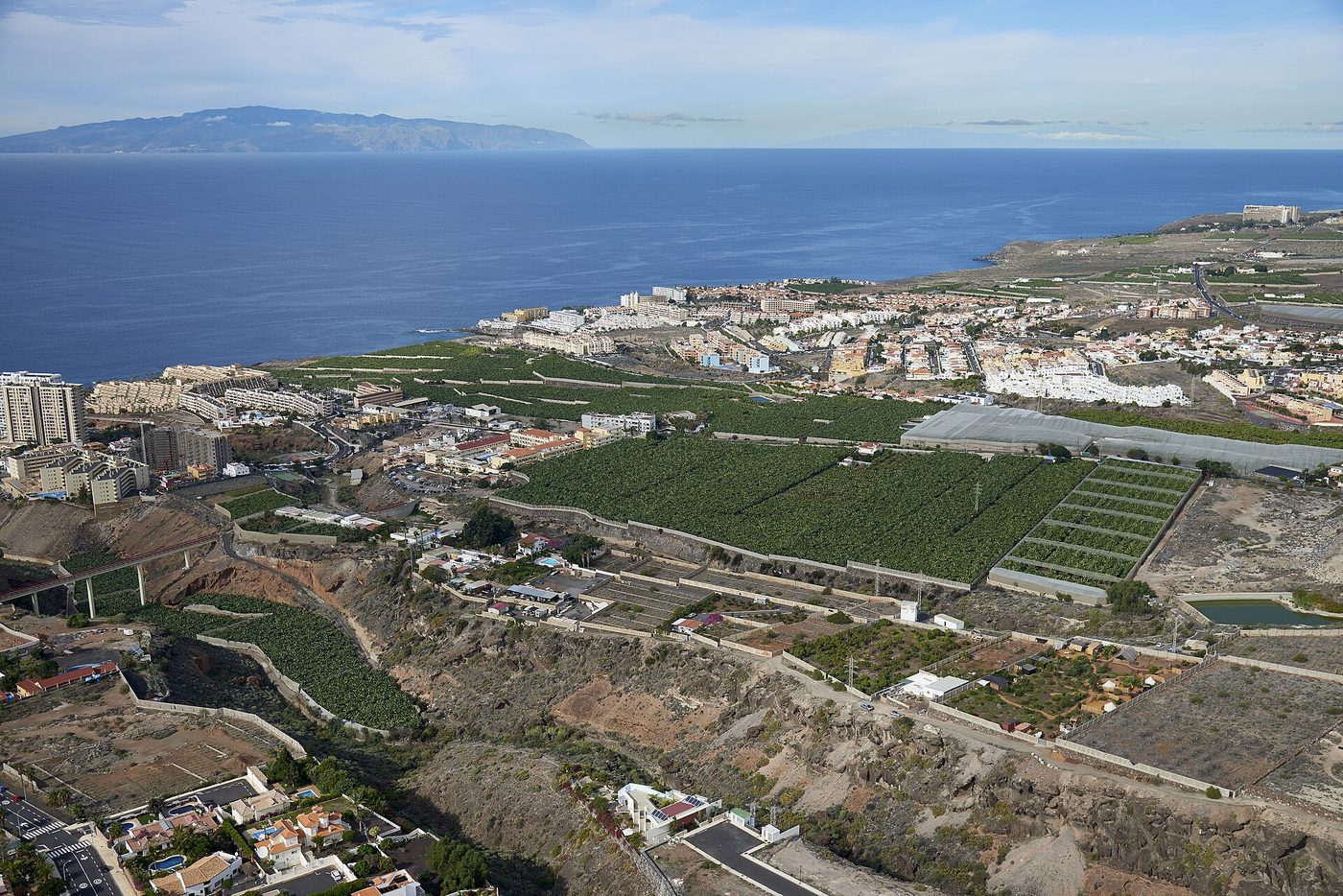
Callao Salvaje · Towns of Tenerife
Callao Salvaje: a resort by decree
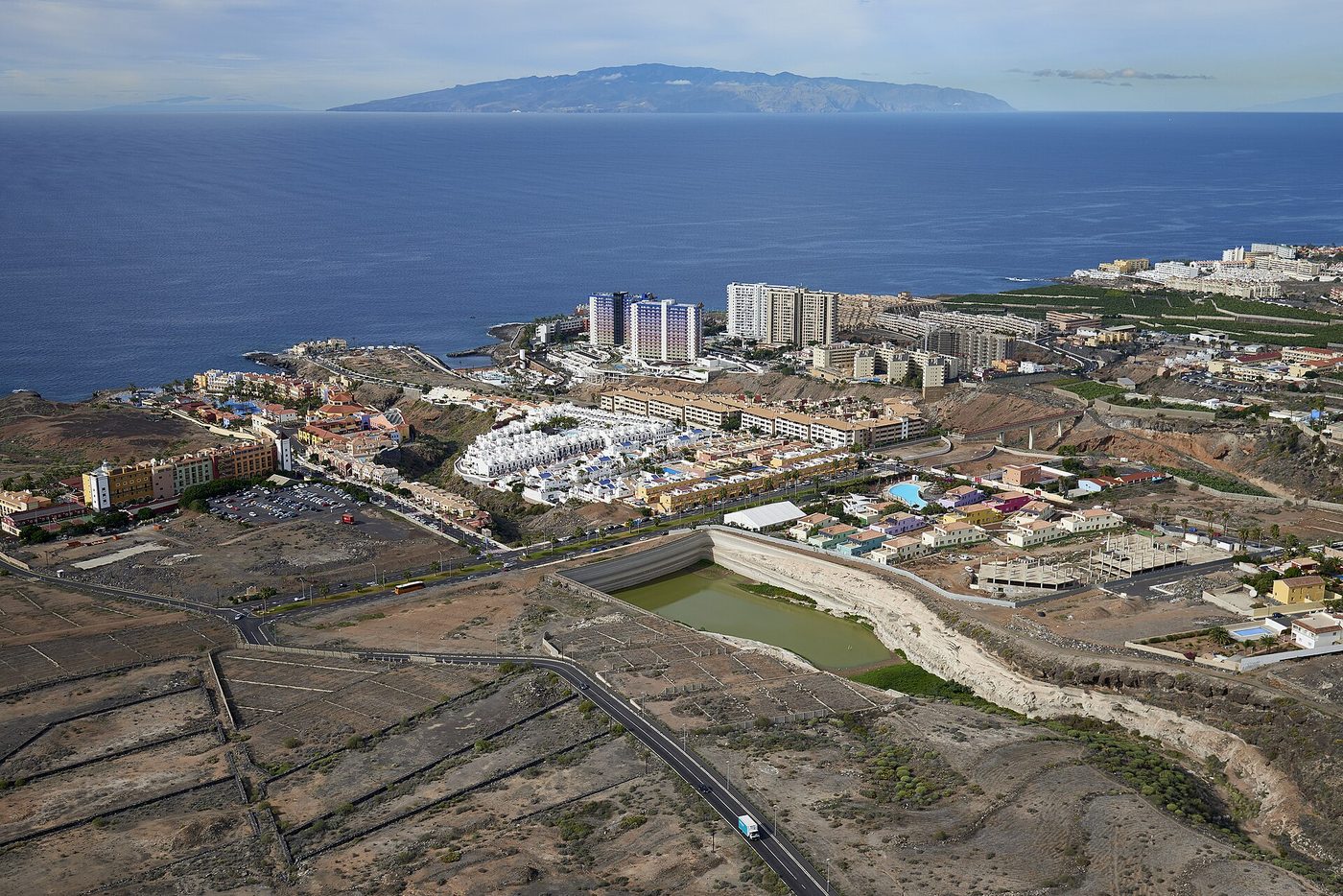
Playa Paraíso · Towns of Tenerife
Playa Paraíso: a paradise on paper
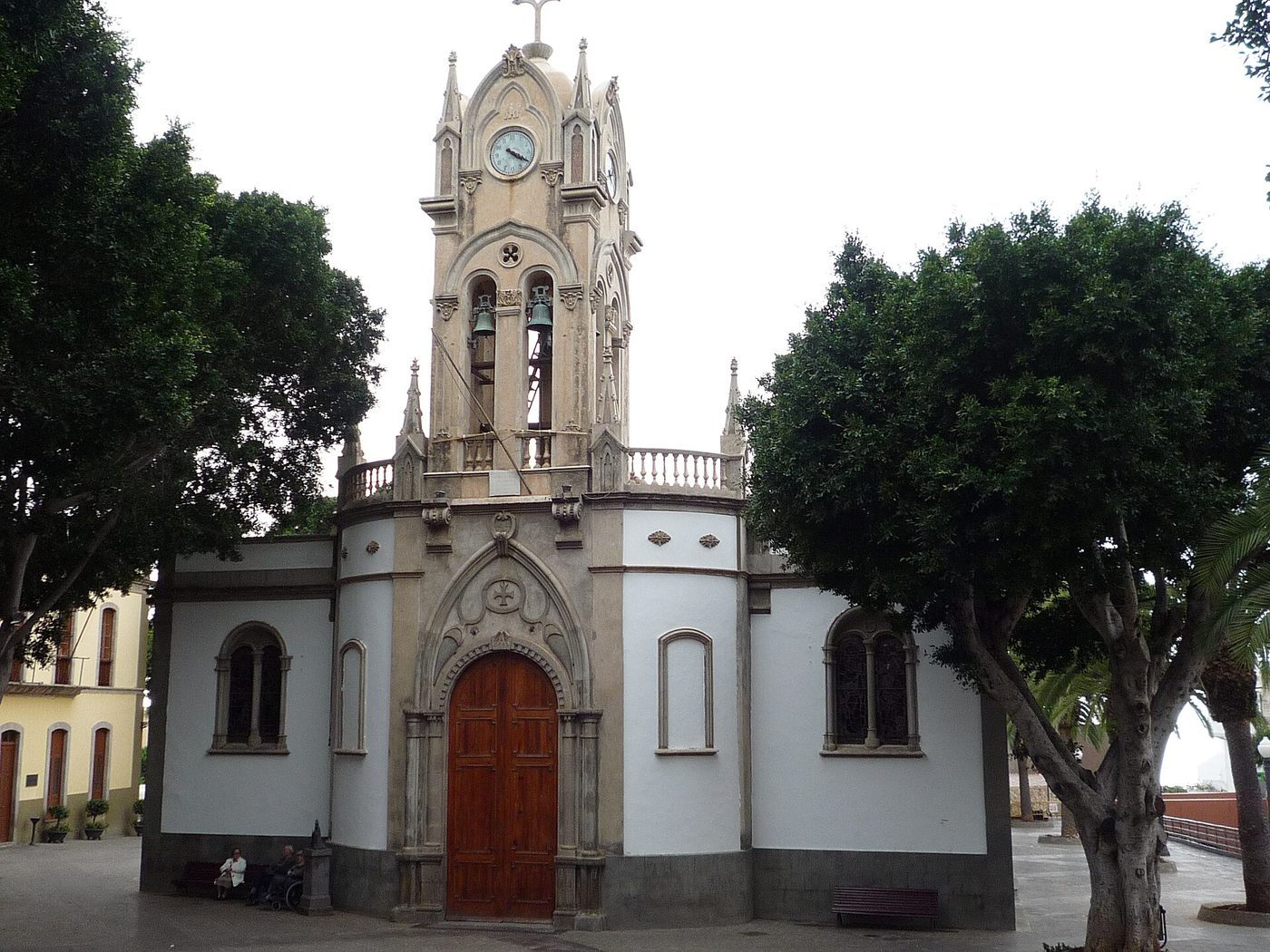
Guía de Isora · Towns of Tenerife
Guía de Isora: from Teide to the sea
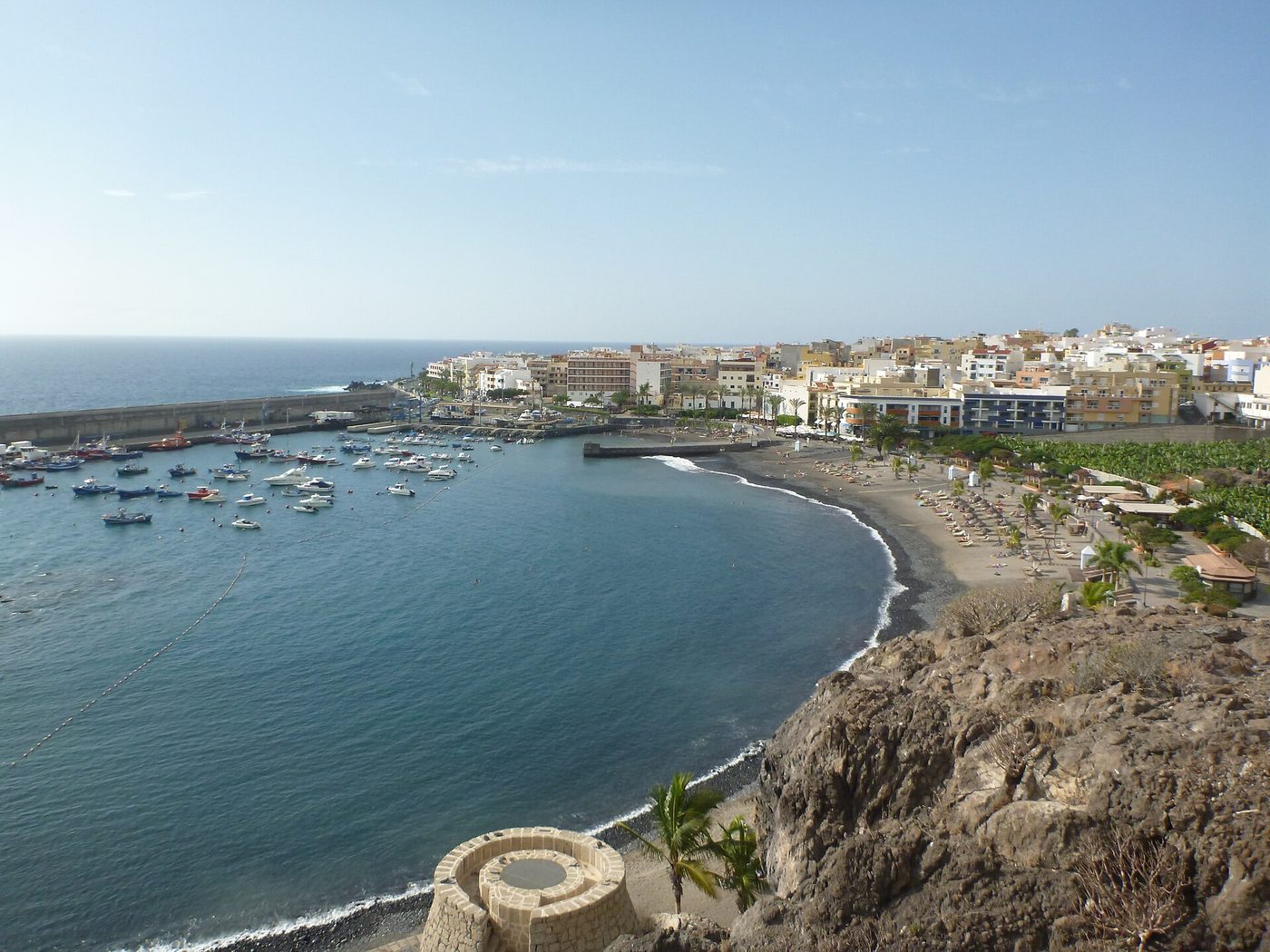
Playa San Juan · Towns of Tenerife
Playa San Juan: Guía de Isora's harbour
Alcalá · Towns of Tenerife
Alcalá: a fishing village on the lava
Puerto Santiago · Towns of Tenerife
Puerto Santiago and Los Gigantes: life below the cliffs
El Médano · Towns of Tenerife
El Médano: the harbour under the red mountain
Icod de los Vinos · Towns of Tenerife
Icod de los Vinos: the dragon tree and the cove of San Marcos
Puerto de la Cruz · Towns of Tenerife
Puerto de la Cruz: from wine port to the first resort
San Juan de la Rambla · Towns of Tenerife
San Juan de la Rambla: a village on the badlands
Buenavista del Norte · Towns of Tenerife
Buenavista del Norte: a planned town at the end of the island