
Alcalá · Towns of Tenerife
Alcalá: a fishing village on the lava
Lava tongues that reached the sea thousands of years ago, a Guanche shell midden known as "the money box", a chapel to the Virgin of Candelaria, salt pans and a road that arrived in the 1930s. The small history of a fishing village on the west coast.
3 min read · 4 sources · Updated October 2026
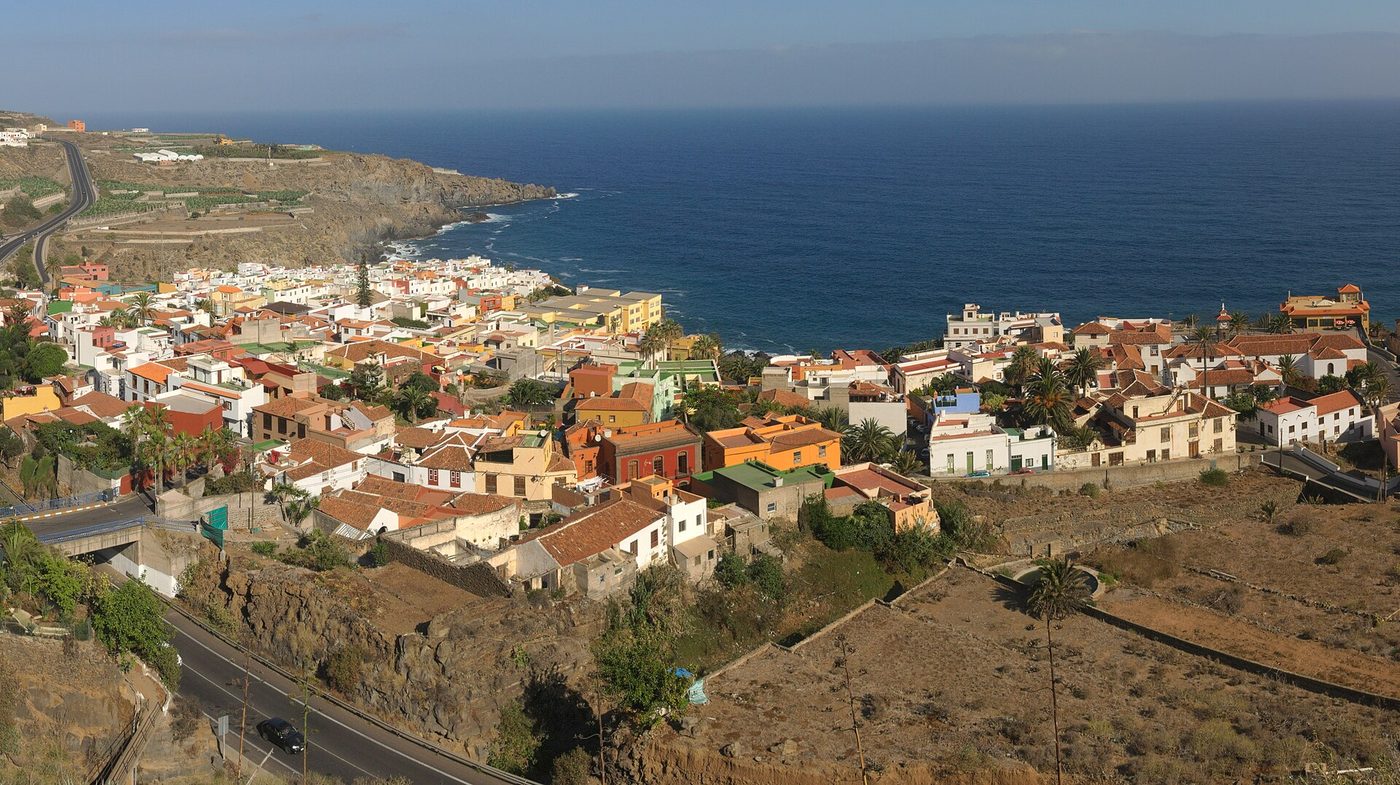
Alcalá · Dreol, CC BY-SA 3.0
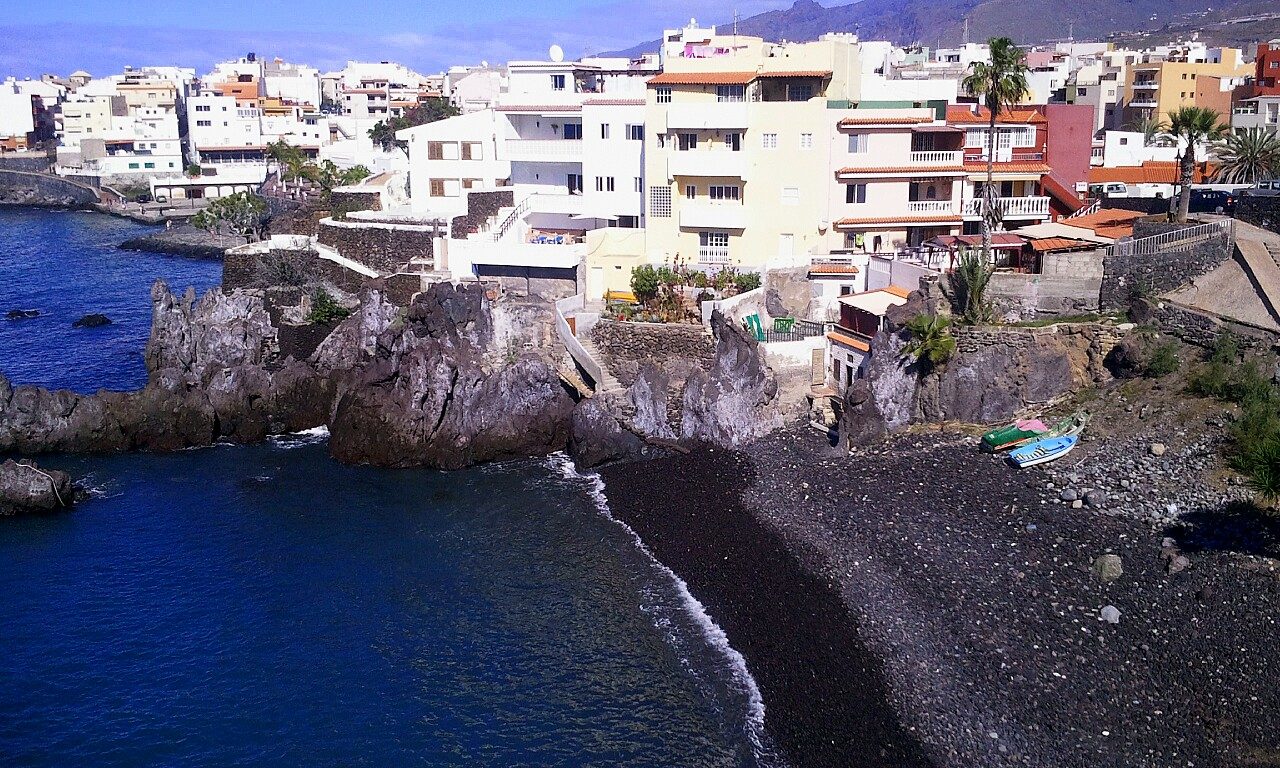
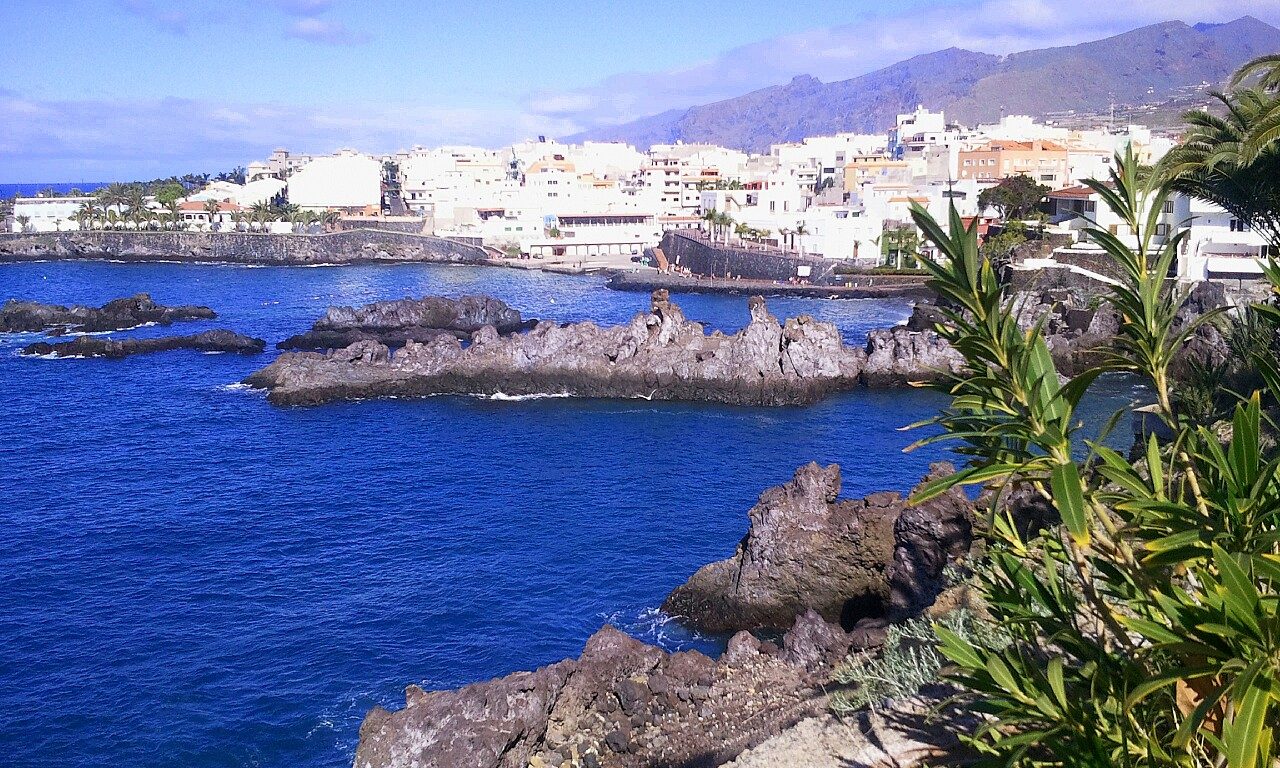
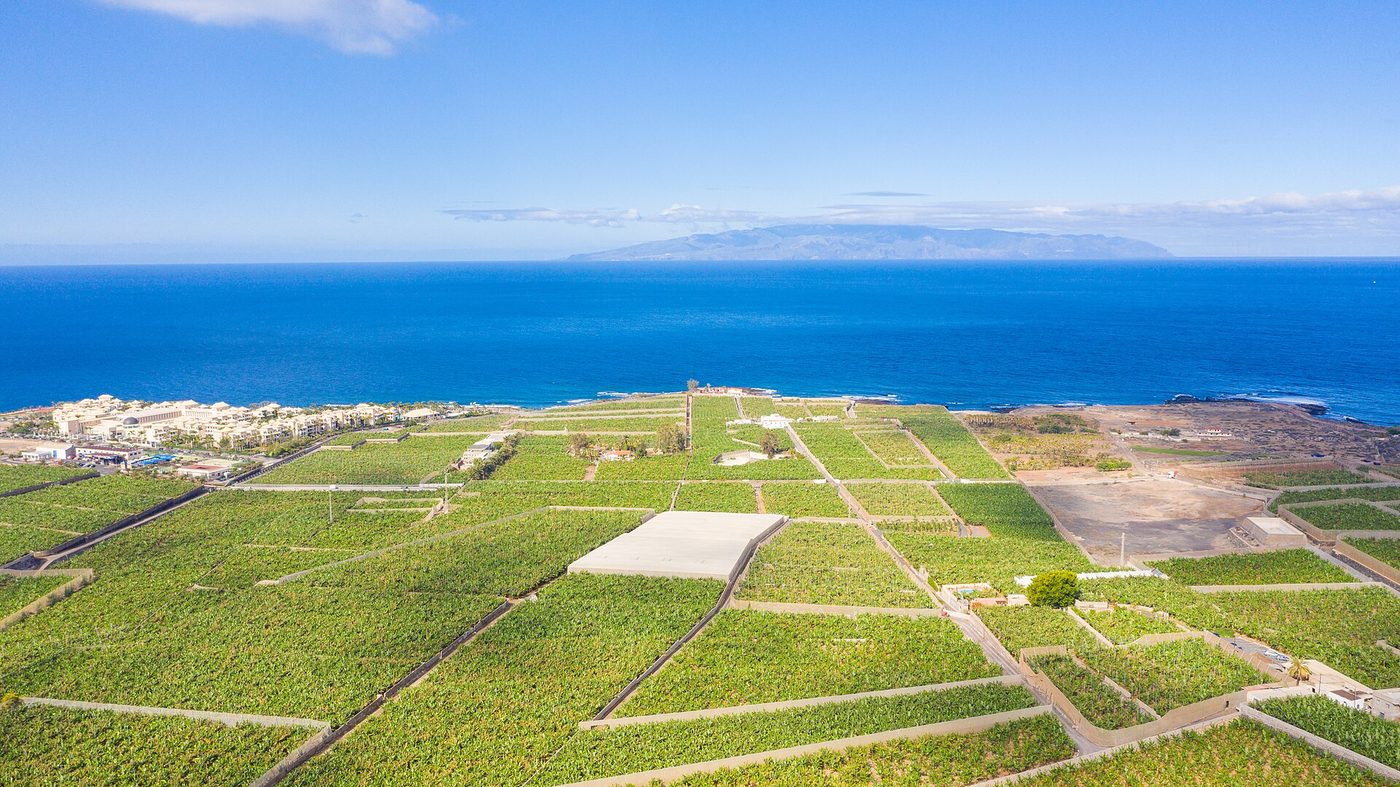
Alcalá sits on a low platform of black lava on the west coast of Tenerife, a few kilometres north of Playa San Juan, looking straight across the water at La Gomera. It is a village of fishermen's houses, a little harbour and a chapel, now flanked by banana plantations and large hotels. Its documented history is short, but the rocks it stands on and the shells left by its first visitors tell a much older story.
Lava and limpets
The coast here was built by volcanoes long before anyone lived on Tenerife. Two lava flows reached the sea near Alcalá: one from Montaña Botija, between Guía de Isora and Chío, which ends just south of the beach, and one from Montaña de Chío, which runs out between Alcalá and Playa San Juan. Both have been dated to several thousand years ago, before the island was first settled.1 The tongues of lava that run into the sea form the little coves and rock pools that shape the village.
The Guanches came to this shore to fish and gather shellfish. On one of those lava tongues, about 20 metres above the sea, archaeologists have recorded a shell midden of more than 400 square metres, known locally as La Caja del Dinero, "the money box": a mound of limpets, top shells and other molluscs, mixed with aboriginal pottery and flakes of obsidian and basalt. Nearby a natural rock shelter, partly closed by a stone wall and with a view over the whole coast, held the same kind of debris.1 On the hills of La Tablada, above Alcalá, a large scatter of pottery and shells and a small stone structure suggest a lookout over the coast of Alcalá and Varadero.1 The archaeologists read the coastal sites of Guía de Isora as seasonal camps, used for herding, shellfish gathering and fishing.1
A chapel and a road
The village that grew up around the cove after the conquest kept its fishing tradition.4 Its chapel is dedicated to the Virgin of Candelaria. The art historian María Jesús Riquelme recorded two images there in the 1980s: an anonymous nineteenth-century figure modelled on the lost original of Candelaria, by then retired to the sacristy, and a larger dressed image made in 1970 by the sculptor Ezequiel de León, placed in a niche of the main altarpiece.2
Getting to Alcalá was long a problem. According to the local historian Marcos Brito, the coast road from Playa San Juan was built only in the early 1930s; along the way stood the salt pans of Fonsalía, just outside Alcalá.3 The archaeological survey of the municipality likewise stresses how isolated this part of the island remained until roads were built in the 1930s.1
Today
The terraces behind Alcalá are now covered with banana plantations, and large hotels have been built on the coast nearby. The village has kept its fishing harbour and its pier, from which boats still go out, and its seafront fish restaurants are its best-known attraction.4
Notes and sources
- 1.A. Mederos Martín, G. Escribano Cobo and V. Valencia Afonso, "Grabados rupestres, espacios domésticos y prácticas funerarias en el municipio de Guía de Isora (Tenerife, Islas Canarias)", Anuario de Estudios Atlánticos 72 (2025), 072-001 (sites Conchero de Alcalá I, Alcalá II and La Tablada; the lava flows of Montaña Botija and Montaña de Chío, after Carracedo and others, 2008). revistas.grancanaria.com
- 2.M. J. Riquelme Pérez, La Virgen de Candelaria y sus santuarios, doctoral thesis, Universidad de La Laguna, 1988 (catalogue entry for the hermitage of Candelaria in Alcalá). riull.ull.es
- 3.Local historian: M. Brito, "Playa de San Juan. Guía de Isora" (blog post, 18 December 2020). marcosbritom.blogspot.com
- 4.Cabildo de Tenerife (Wonderful Tenerife), Descubre Guía de Isora, tourist guide. wonderfultenerife.com
What's on in Guía de Isora now →
Fiestas, concerts and events from the town hall agenda, updated daily.
More towns in the series
La Laguna · Towns of Tenerife
San Cristóbal de La Laguna: a town planned for peace
Garachico · Towns of Tenerife
Garachico: the port the volcano took
Bajamar · Towns of Tenerife
Bajamar and Punta del Hidalgo: La Laguna's shore
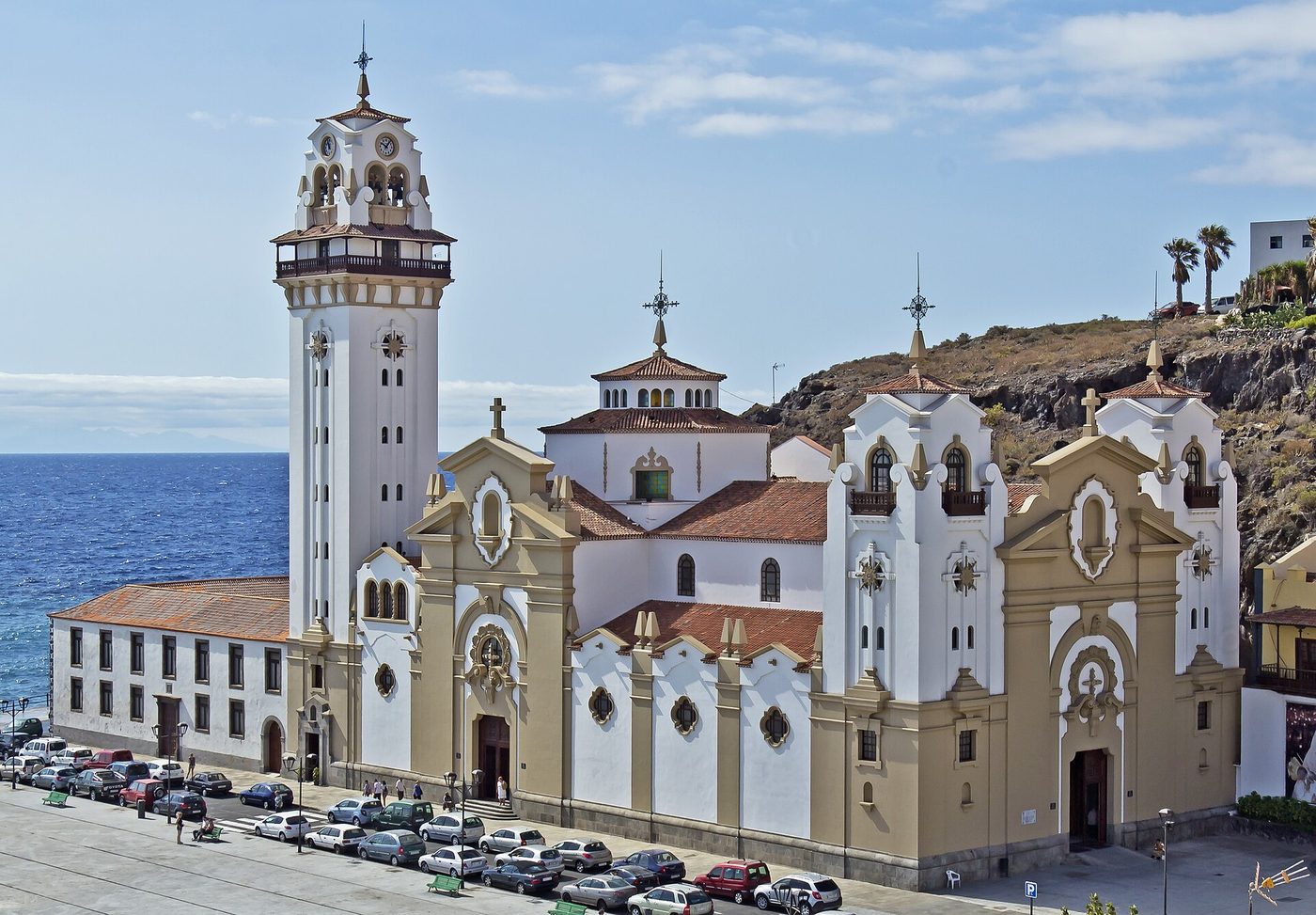
Candelaria · Towns of Tenerife
Candelaria: the shrine on the shore
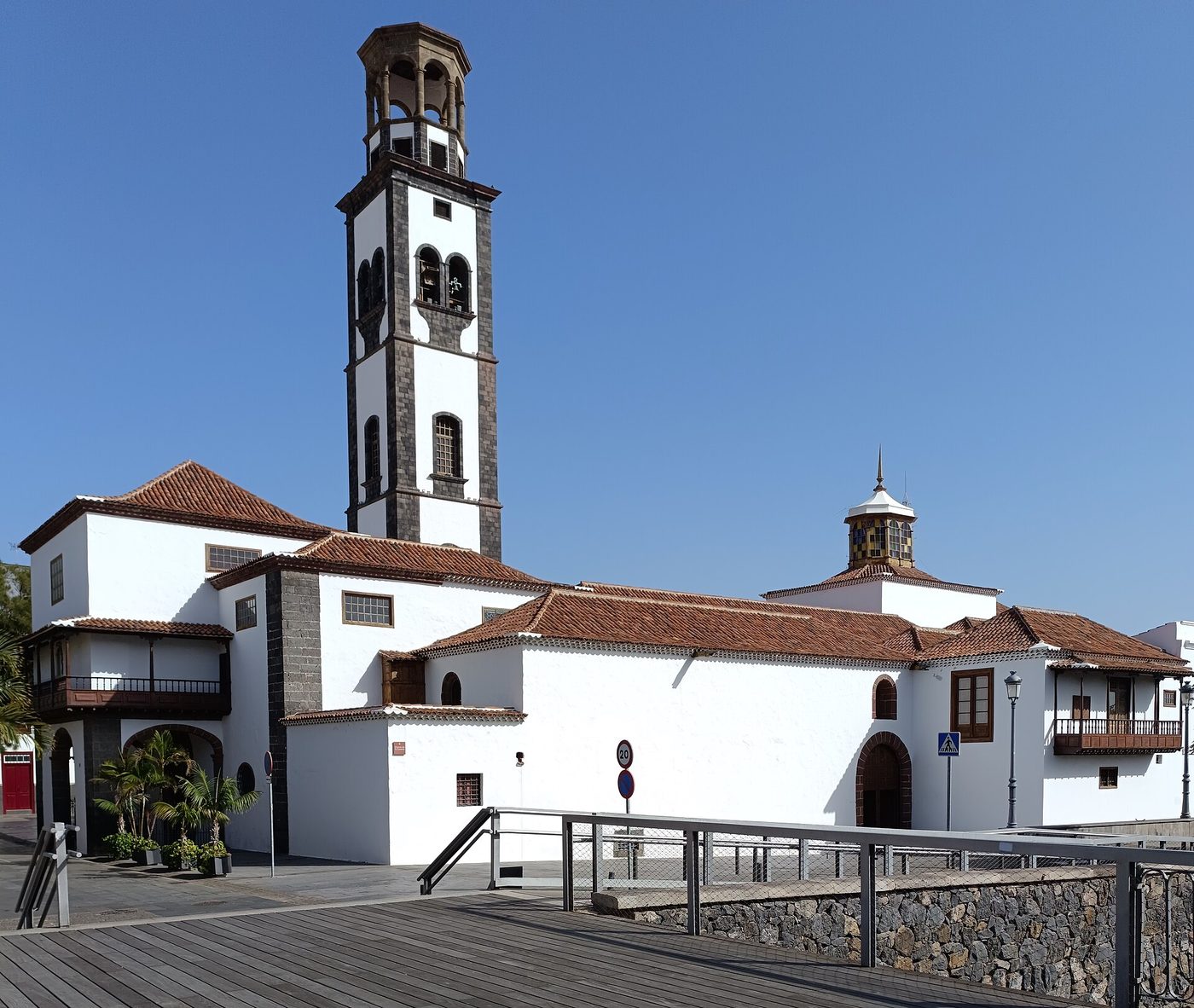
Santa Cruz de Tenerife · Towns of Tenerife
Santa Cruz: from army camp to capital
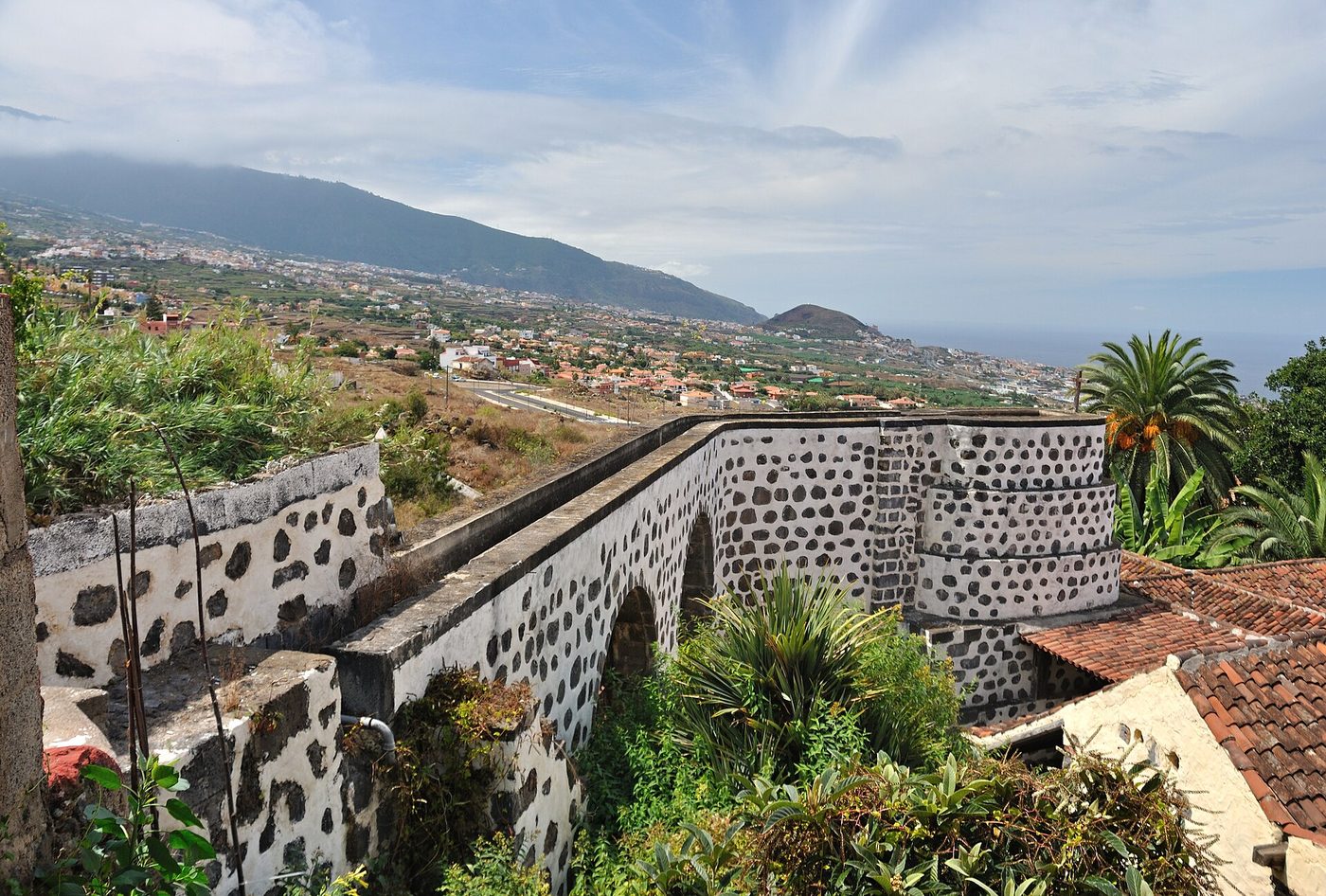
La Orotava · Towns of Tenerife
La Orotava: a town drawn with a cord
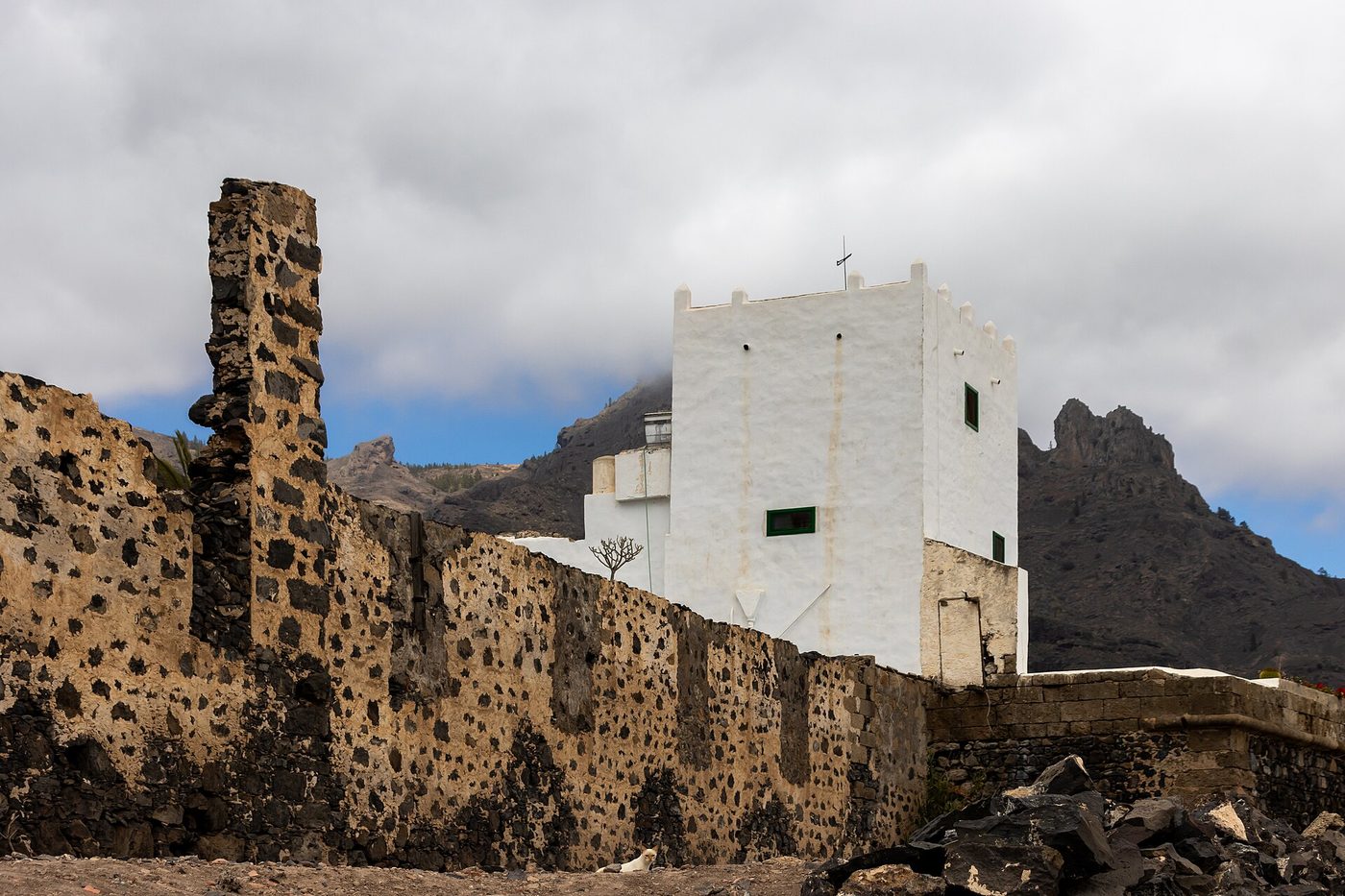
Adeje · Towns of Tenerife
Adeje: the kingdom, the fortress and the marquises
La Caleta · Towns of Tenerife
La Caleta: Adeje's old harbour
Los Cristianos · Towns of Tenerife
Los Cristianos: the south's harbour
Las Galletas · Towns of Tenerife
Las Galletas: salt, fish and a garden city
Playa de las Américas · Towns of Tenerife
Playa de las Américas: a resort from scratch
Callao Salvaje · Towns of Tenerife
Callao Salvaje: a resort by decree
Playa Paraíso · Towns of Tenerife
Playa Paraíso: a paradise on paper
Guía de Isora · Towns of Tenerife
Guía de Isora: from Teide to the sea
Playa San Juan · Towns of Tenerife
Playa San Juan: Guía de Isora's harbour
Puerto Santiago · Towns of Tenerife
Puerto Santiago and Los Gigantes: life below the cliffs
El Médano · Towns of Tenerife
El Médano: the harbour under the red mountain
Icod de los Vinos · Towns of Tenerife
Icod de los Vinos: the dragon tree and the cove of San Marcos
Puerto de la Cruz · Towns of Tenerife
Puerto de la Cruz: from wine port to the first resort
San Juan de la Rambla · Towns of Tenerife
San Juan de la Rambla: a village on the badlands
Buenavista del Norte · Towns of Tenerife
Buenavista del Norte: a planned town at the end of the island