
Icod de los Vinos · Towns of Tenerife
Icod de los Vinos: the dragon tree and the cove of San Marcos
A Guanche kingdom on a lava flow from Pico Viejo, a saint found in a sea cave, a cove named after a dragon tree in 1501, pine forests that reached the sea, a failed royal squadron, a Dutch attack in 1599, wine, tuna and bananas. The story of Icod and its harbour.
6 min read · 3 sources · Updated October 2026
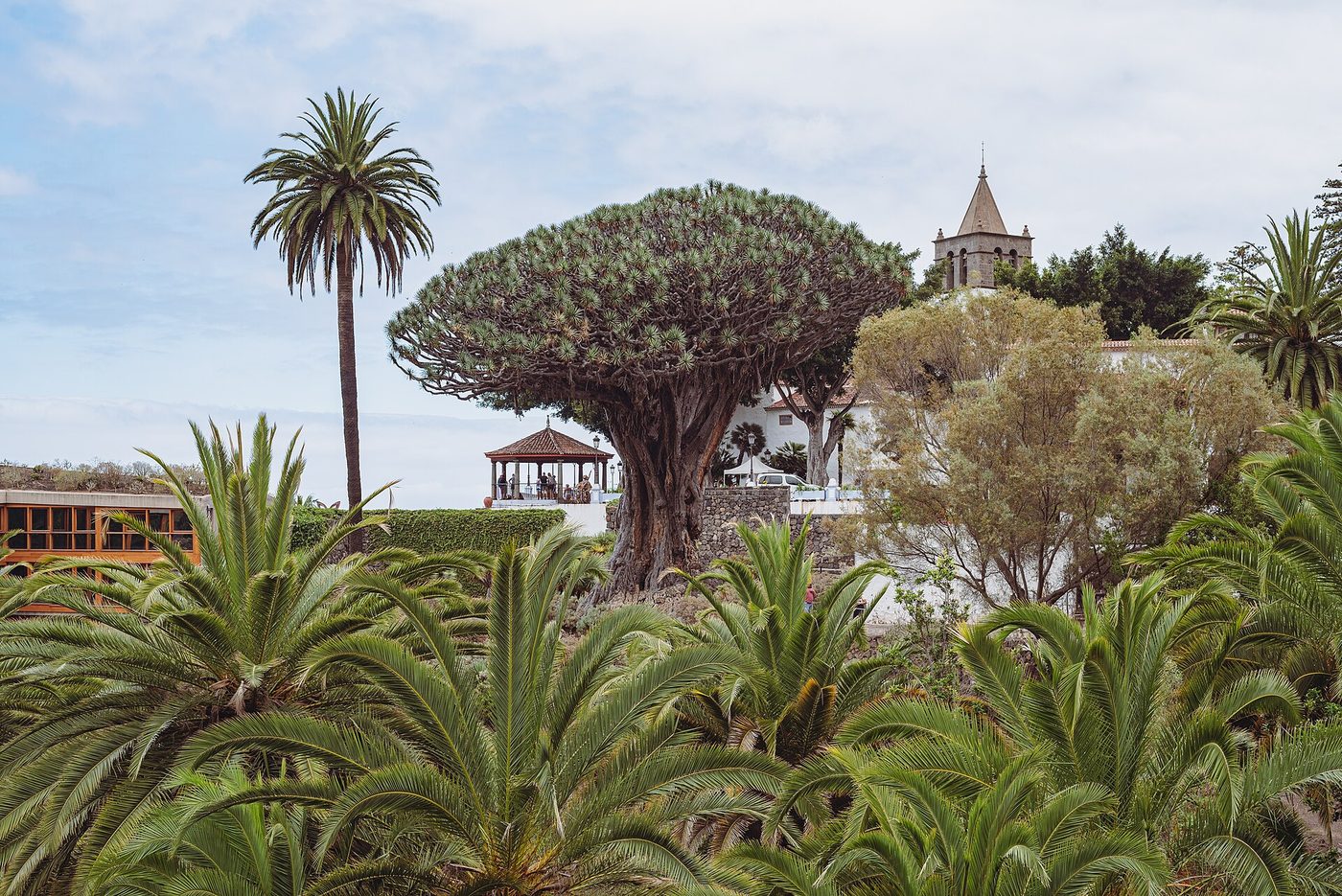
The Drago of Icod · Flocci Nivis, CC BY-SA 4.0
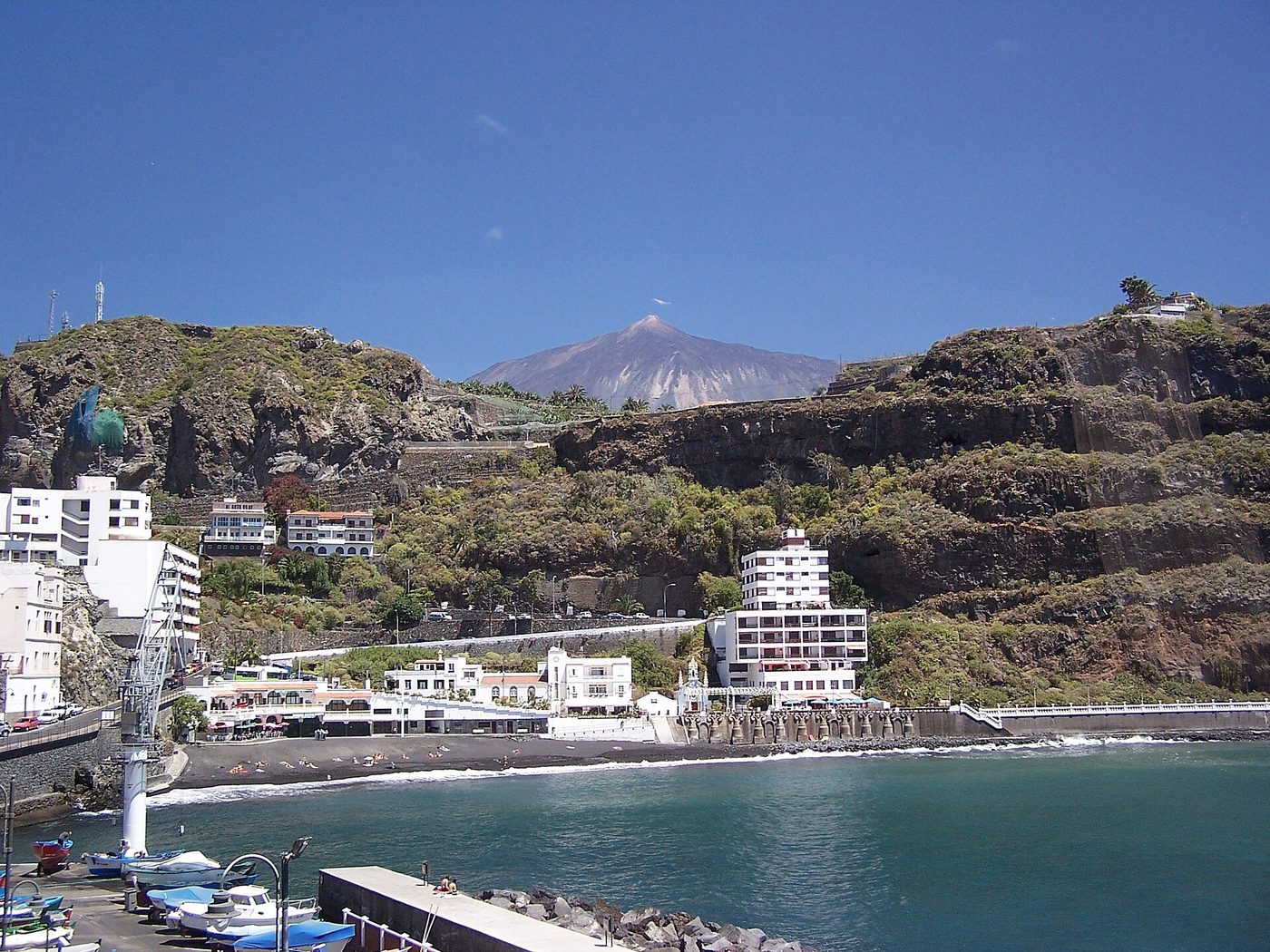
Icod de los Vinos stretches for more than eight kilometres from the slopes of Teide and Pico Viejo down to the Atlantic, on the north-west coast of Tenerife.3 It is known around the world for one tree, the great dragon tree beside the church of San Marcos. But the town's history is better told from its shore, from the small cove of San Marcos below it, which for centuries was one of the best natural harbours on the north coast of the island.1
A kingdom on the lava
Before the conquest Icod was the seat of one of the Guanche kingdoms of Tenerife. The nineteenth-century physician and ethnographer Juan Bethencourt Alfonso placed its western border with the kingdom of Daute at the far end of the beach of San Marcos.1 A tradition recorded by the friar Alonso de Espinosa in 1594 even made Icod the place where the island's first settlers lived: the old Guanches, he wrote, said that sixty people had come to the island long ago and made their home near Icod.1
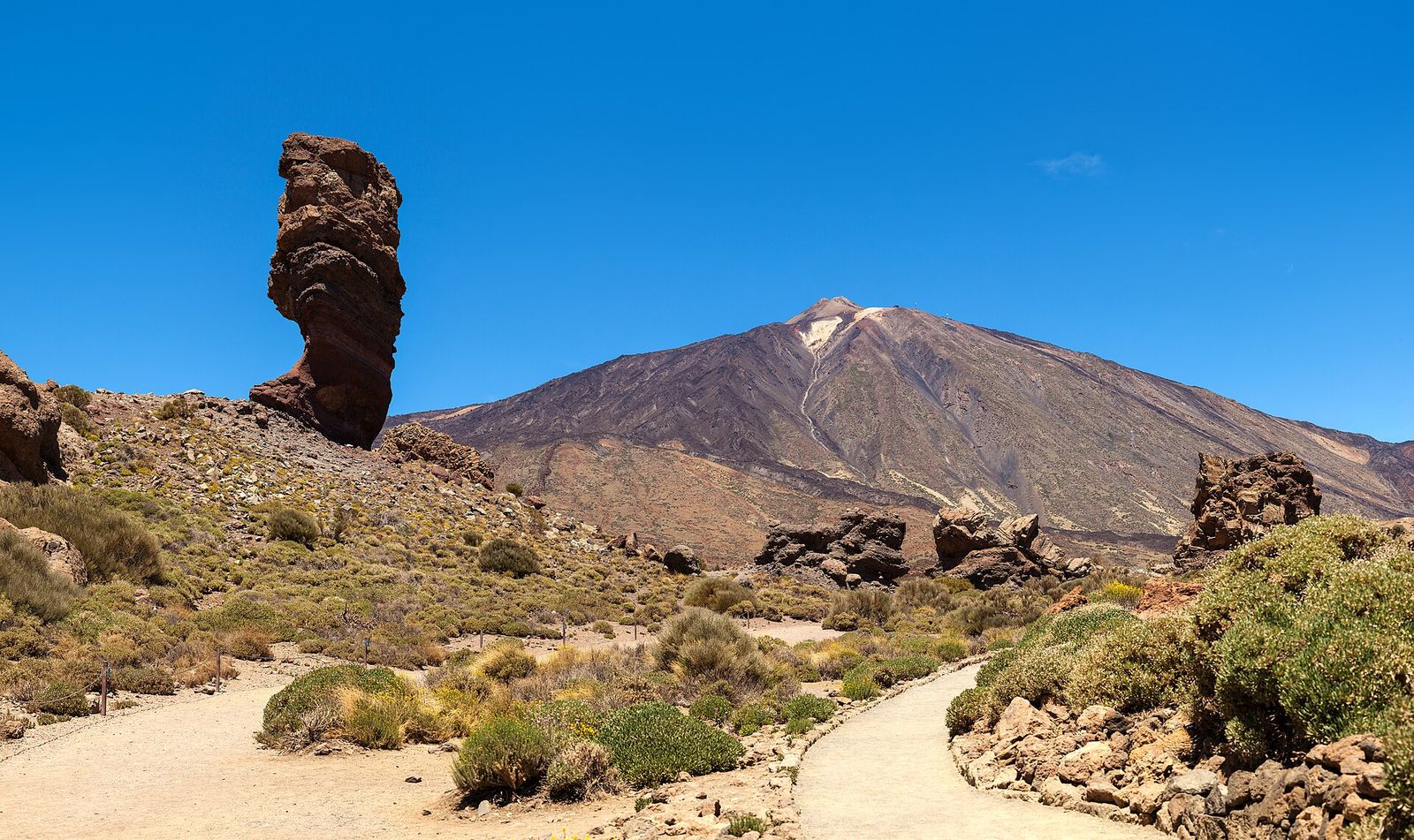
The landscape gave Icod something unusual. A great lava flow from Pico Viejo runs down to the sea at San Marcos, and it did two things. It formed the lava tube of the Cueva del Viento, whose lower end probably reached the beach, and it carried the pine forest almost to the shore, something rare on the north coast. The same lava gave the Guanches plenty of obsidian without a climb to Las Cañadas.1 Archaeology has left a dense record here. Above the cliffs of Playa Moreno, the Cueva de los Guanches is a lava tube with dry-stone structures, used seasonally by the Guanches; oral tradition says that the mencey of Icod lived there.2 In the caves of Don Gaspar, excavations recovered charred seeds of wheat, barley and beans dated between the third century BC and the third century AD.2 Two burial caves at San Marcos, studied in 1948 by the archaeologist Luis Diego Cuscoy, held human remains.1
A saint from the sea
The cove was already known before the conquest. In 1479 Alonso Fernández de Lugo, the future conqueror of the island, landed here at night on a raid and carried back to Gran Canaria goats, wax, hides and barley.1 According to the chroniclers of the sixteenth and seventeenth centuries, at about the same time as the Virgin of Candelaria appeared in the south, an image of Saint Mark was found in a cave by the sea at Icod, and it gave the cove its name.1 The archaeologists Alfredo Mederos and Gabriel Escribano suggest that a figure of the patron saint of Venice could point to Venetian sailors along the African coast in the late Middle Ages, but that remains a hypothesis.1 The island council's heritage catalogue describes the image as probably Flemish; the church of San Marcos built for it in the town became a parish early in the sixteenth century, in 1515 according to the catalogue, and took its present form, with the tower that dominates it, in the seventeenth century.12
The oldest name of the cove has a familiar ring. A land grant of 1 January 1501 calls it "the cove of the dragon tree of Icod", and another of 1503 mentions "a large dragon tree" on the way to Daute. Whether either is the tree that still stands beside the church cannot be proved.1
Pine, ships and a Dutch fleet
The forest that came down to the sea made San Marcos a timber port. In 1521 pine was shipped from here to build the Franciscan monastery at Gáldar on Gran Canaria, and as early as 1514 there were requests to cut timber in the badlands of Icod. Within a decade the damage was so great that in 1525 the island council banned pitch kilns in Icod, Garachico and Daute.1 The beach also had a shipyard: in 1562 a caravel and three smaller boats were built here.1
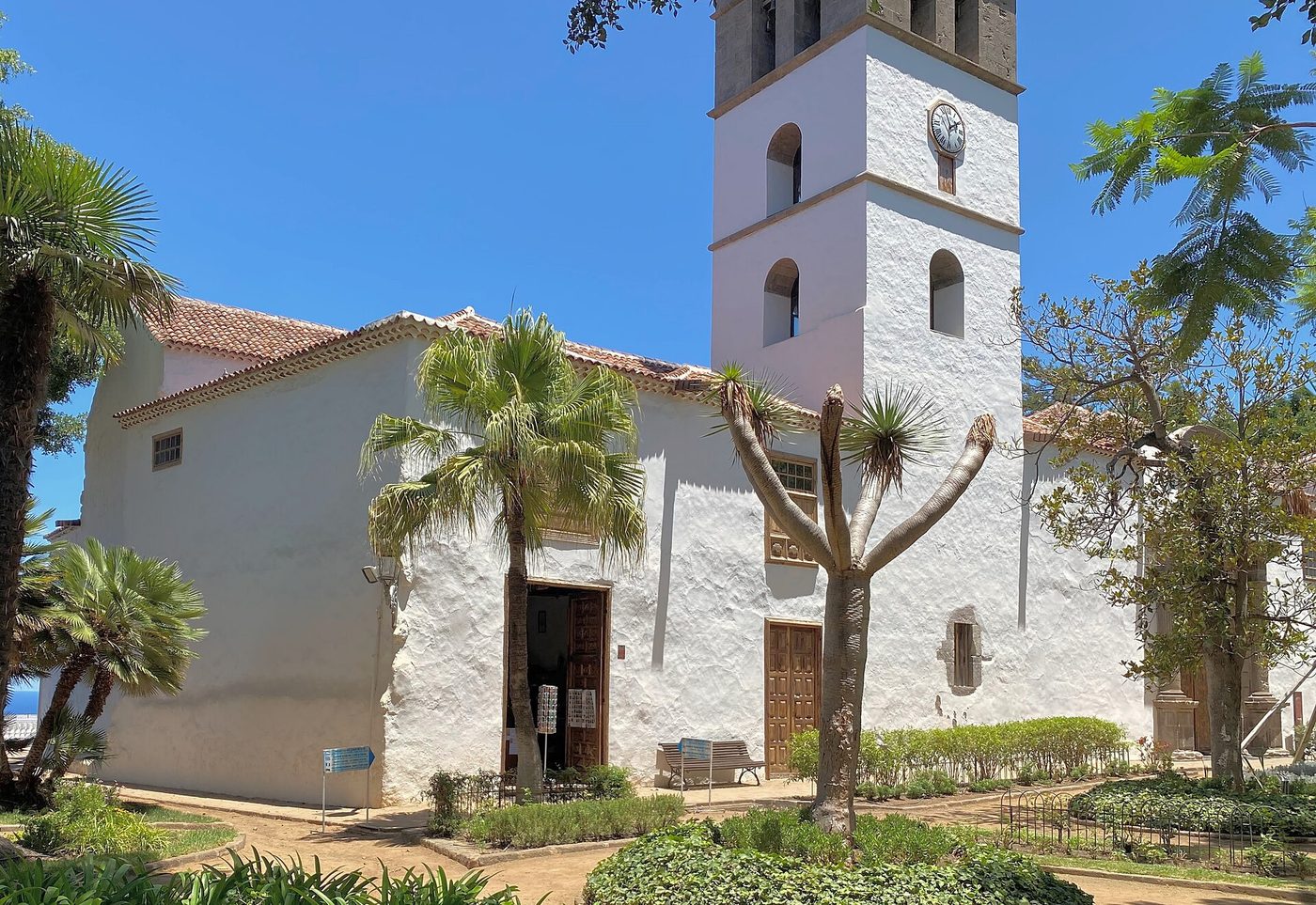
The most ambitious project came at the end of the century. In 1590 the captain general of the Canaries, Luis de la Cueva, began building a small war fleet at San Marcos to defend the islands, paid for by all the island councils: three frigates of more than 250 tonnes and a galleon. Militiamen from Icod did the work, with pine brought down from the hills. The frigates were finished by 1592, but they lacked guns and rigging, the green timber rotted, rats ate the sails, and by 1596 the council described them as ruined. Historians have called the squadron a failed project.1 In July 1599 part of the Dutch fleet of Pieter van der Does, which had just sacked Las Palmas, appeared off the cove with five large ships and seven smaller ones. Guns on shore and three armed vessels sheltering in the cove drove them off.1
Wine, bananas and tuna
The eruption that destroyed the port of Garachico in 1706 also hurt San Marcos, which had worked as its partner and refuge.1 Even so, a description of the islands written in the 1740s noted that "many wines and brandy" were loaded at the cove, together with timber for building, and that there was fresh water on the beach itself.1 The wine is in the town's name.
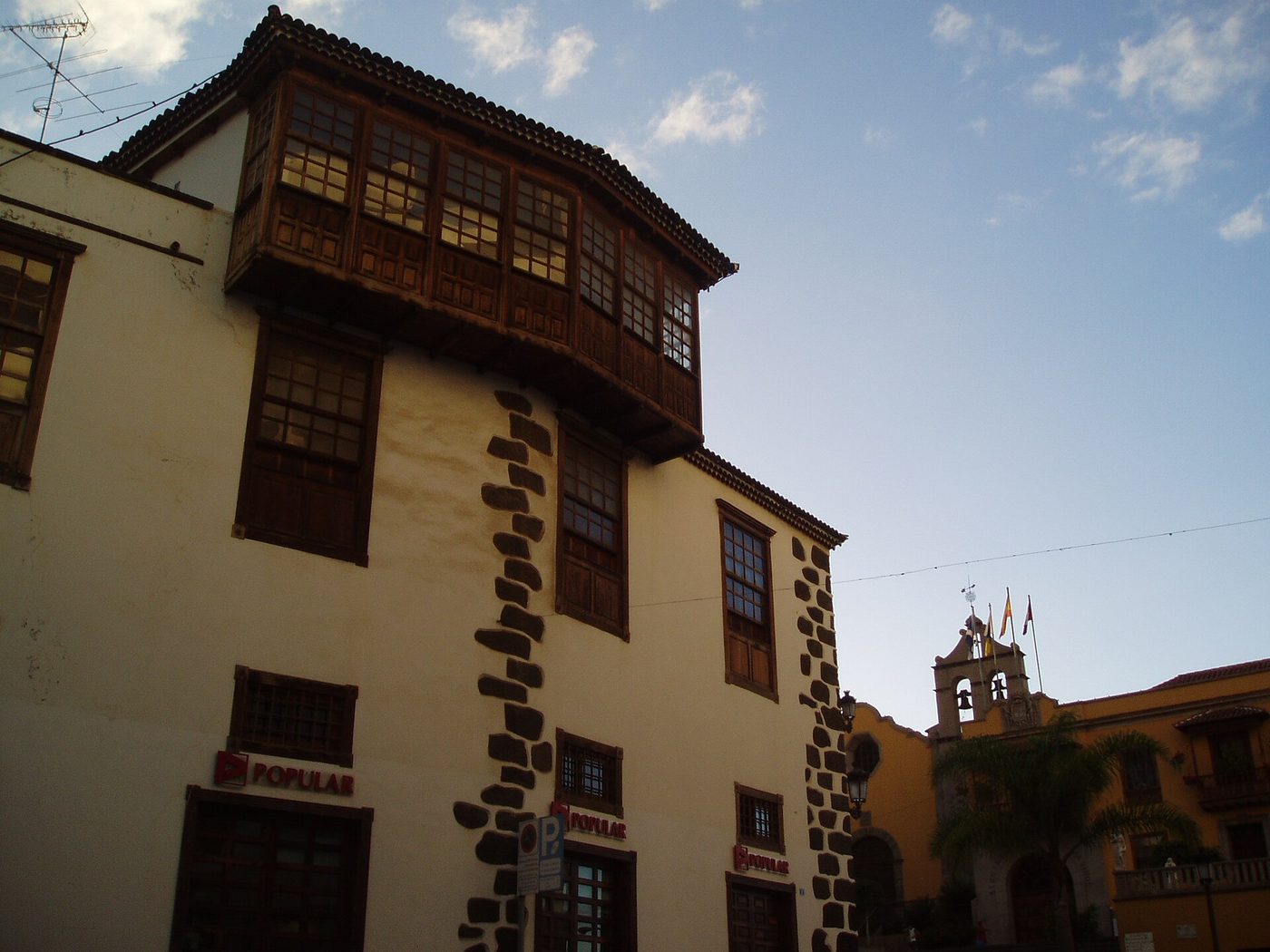
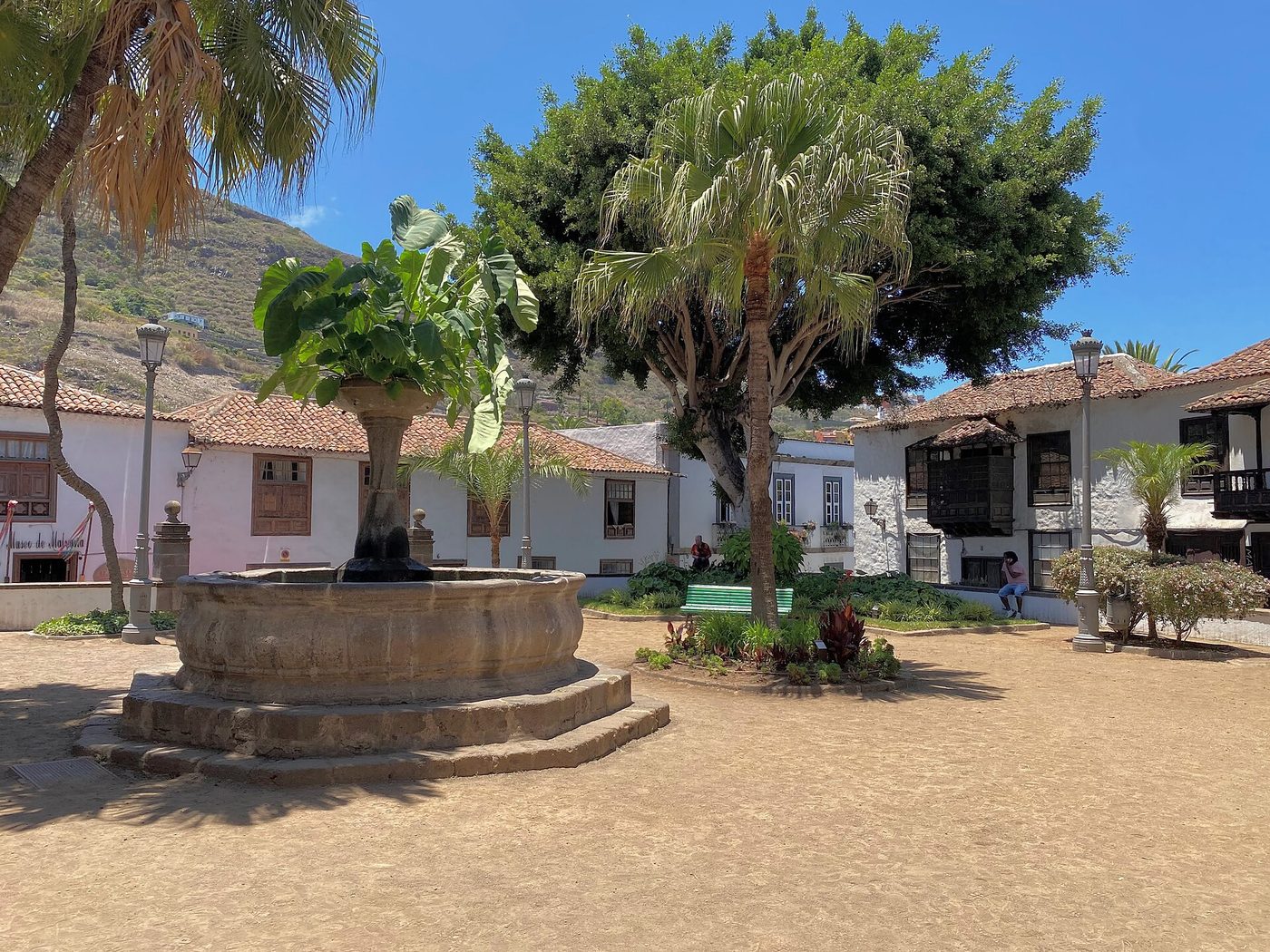
The town above prospered on that trade. Its historic centre grew from the settlement founded after the conquest, and its finest houses, built around central patios in the eighteenth century, stand around the Plaza de La Pila.2 The Franciscans founded their convent of the Espíritu Santo in 1641; the hermit Pedro de la Cruz founded the sanctuary of El Amparo in the hills at the end of the sixteenth century; and the church of San Marcos gathered works by Martínez Montañés, Martín de Andújar and José de Arce, and a great silver filigree cross from Havana.2 Another Christ, in the chapel of the Calvario, was brought from Havana in 1729.2
In the nineteenth century the town fought for a proper quay. Plans were drawn up in 1870 and again in the 1880s; work began in 1888, and a small quay was finished in 1896 after storms had damaged it again and again. In 1896 and 1897 the firm Elder Dempster built two fruit packing sheds by the cove, and in 1909 the port received 36 steamers and 15 sailing ships; from 1912 the inter-island mail steamers called here.1 A larger harbour was planned in 1933, when banana and tomato exports passed twenty million kilos, but the Civil War stopped it before work began.1
The sea gave fish as well as trade. Tuna passed along the north coast between spring and autumn, and lookouts on the Punta de la Atalisca, "the little watchtower", spotted the shoals by the seagulls circling over them. In 1982 there were still 205 fishermen at San Marcos, and the fishing harbour with its slipway was finished in 1984.1
Notes and sources
- 1.A. Mederos Martín and G. Escribano Cobo, "Prospección arqueológica de la Caleta de San Marcos (Icod de los Vinos, Tenerife)", Canarias Arqueológica 20 (2014), pp. 9-62 (drawing on the island council minutes, early land grants, A. de Espinosa, 1594, J. Bethencourt Alfonso, 1912, A. Rumeu de Armas and M. Brito, 2005, on the port works). museosdetenerife.org
- 2.Cabildo de Tenerife, Patrimonio Histórico de Tenerife. Catálogo de Bienes de Interés Cultural, 2018 (entries for the historic centre of Icod, the church of San Marcos, the convent of the Espíritu Santo, the Calvario, El Amparo, the Cueva de Don Gaspar and the Cueva de los Guanches). tenerife.es
- 3.INVOLCAN, Geoturismo urbano de Tenerife: Icod de los Vinos, 2019. tfgeoturismo.involcan.org
What's on in Icod de los Vinos now →
Fiestas, concerts and events from the town hall agenda, updated daily.
More towns in the series
La Laguna · Towns of Tenerife
San Cristóbal de La Laguna: a town planned for peace
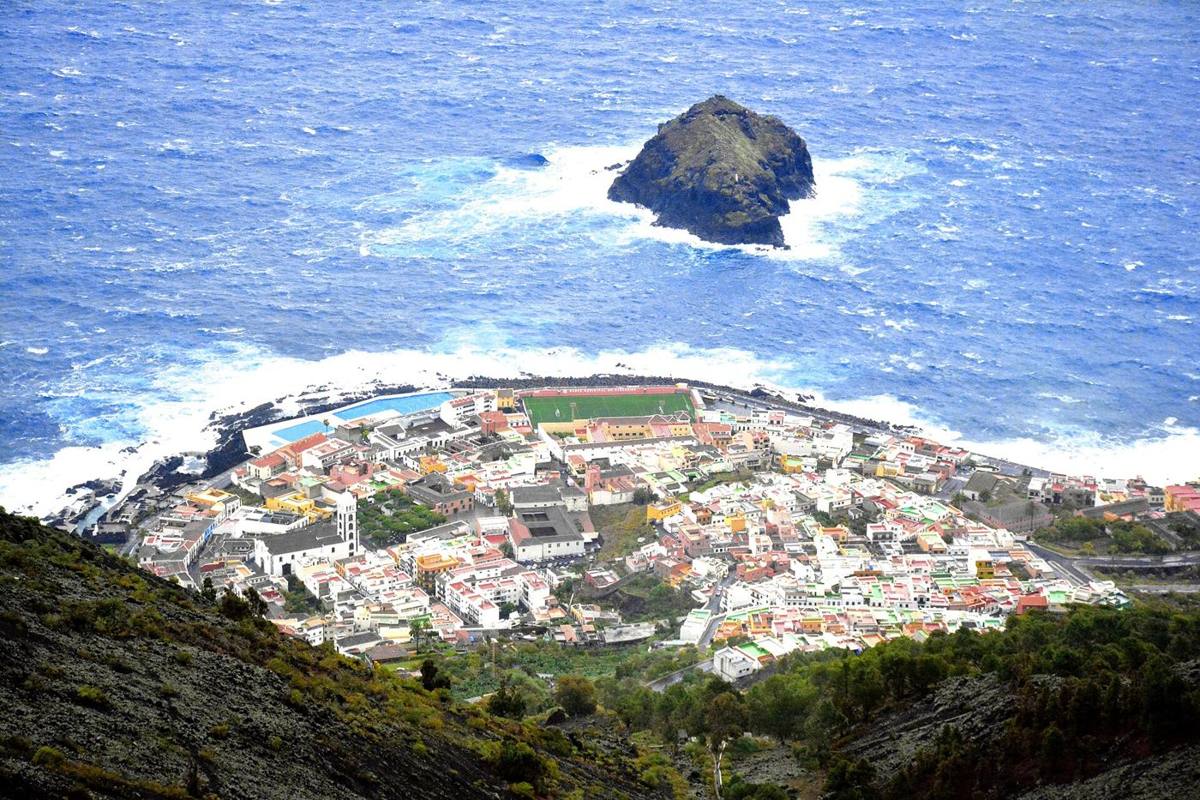
Garachico · Towns of Tenerife
Garachico: the port the volcano took
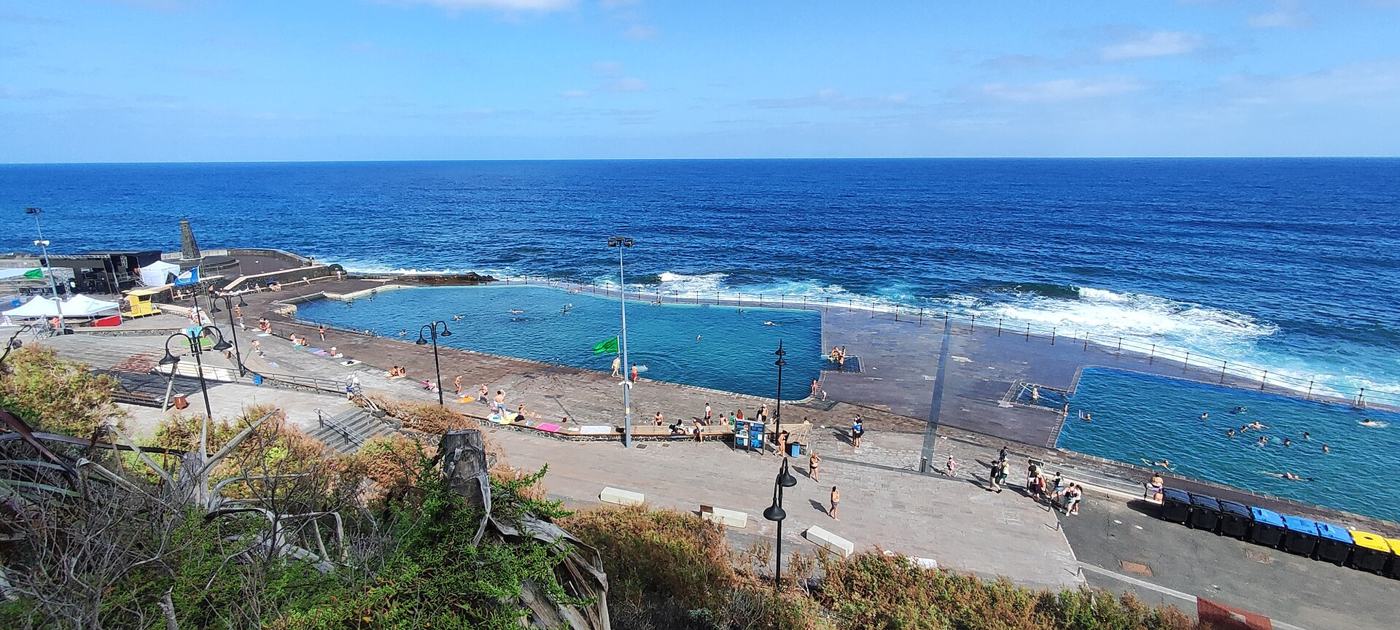
Bajamar · Towns of Tenerife
Bajamar and Punta del Hidalgo: La Laguna's shore
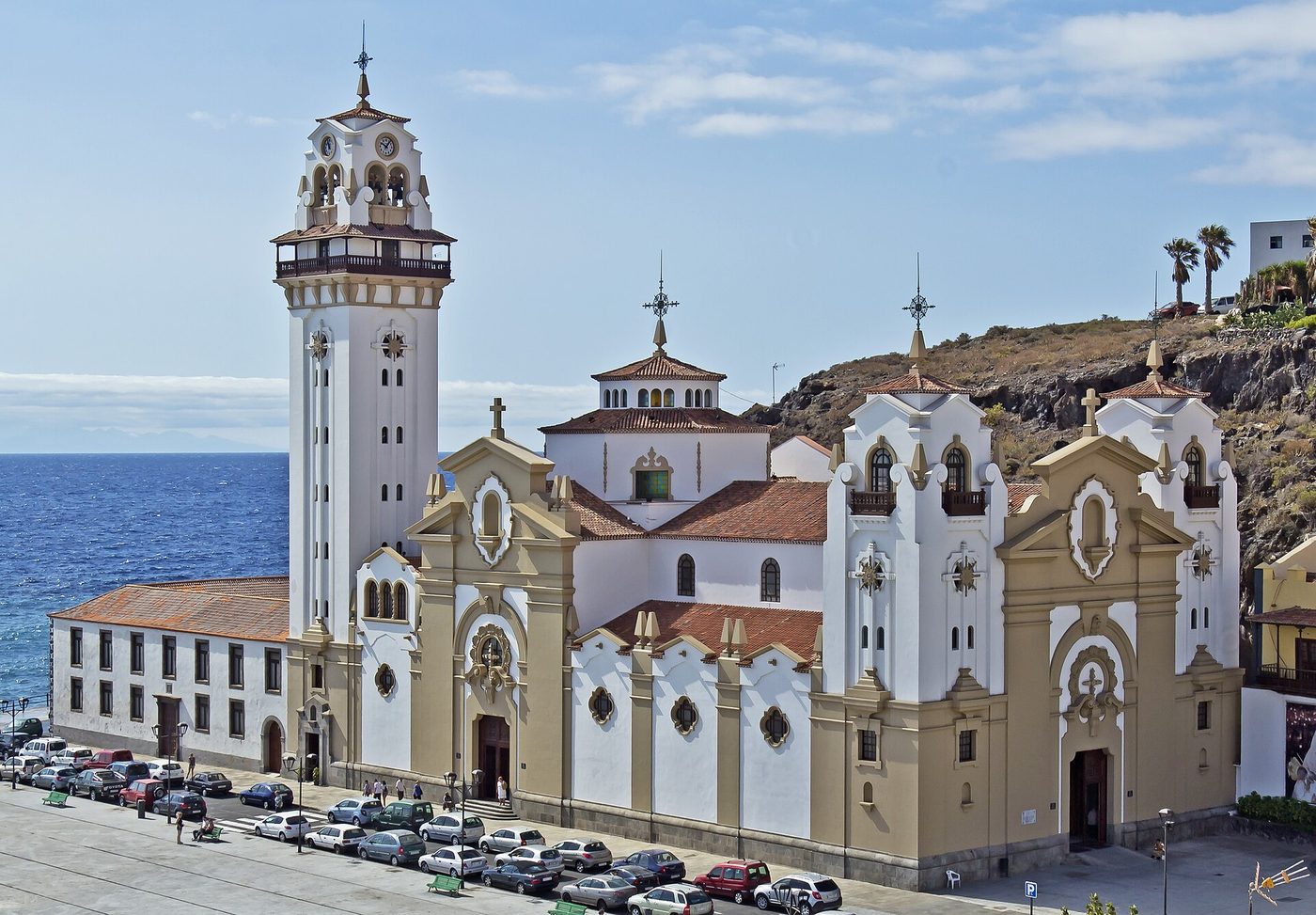
Candelaria · Towns of Tenerife
Candelaria: the shrine on the shore
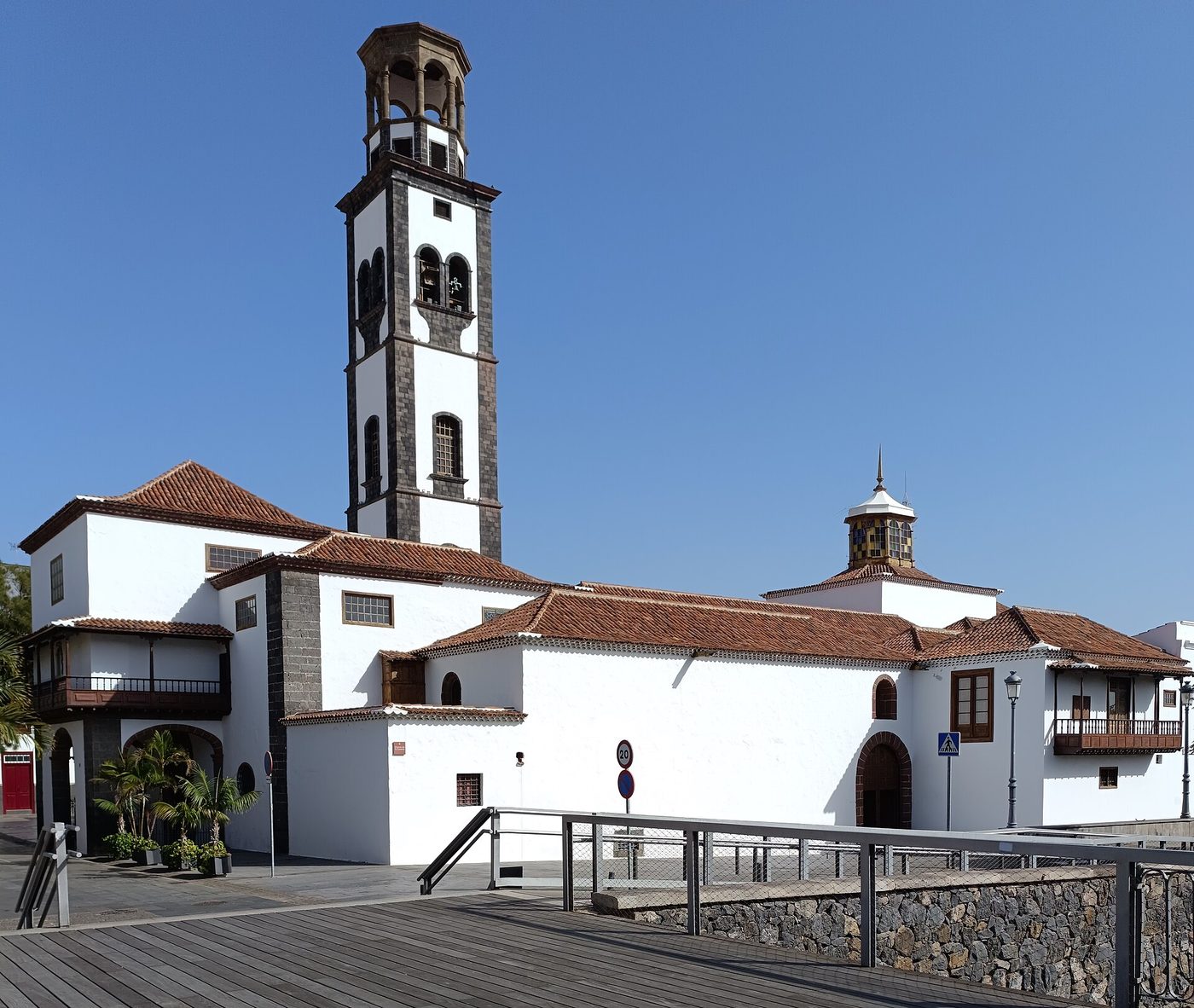
Santa Cruz de Tenerife · Towns of Tenerife
Santa Cruz: from army camp to capital
La Orotava · Towns of Tenerife
La Orotava: a town drawn with a cord
Adeje · Towns of Tenerife
Adeje: the kingdom, the fortress and the marquises
La Caleta · Towns of Tenerife
La Caleta: Adeje's old harbour
Los Cristianos · Towns of Tenerife
Los Cristianos: the south's harbour
Las Galletas · Towns of Tenerife
Las Galletas: salt, fish and a garden city
Playa de las Américas · Towns of Tenerife
Playa de las Américas: a resort from scratch
Callao Salvaje · Towns of Tenerife
Callao Salvaje: a resort by decree
Playa Paraíso · Towns of Tenerife
Playa Paraíso: a paradise on paper
Guía de Isora · Towns of Tenerife
Guía de Isora: from Teide to the sea
Playa San Juan · Towns of Tenerife
Playa San Juan: Guía de Isora's harbour
Alcalá · Towns of Tenerife
Alcalá: a fishing village on the lava
Puerto Santiago · Towns of Tenerife
Puerto Santiago and Los Gigantes: life below the cliffs
El Médano · Towns of Tenerife
El Médano: the harbour under the red mountain
Puerto de la Cruz · Towns of Tenerife
Puerto de la Cruz: from wine port to the first resort
San Juan de la Rambla · Towns of Tenerife
San Juan de la Rambla: a village on the badlands
Buenavista del Norte · Towns of Tenerife
Buenavista del Norte: a planned town at the end of the island