
El Médano · Towns of Tenerife
El Médano: the harbour under the red mountain
A red volcano that sailors used to find their way around the island, Guanche shelters in the dunes, a 1519 anchorage of Magellan's fleet, a port for camels and steamers, a summer colony with a woman president in 1933, wartime bunkers, a forgotten airfield and the wind that kept mass tourism away. The story of El Médano.
6 min read · 3 sources · Updated October 2026
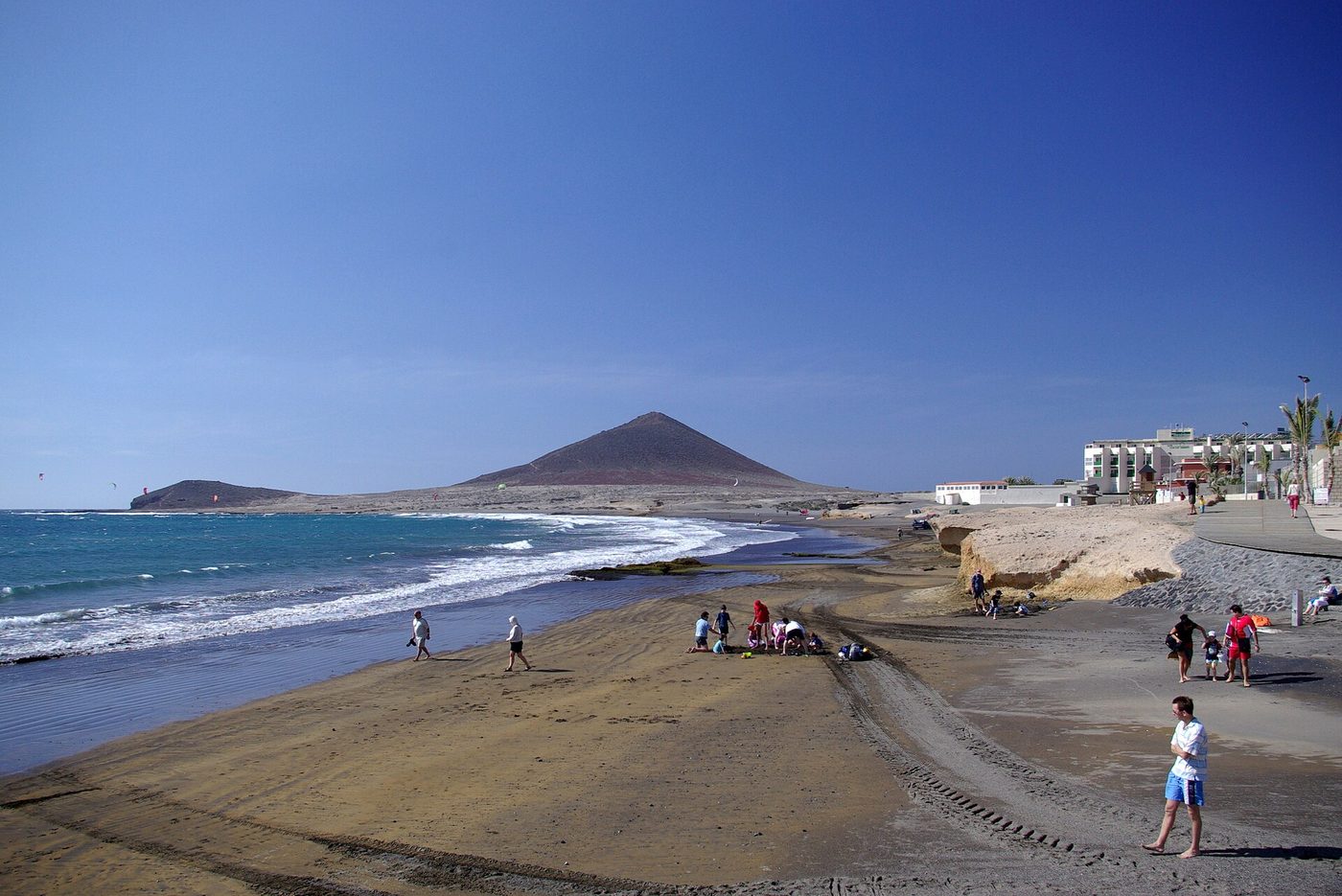
El Médano and Montaña Roja · Berthold Werner, public domain
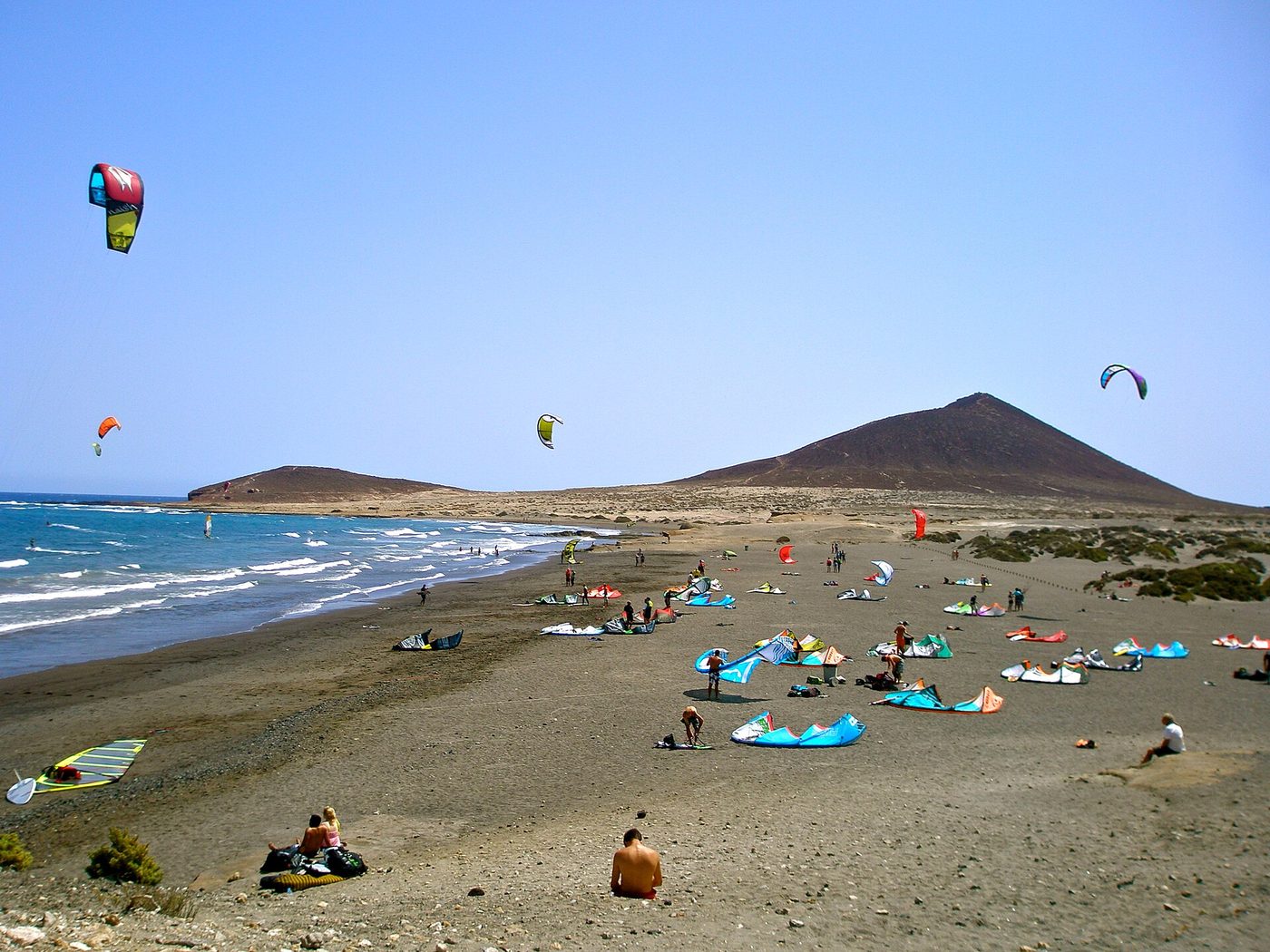
El Médano takes its name from its dunes, the médanos of pale sand that the trade wind has piled up along this stretch of the south coast of Tenerife. Above the beach rises Montaña Roja, a volcanic cone of red cinders about 170 metres high. A spit of sand, a tombolo, joined that once separate islet to the shore and created the two bays on either side of it, El Médano to the east and El Confital-La Tejita to the west.1 Both are good natural harbours, and that simple fact explains most of El Médano's history.
A landmark for sailors
For centuries Montaña Roja was one of the three corners of Tenerife. Writers of the late sixteenth century described the island as a triangle whose points were Anaga, Teno and Montaña Roja, and later sailing directions still told pilots to look for the red mountain, easy to recognise by its colour.1
Long before that the Guanches used the same shelter. In 2007, ahead of a restoration project in the nature reserve, the archaeologists Gabriel Escribano and Alfredo Mederos surveyed the area around Montaña Roja and recorded 47 sites close to the coast: some twenty natural shelters in the soft volcanic tuff, a few with walls trimmed by hand, caves and shelters in basalt, scatters of pottery and stone that may mark vanished huts, two panels of rock engravings and four shell middens.1 They read this as seasonal use by herders who brought their goats down to the coast, with lookouts placed where they could watch both the animals and the sea. Part of the old settlement lies under the town itself, in the shelters of the Hoya del Médano, now largely built over.1 A tradition collected at the end of the nineteenth century even describes a Guanche swimming contest around Montaña Roja during the midsummer festival of Beñesmer; the archaeologists warn that it should be treated with caution.1
Caleta de Abona
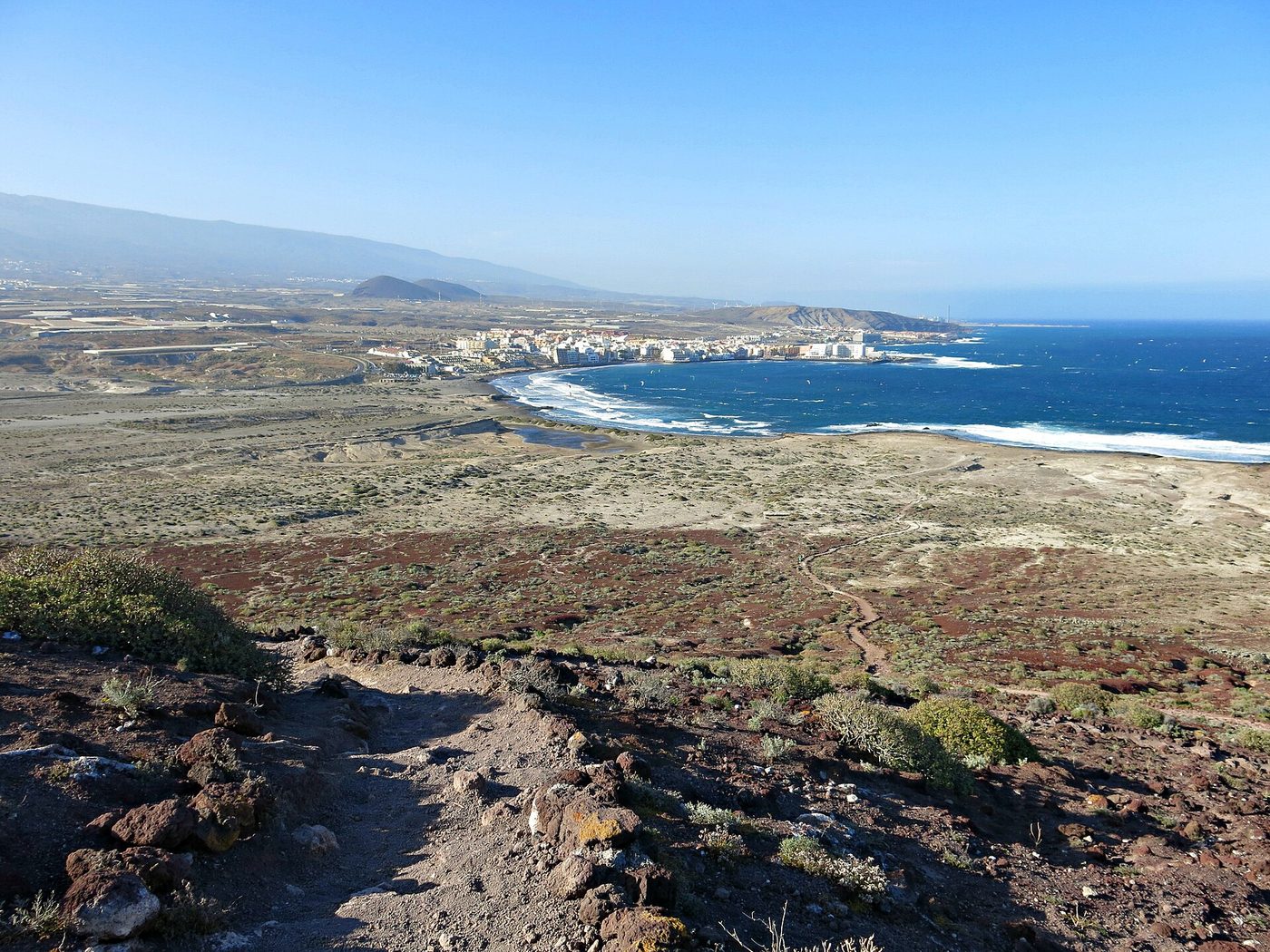
After the conquest the bay was known as the Caleta de Abona, and only in the eighteenth century do maps begin to call it Playa del Médano. Already in 1523 the island council posted two guards at the "port of Montaña Roja".1 According to the archaeologists, reading the account of the chronicler Antonio Pigafetta, Magellan's fleet anchored here from 1 to 3 October 1519, after three and a half days at Santa Cruz, before setting out on the first voyage around the world.1 Ships also came with less peaceful intentions. In 1571 a large English fleet anchored at the port of Montaña Roja and a party of twelve men came ashore; the local militia captain attacked them and, according to a later account, killed eleven and took the twelfth prisoner. Another landing in 1583 ended with ten prisoners.1
The bay has a link with the island's best-known saint. A biography of Pedro de Bethencourt, the Hermano Pedro, who herded his family's sheep in the south of the island as a young man, says that in winter he prayed in "a cave on the mountain of Rojas" with an altar he had made himself. Local tradition places it in a cave in the Barranco del Saltadero, near the airport, which was fitted out for worship in 1994; Escribano and Mederos doubt that identification and point to the artificial caves on Montaña Roja itself.1
Camels and steamers
For a long time nobody lived here permanently. The parish census of Granadilla first listed El Médano as a separate hamlet in 1857, with five households, and a few years later it was described as seven one-storey buildings, only one of them occupied, which suggests a summer settlement.1 At the end of the century the port shipped paving slabs and water filter stones cut from the fossil dune on the side of Montaña Roja.1 By 1906 there were 24 buildings, two inns and the chapel of Our Lady of Las Mercedes, and most of the seventy inhabitants worked loading the produce that camels brought down from Granadilla, more than ten kilometres away.1
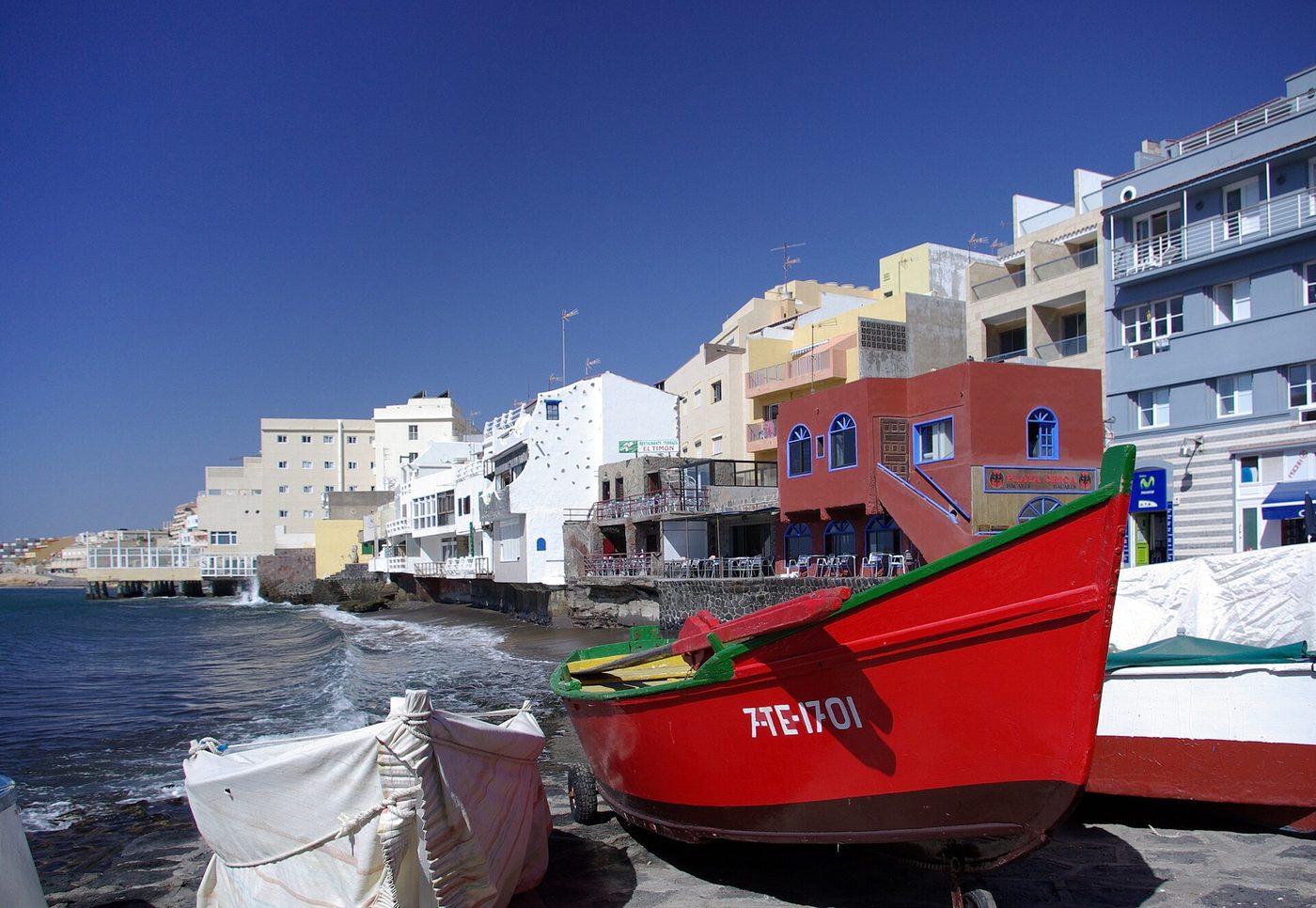
Without a road the sea was the way out, and the village kept asking for a proper quay. A royal decree of 1906 and an order of 1914 authorised a modest landing stage, but little changed: when a government minister called in 1927 aboard the steamer La Palma he had to be carried ashore in the arms of the sailors.1 From 1911 the regular steamer route from Las Palmas to Santa Cruz, the south of Tenerife and La Gomera stopped here.1 In his 1925 novel El loco de la playa, the Santa Cruz lawyer and writer Leocadio Machado described the steamer that took six hours from the capital, the launch that carried passengers to the beach and the fishermen's wives who walked up to Granadilla and back, more than twenty kilometres, to sell the catch.2
Summer people
The road from Santa Cruz reached Granadilla in 1933, and from the mid-1930s families from Granadilla, Santa Cruz and La Orotava began to spend the summer by the beach.1 That same summer of 1933 the visitors founded a social club, "La Bulla del Médano". According to the historian Octavio Rodríguez Delgado, its women members used the voting rights granted by the new Republic to elect the board they wanted, with Olivia Friend Martín as president, a real novelty at the time.2 On 23 September 1934 the beach was named after Leocadio Machado, its great promoter, with a plaque, a band and a dance at the club.2
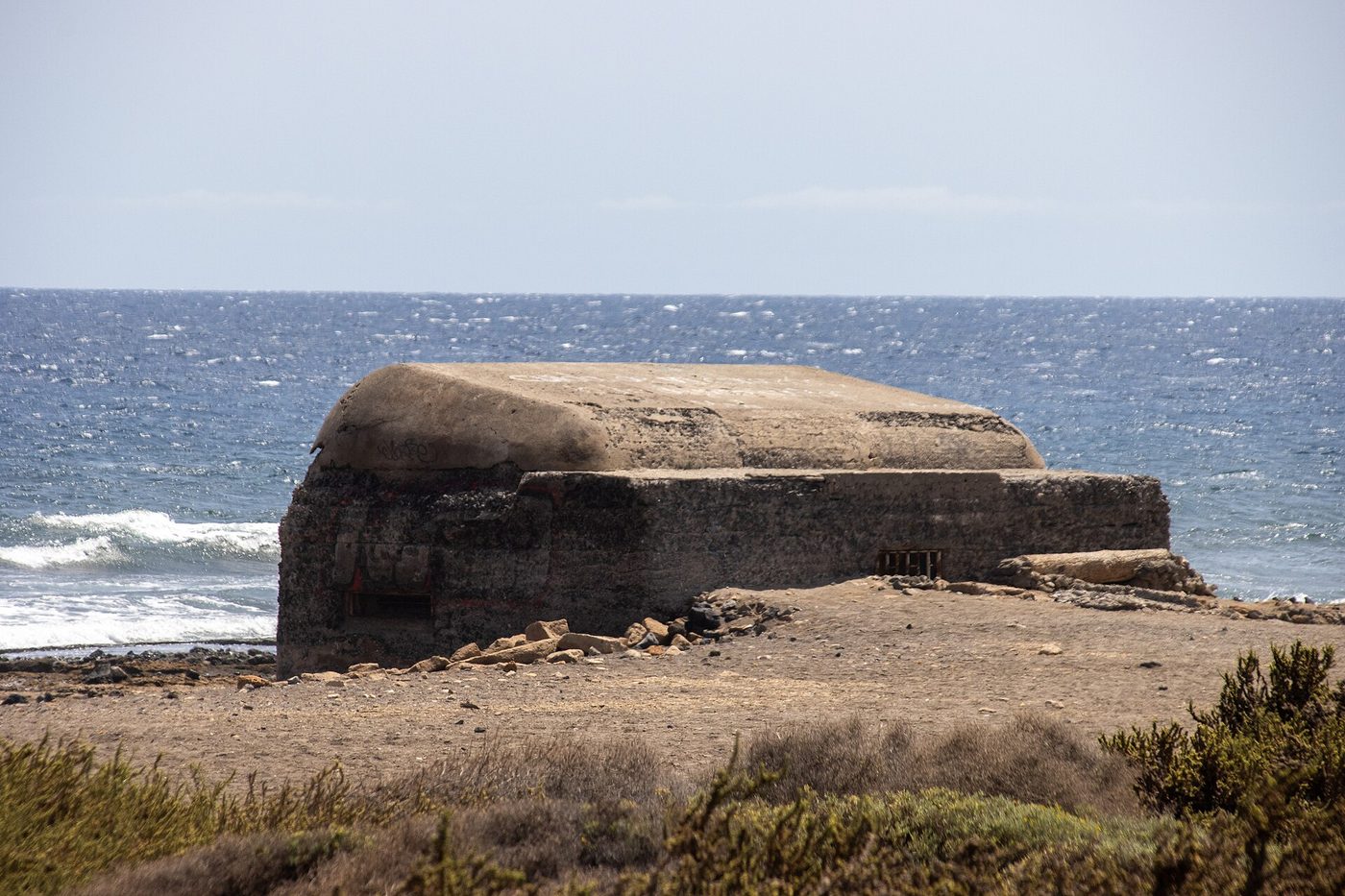
War left its mark too. Between 1940 and 1945, fearing an Allied landing, the army placed four anti-landing guns at El Médano and built the concrete bunkers that still stand along the beach and on the slopes of Montaña Roja.1 In 1934 the council of Granadilla had given land at the foot of the mountain for an airfield. The plan stalled when work began on Los Rodeos airport in the north in 1938, but the strip was reopened in 1948 and became the official Tomás Zerolo aerodrome in 1962, used among other things for crop spraying on the tomato farms. It closed in October 1978, when the new Tenerife South airport opened nearby; its control tower still stands at the foot of the mountain.13
The wind
The first Hotel Médano was built in the late 1950s on the site of an old tomato packing shed and loading point.1 Yet El Médano never became a mass resort. The strong north-east wind that piles up its dunes made the beach less attractive than Los Cristianos or Playa de las Américas, slowed down building and turned the town instead into a centre for windsurfing.1 The opening of the southern airport in 1978 brought apartments for pilots, cabin crew and ground staff.1 The bay and the mountain were protected as a natural area in 1987 and became the Montaña Roja Special Nature Reserve in 1994, covering 166 hectares.1
Notes and sources
- 1.G. Escribano Cobo and A. Mederos Martín, "Prospección arqueológica de Montaña Roja y las bahías de El Médano y El Confital-La Tejita (Granadilla, Tenerife, Islas Canarias)", Canarias Arqueológica 20 (2014), pp. 63-118 (on the history of the port they draw on Pigafetta, the island council minutes, the 1857 parish census, P. López Soler, 1906, and J. García Casanova, O. Rodríguez Delgado and W. Wildpret, Montaña Roja, 1996). museosdetenerife.org
- 2.Local historian: O. Rodríguez Delgado, "La sociedad republicana 'La Bulla del Médano' (1933-1934), en el municipio de Granadilla de Abona" (with extracts from L. Machado, El loco de la playa, 1925, and from the press of 1933-1934). blog.octaviordelgado.es
- 3.INVOLCAN, Tenerife geotourism, site card LIG 19, "Montaña Roja" (the airfield, the bunkers and the telegraph house within the reserve). tfgeoturismo.involcan.org
What's on in Granadilla de Abona now →
Fiestas, concerts and events from the town hall agenda, updated daily.
More towns in the series
La Laguna · Towns of Tenerife
San Cristóbal de La Laguna: a town planned for peace
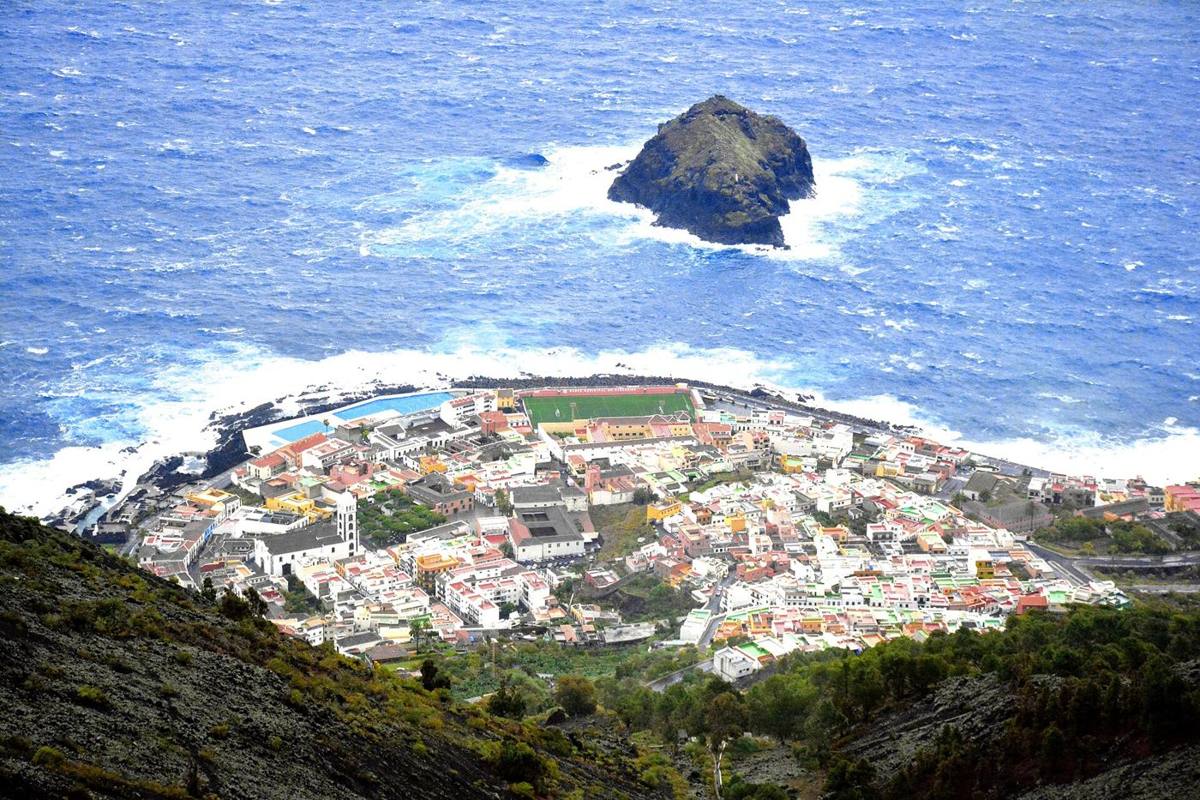
Garachico · Towns of Tenerife
Garachico: the port the volcano took
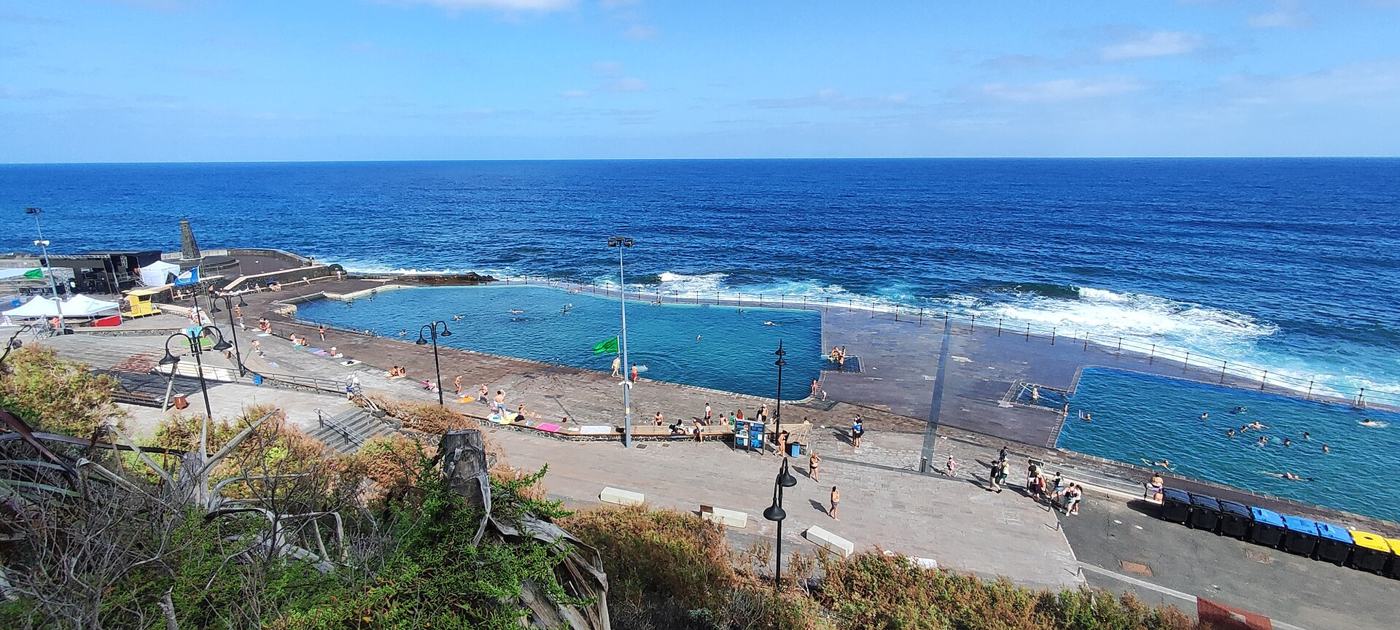
Bajamar · Towns of Tenerife
Bajamar and Punta del Hidalgo: La Laguna's shore
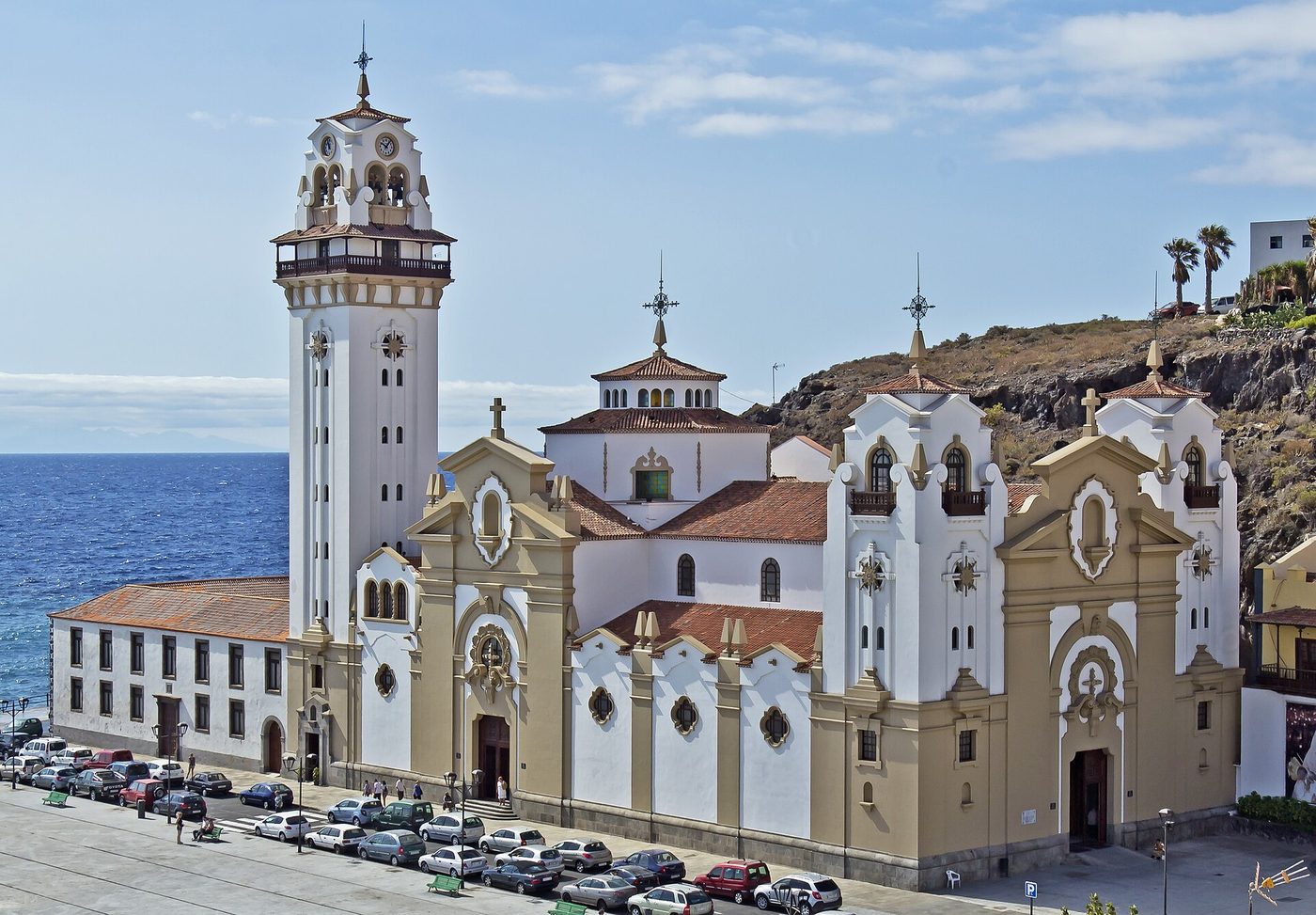
Candelaria · Towns of Tenerife
Candelaria: the shrine on the shore
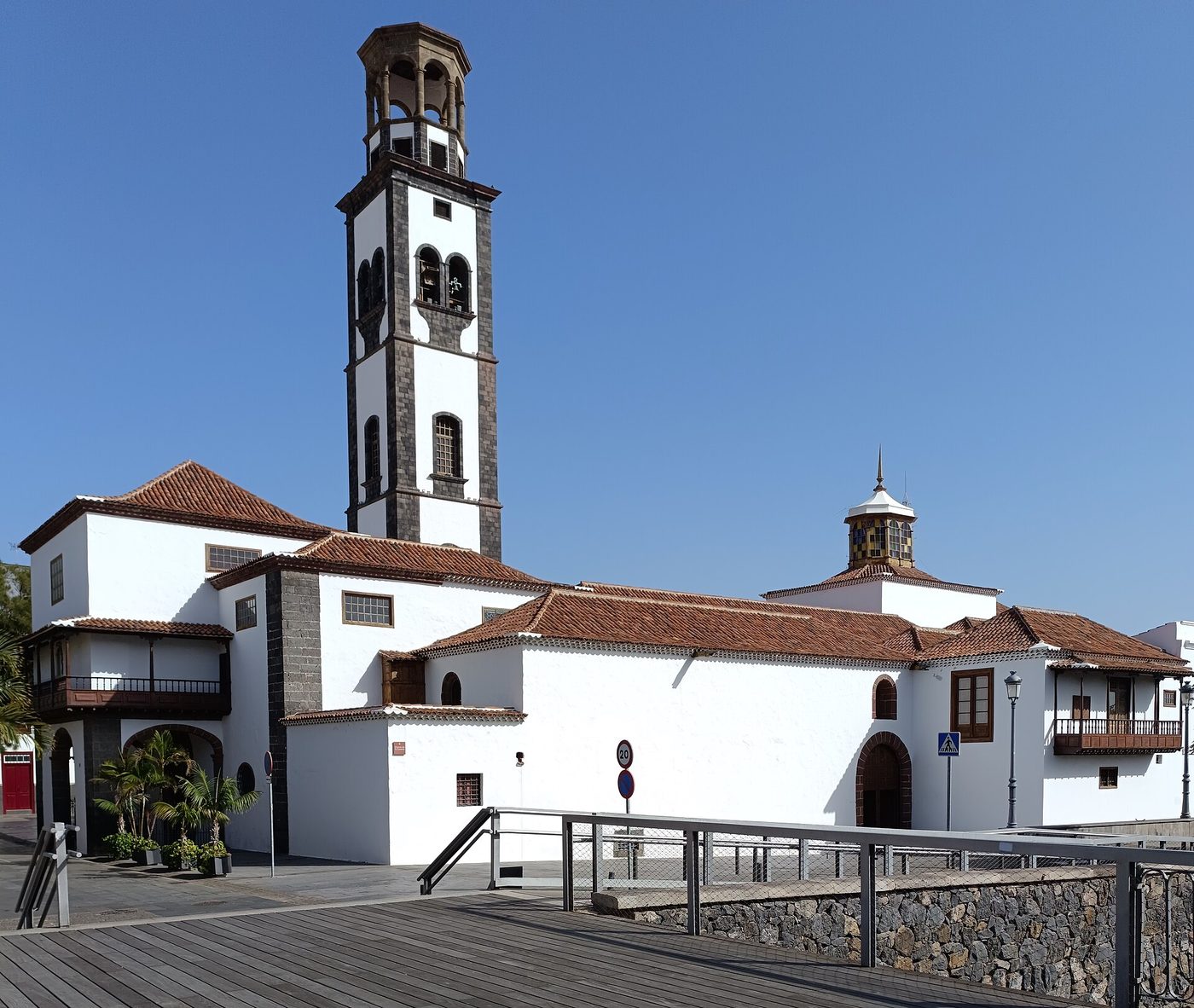
Santa Cruz de Tenerife · Towns of Tenerife
Santa Cruz: from army camp to capital
La Orotava · Towns of Tenerife
La Orotava: a town drawn with a cord
Adeje · Towns of Tenerife
Adeje: the kingdom, the fortress and the marquises
La Caleta · Towns of Tenerife
La Caleta: Adeje's old harbour
Los Cristianos · Towns of Tenerife
Los Cristianos: the south's harbour
Las Galletas · Towns of Tenerife
Las Galletas: salt, fish and a garden city
Playa de las Américas · Towns of Tenerife
Playa de las Américas: a resort from scratch
Callao Salvaje · Towns of Tenerife
Callao Salvaje: a resort by decree
Playa Paraíso · Towns of Tenerife
Playa Paraíso: a paradise on paper
Guía de Isora · Towns of Tenerife
Guía de Isora: from Teide to the sea
Playa San Juan · Towns of Tenerife
Playa San Juan: Guía de Isora's harbour
Alcalá · Towns of Tenerife
Alcalá: a fishing village on the lava
Puerto Santiago · Towns of Tenerife
Puerto Santiago and Los Gigantes: life below the cliffs
Icod de los Vinos · Towns of Tenerife
Icod de los Vinos: the dragon tree and the cove of San Marcos
Puerto de la Cruz · Towns of Tenerife
Puerto de la Cruz: from wine port to the first resort
San Juan de la Rambla · Towns of Tenerife
San Juan de la Rambla: a village on the badlands
Buenavista del Norte · Towns of Tenerife
Buenavista del Norte: a planned town at the end of the island