
Playa Paraíso · Towns of Tenerife
Playa Paraíso: a paradise on paper
Shepherds' huts and obsidian on the headlands, a cove where boats loaded dye lichen, tomato terraces and banana plantations, then a special plan in 1972 and the decades of building that followed. The short history of Adeje's westernmost resort.
3 min read · 4 sources · Updated October 2026
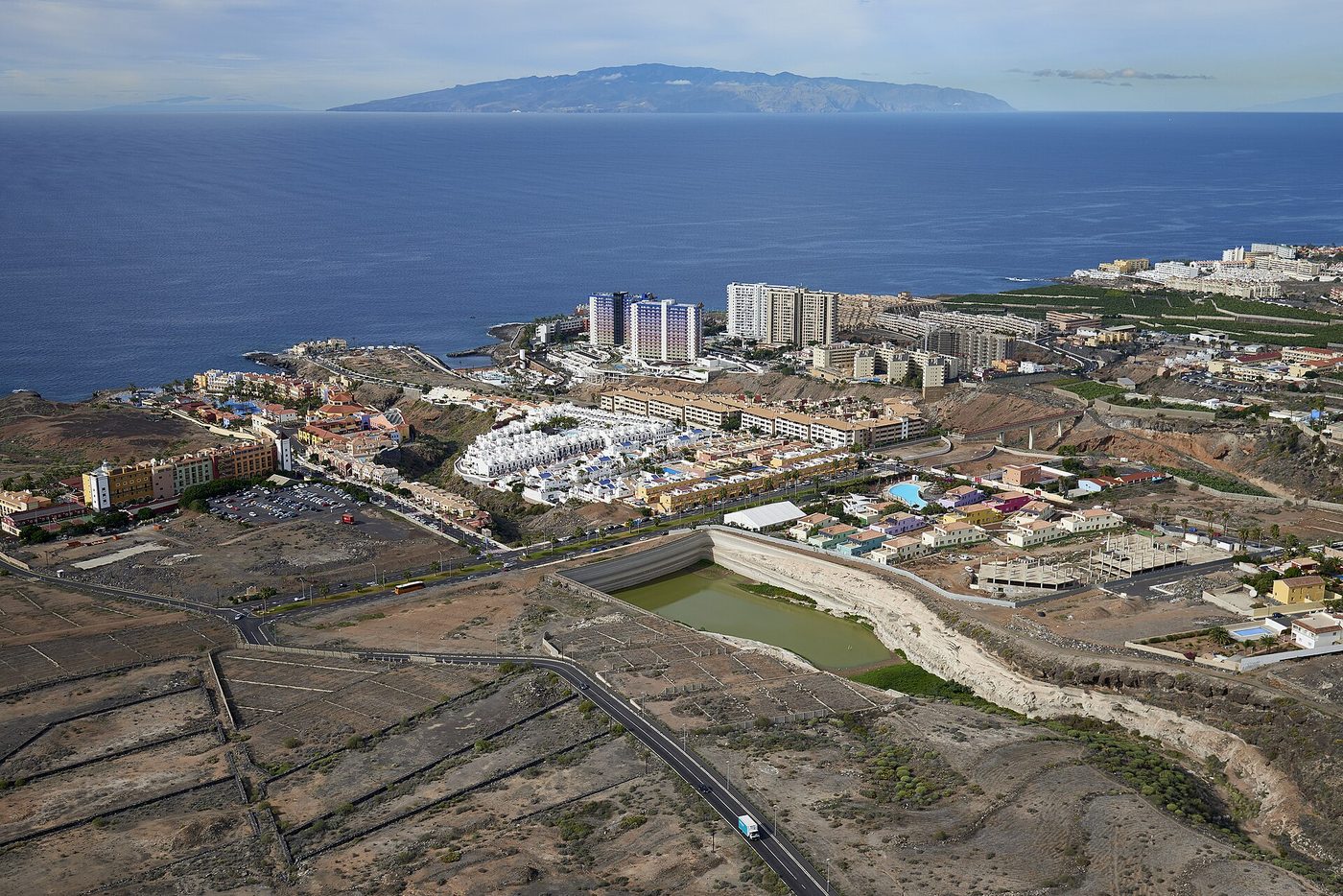
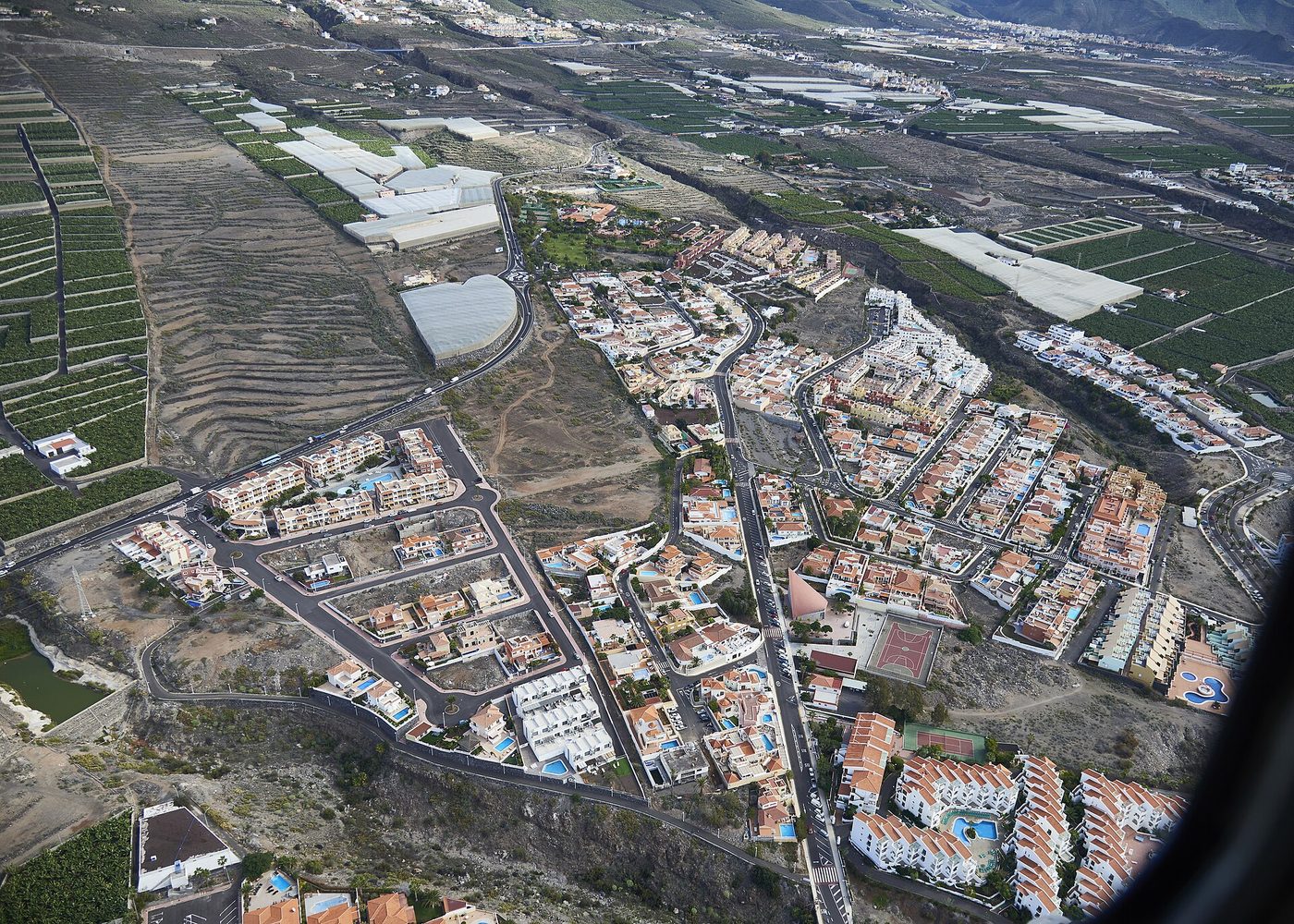
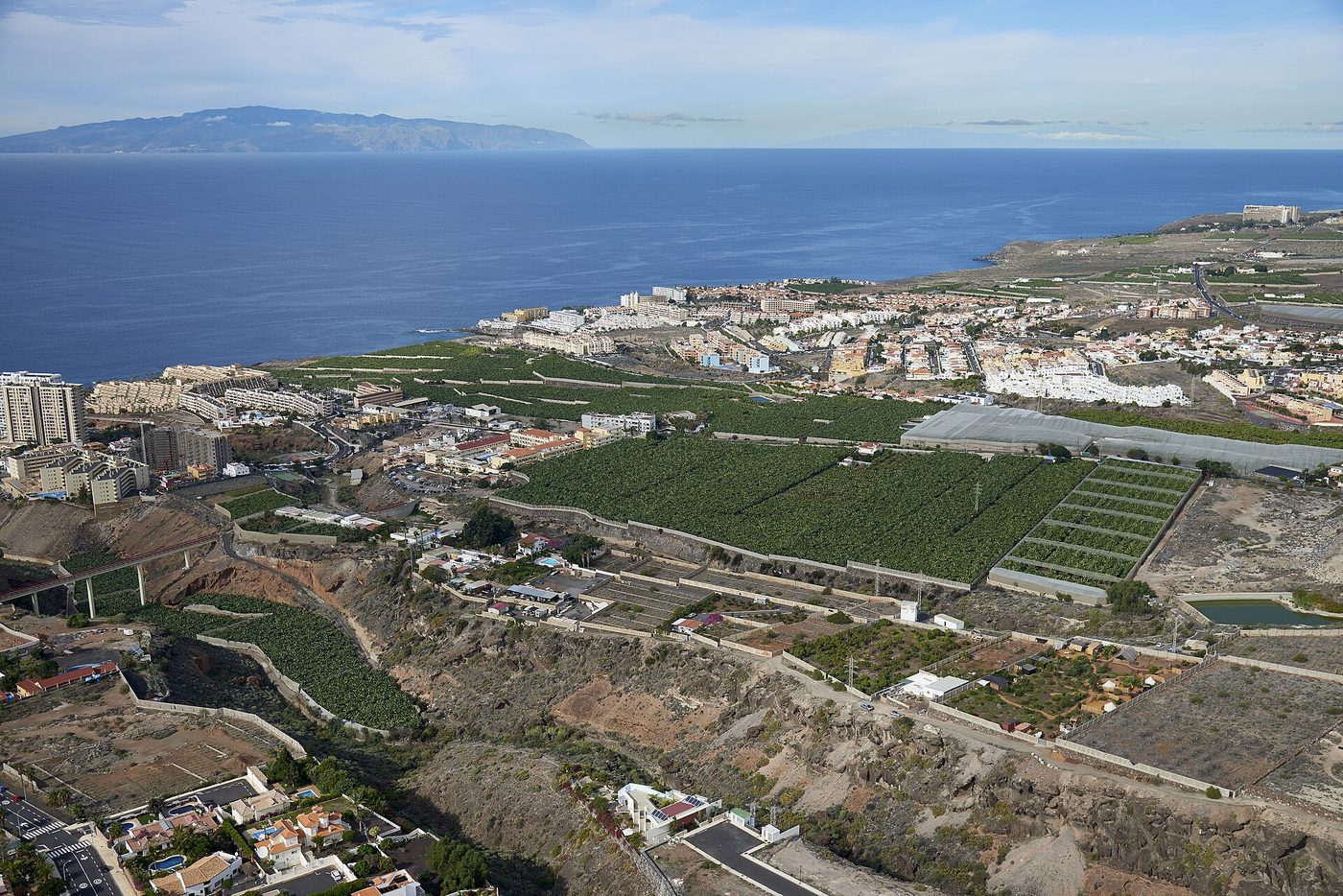
Playa Paraíso and Callao Salvaje · Wouter Hagens, CC BY-SA 4.0
Few places in Tenerife have a name that says so plainly what they were built to sell. Playa Paraíso, "Paradise Beach", is a resort of the late twentieth century on the western edge of Adeje, next to Callao Salvaje and a few kilometres from the boundary with Guía de Isora. Its history as a town is short. The history of the ground beneath it is not.
Headlands and ravines
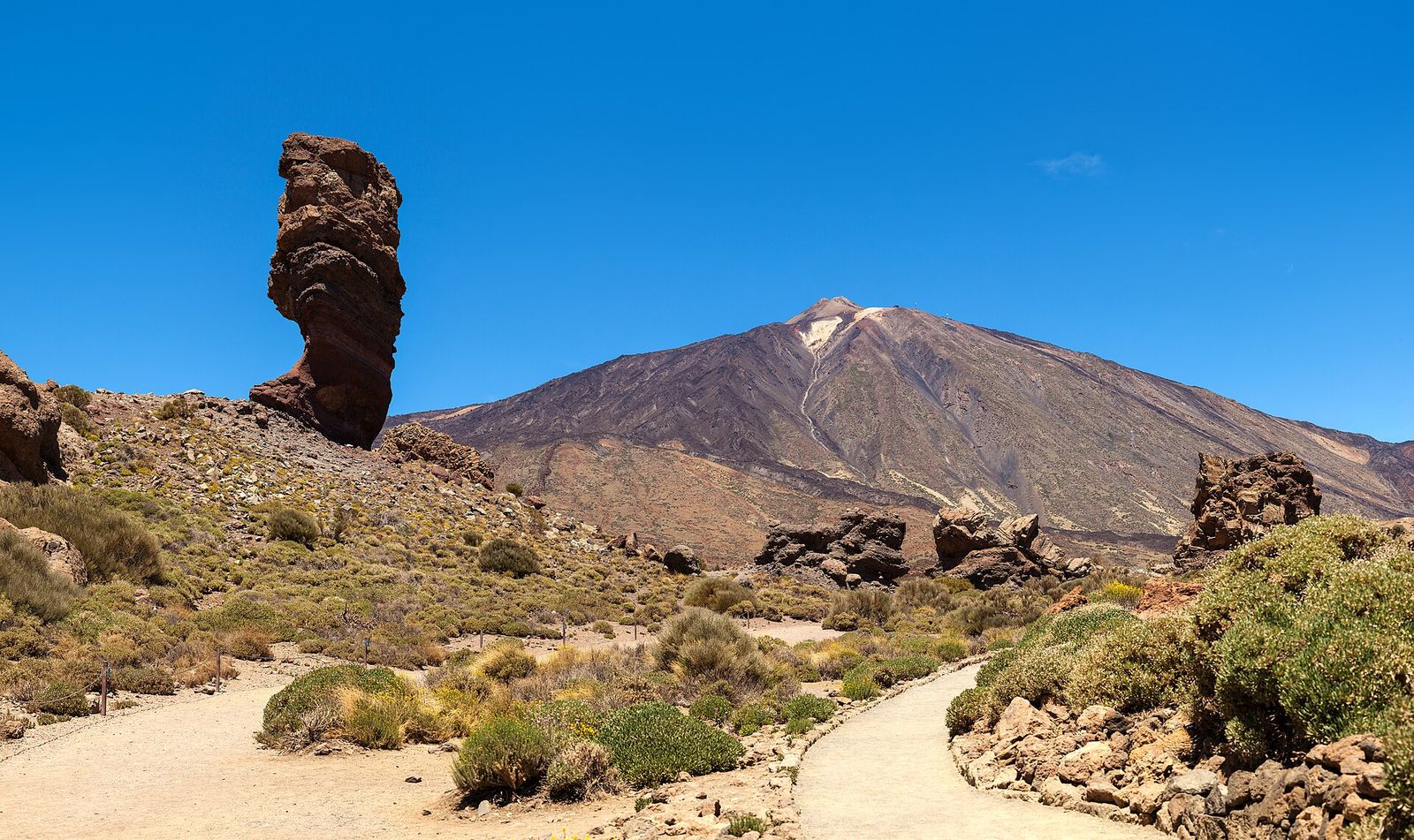
Before the conquest this coast belonged to the menceyato of Adeje. The archaeologists who surveyed it between 2004 and 2009 found that people here lived mostly in small stone huts rather than caves, often single round structures on headlands close to the ravines, with a good view of the land around them. They interpret them as temporary shelters or lookout posts for herders watching their flocks; most were reused in later centuries.1 In western Adeje, outcrops of volcanic glass in the ignimbrite layers were quarried for obsidian, the sharpest cutting material available to the Guanches.1
After the conquest the coast was a working landscape, not an empty one. The small cove of El Puertito, also called the port of Armeñime, served the western side of Adeje: in the 1520s contracts set it as a place to deliver orchil, the lichen gathered on the cliffs and sold as a dye, and in the following centuries boats from La Gomera came to Adeje for pine timber.2
Tomatoes and bananas
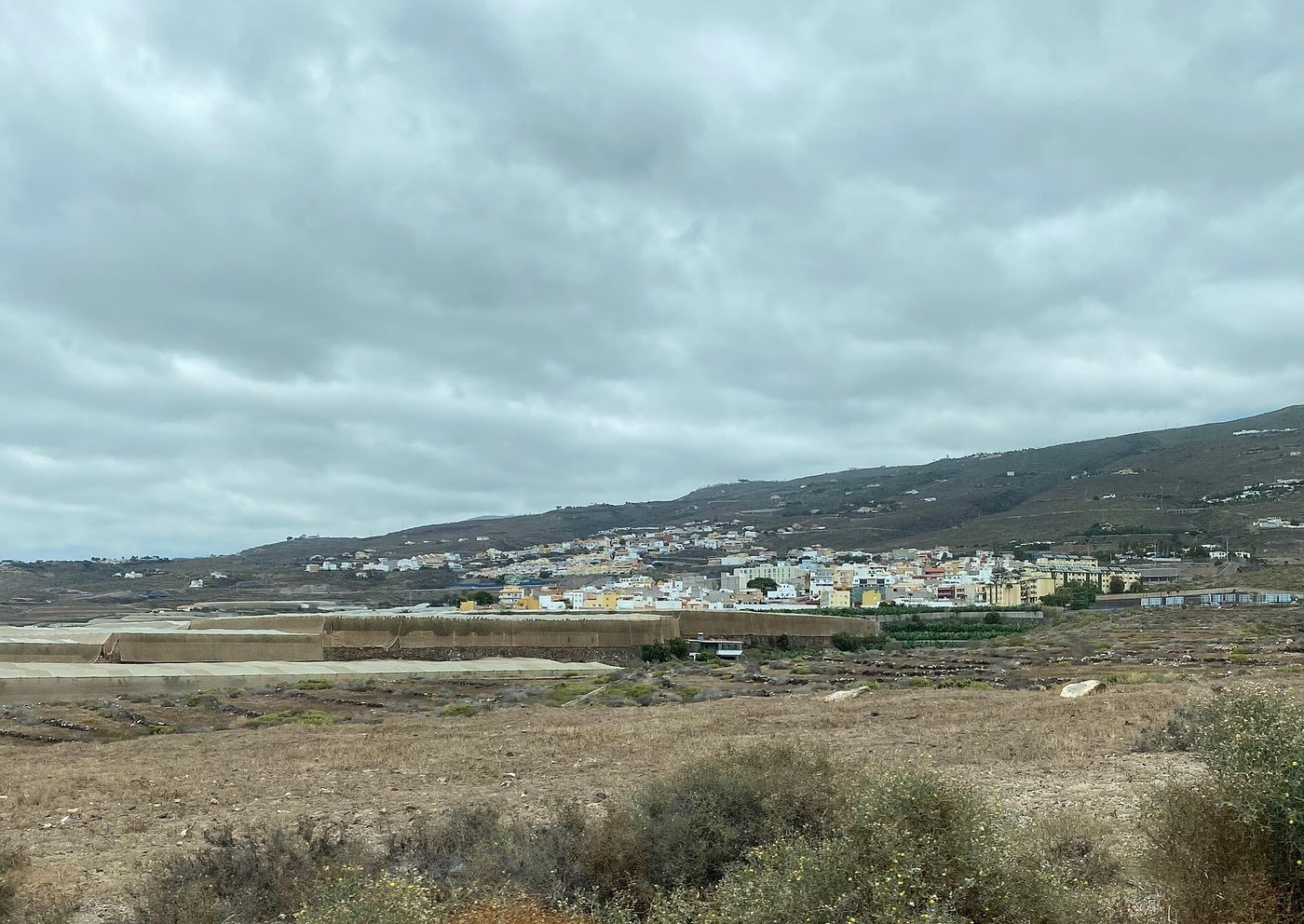
The twentieth century brought irrigation and export crops. In the 1950s and 1960s the slopes of western Adeje were cut into terraces for tomatoes. Many of those fields were abandoned later; others were prepared for bananas in the 1970s and 1980s, in part by Canarian emigrants who had come back from Venezuela.1 Those terraces can still be seen between and above the apartment blocks.
A plan in 1972
Playa Paraíso belongs to the wave of tourist projects that Adeje approved on rural estates at the turn of the 1970s. Between 1968 and 1973 the municipality, which had no general plan, approved fourteen tourist plans, twelve of them under a circular of the provincial planning commission that allowed special plans for tourism on rural land.3 A special plan for Playa Paraíso dates from 1972; its map is kept in the archive of the Spanish ministry of transport.3 A few kilometres away, Callao Salvaje had been declared a Centre of National Tourist Interest in 1969.4
The plans did not turn into buildings overnight. Adeje's planning rules of 1982 still tried to make export farming and tourism compatible; a modification of 1986 removed that protection and reclassified some 751 hectares for development, with room for 85,200 tourist beds, and the coastal strip from Costa Adeje to La Caleta, Playa Paraíso and Callao Salvaje was set aside as urban land for tourism.3 In the 2000s, with Arona almost out of building land, tourist expansion continued westwards into Adeje.3
A town without a centre
Playa Paraíso is not a village that grew into a resort but a resort that grew into a place where people live. Its streets were drawn by planners rather than by paths and water channels, and the archaeologists who surveyed this coast regretted that several small sites recorded in 1988 had already disappeared under hotels, apartments and golf courses.1 When Adeje approved its first full general plan in 2008, the farmland left in the municipality had shrunk to under a thousand hectares.3 The headlands, the ravines and the terraces are the threads that still tie the new town to the long history of the coast.
Notes and sources
- 1.A. Mederos Martín, G. Escribano Cobo and V. Valencia Afonso, "Hábitat aborigen y grabados rupestres en el municipio de Adeje (Tenerife, islas Canarias) (II). La prospección arqueológica", Anuario de Estudios Atlánticos 71 (2025), 071-011. revistas.grancanaria.com
- 2.A. Mederos Martín and G. Escribano Cobo, "Prospección arqueológica de La Caleta de Adeje (Tenerife, Islas Canarias)", Revista de Historia Canaria 198 (2016), pp. 177-229. riull.ull.es
- 3.C. García-Blanco Chávez, "Turismo y territorio. La transformación del sur de Tenerife (1960-2018)", Territorios en Formación 23 (2025), DOI 10.20868/tf.2025.23.5625 (including the map of the Plan Especial Playa Paraíso, 1972, Ministerio de Transportes, Movilidad y Agenda Urbana, ref. S-U 890-1). polired.upm.es
- 4.Decreto 2039/1969, de 24 de julio, Boletín Oficial del Estado, 16 September 1969 (Callao Salvaje). boe.es
What's on in Adeje now →
Fiestas, concerts and events from the town hall agenda, updated daily.
More towns in the series
La Laguna · Towns of Tenerife
San Cristóbal de La Laguna: a town planned for peace
Garachico · Towns of Tenerife
Garachico: the port the volcano took
Bajamar · Towns of Tenerife
Bajamar and Punta del Hidalgo: La Laguna's shore
Candelaria · Towns of Tenerife
Candelaria: the shrine on the shore
Santa Cruz de Tenerife · Towns of Tenerife
Santa Cruz: from army camp to capital
La Orotava · Towns of Tenerife
La Orotava: a town drawn with a cord
Adeje · Towns of Tenerife
Adeje: the kingdom, the fortress and the marquises
La Caleta · Towns of Tenerife
La Caleta: Adeje's old harbour
Los Cristianos · Towns of Tenerife
Los Cristianos: the south's harbour
Las Galletas · Towns of Tenerife
Las Galletas: salt, fish and a garden city
Playa de las Américas · Towns of Tenerife
Playa de las Américas: a resort from scratch
Callao Salvaje · Towns of Tenerife
Callao Salvaje: a resort by decree
Guía de Isora · Towns of Tenerife
Guía de Isora: from Teide to the sea
Playa San Juan · Towns of Tenerife
Playa San Juan: Guía de Isora's harbour
Alcalá · Towns of Tenerife
Alcalá: a fishing village on the lava
Puerto Santiago · Towns of Tenerife
Puerto Santiago and Los Gigantes: life below the cliffs
El Médano · Towns of Tenerife
El Médano: the harbour under the red mountain
Icod de los Vinos · Towns of Tenerife
Icod de los Vinos: the dragon tree and the cove of San Marcos
Puerto de la Cruz · Towns of Tenerife
Puerto de la Cruz: from wine port to the first resort
San Juan de la Rambla · Towns of Tenerife
San Juan de la Rambla: a village on the badlands
Buenavista del Norte · Towns of Tenerife
Buenavista del Norte: a planned town at the end of the island