
Los Cristianos · Towns of Tenerife
Los Cristianos: the south's harbour
A cattle pen named in 1516, an anchorage for the grain and tomatoes of the south, a mole that took three decades to build, a group of Swedish patients in search of the sun and a ferry port for the western islands. How a fishing village became one of Tenerife's busiest towns.
6 min read · 10 sources · Updated October 2026
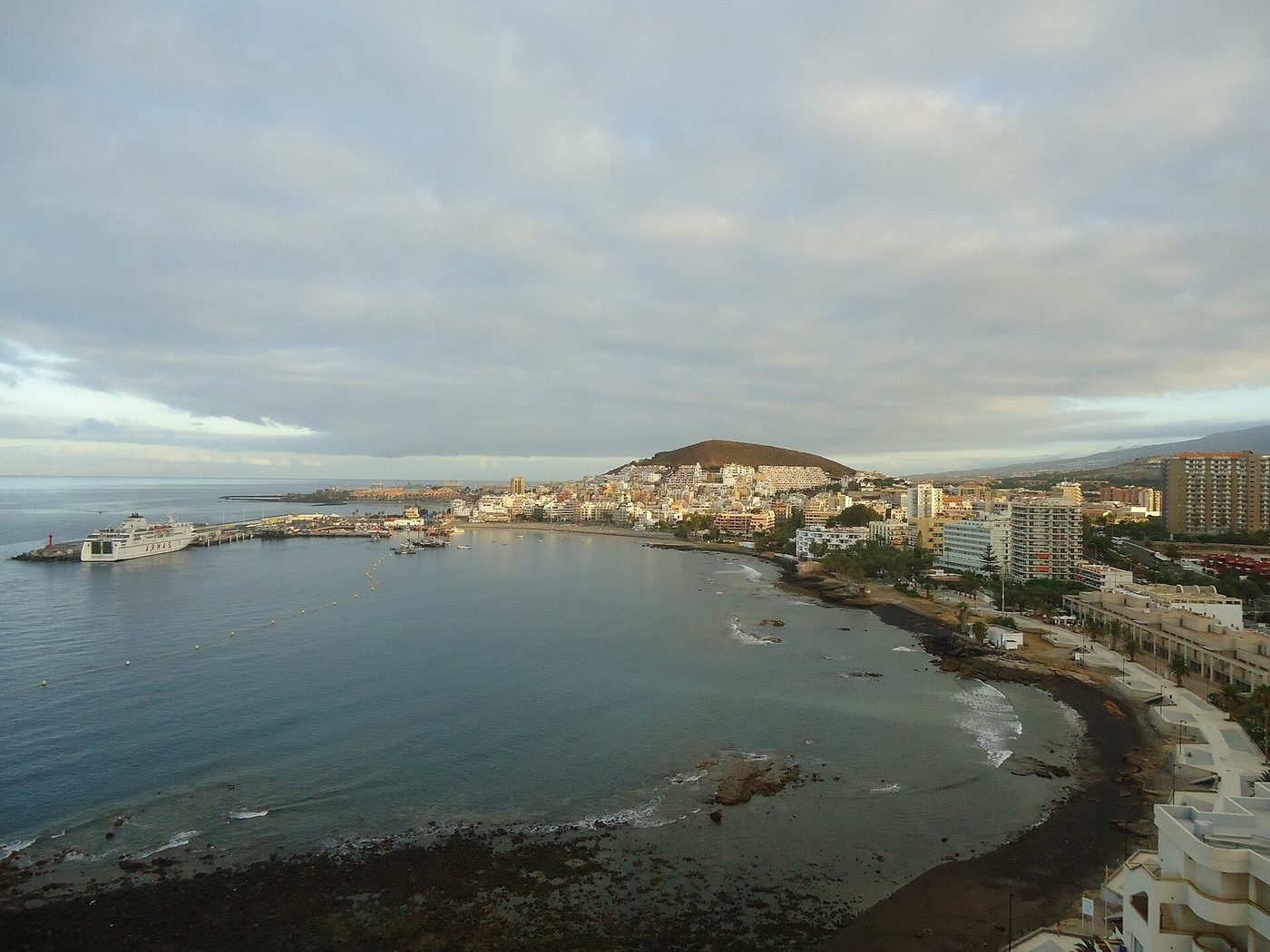
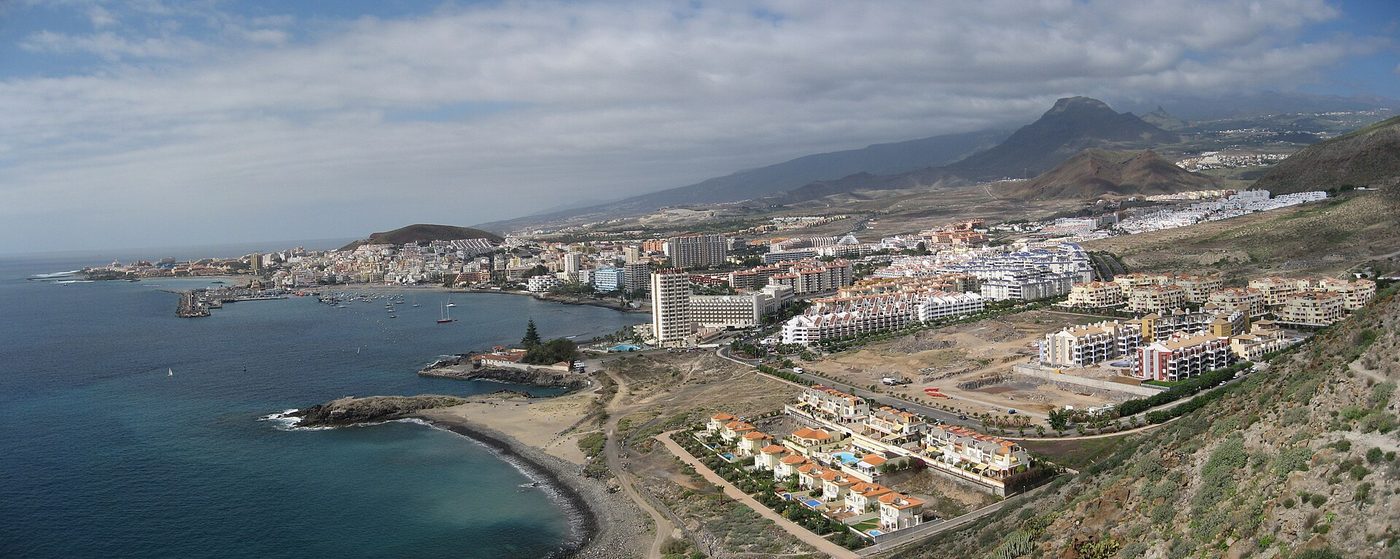
Bahía de Los Cristianos · Javier1989canario, CC BY-SA 3.0
For most of its history Los Cristianos was not a town but a landing place. It belonged to Arona, a farming village in the hills, and served it as its door to the sea: the point where the grain, then the cochineal and finally the tomatoes of the south were loaded onto boats, and where the steamers from Santa Cruz called on their way to La Gomera. The village that grew around the beach was small and poor until the middle of the twentieth century. What made it different was its harbour, and later its climate.12
A name older than the village
The name appears very early. A land grant of 1516 describes an estate in what was then called the kingdom of Abona, running down the ravine to Las Galletas and the sea and as far as "the great corral that they call of Los Cristianos", a livestock pen near today's beach.1 Where the name came from is not recorded in the sources used here. The land around it had been Guanche country for centuries: archaeologists have found aboriginal pottery, obsidian and the remains of huts on the Montaña de Guaza, including a large structure on a spur of the mountain with a perfect view of the bay that may have served as a lookout.3 Nearby, at Las Toscas, a vast network of channels and cups carved into soft volcanic tuff is protected as one of the largest rock-art sites on the island.38
In 1625 almost all the land from Los Cristianos to Los Quemados was granted to Antón Domínguez, known as "the Elder"; his family founded the chapel around which the village of Arona grew, up in the hills.9 The coast stayed almost empty. Its value was strategic: on 18 January 1746 two English ships tried to seize a vessel loaded with wheat anchored at Los Cristianos and bombarded the shore from four in the afternoon until one in the morning, while some 600 militiamen gathered on the beach. Nobody was hurt and the English did not land.1
Cochineal, tomatoes and a mole
Arona became a parish in 1796 and broke away from Vilaflor in 1798; its first councils were made up of well-off farmers from the midland villages. At the time more than half the land belonged to absentee lords: the Marquises of La Fuente de las Palmas and the house of Adeje.2 The cochineal boom of the mid-nineteenth century, when the south of Tenerife grew prickly pears to raise the dye-producing insect, gave a few local families (the Domínguez, the Bethencourt, the Alfonso) the money to buy land that the Church and the old lords were forced to sell. They ran the municipality for the next hundred years.2
In the early twentieth century the elite of Arona bet on new export crops, bananas and above all tomatoes, and that meant two things: water and transport. A decree of 1906 authorised a mole at Los Cristianos, but it was not finished until 1934. In 1911 the regular steamer line linking Las Palmas, Santa Cruz and La Gomera already called at Los Cristianos twice a month in each direction.12 In 1927 the town council even asked the government to build the Canary Islands' planned airport in the bay of Los Cristianos; the prize went to Gando and later to Los Rodeos, partly because Los Cristianos was 105 kilometres from Santa Cruz without a decent road.2 That road, the southern ring road first planned in 1858, finally reached the village in 1946, after the Canal del Sur had begun bringing water from Fasnia in the 1940s.2 A first plan for the urban development of Los Cristianos had been approved as early as 1934.2
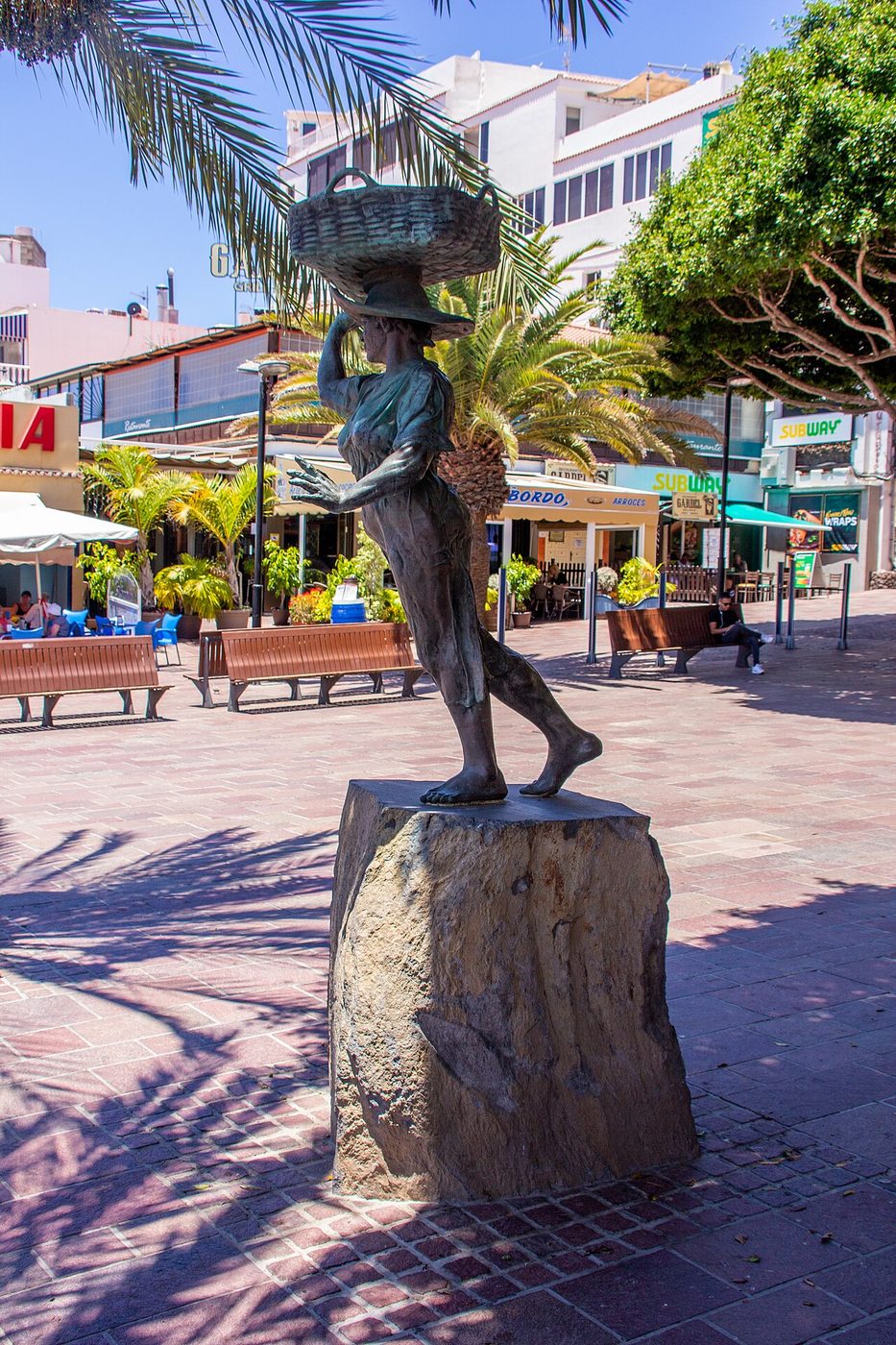
The Swedes
When the first foreign visitors arrived, Los Cristianos was still a small village; the anthropologist K. E. Moore, who stayed there in those years, wrote about its "modernisation" in 1970.5 In the late 1950s, according to the Church of Sweden in Los Cristianos, a couple of Swedes in wheelchairs came to try the climate, having heard that it was unusually warm and even. They felt better, and others followed: people with rheumatism, multiple sclerosis and psoriasis. At first they stayed in a rented house in the village; in 1963 a purpose-built home, the Casa Sueca or Vintersol, opened at the edge of the farmland, with physiotherapists and staff hired locally, and in the autumn of 1965 a much larger rehabilitation centre took over the Vintersol name at Playa de las Vistas.4
In 2004 Arona paid an official homage to these Swedish visitors and published a book, Sol de invierno, presenting them as the origin of tourism in the south. A review of that book by the anthropologist Raquel de la Cruz Modino is a useful corrective. The Swedes were not the only foreigners in Los Cristianos in those years, and one of the book's own authors, himself a native of the village, considered the claim that they kicked off its development exaggerated. What set them apart, the contributors agree, was how closely they lived with the villagers: they learned Spanish, helped in the schools and depended on local people for everyday care.5
A town for the world
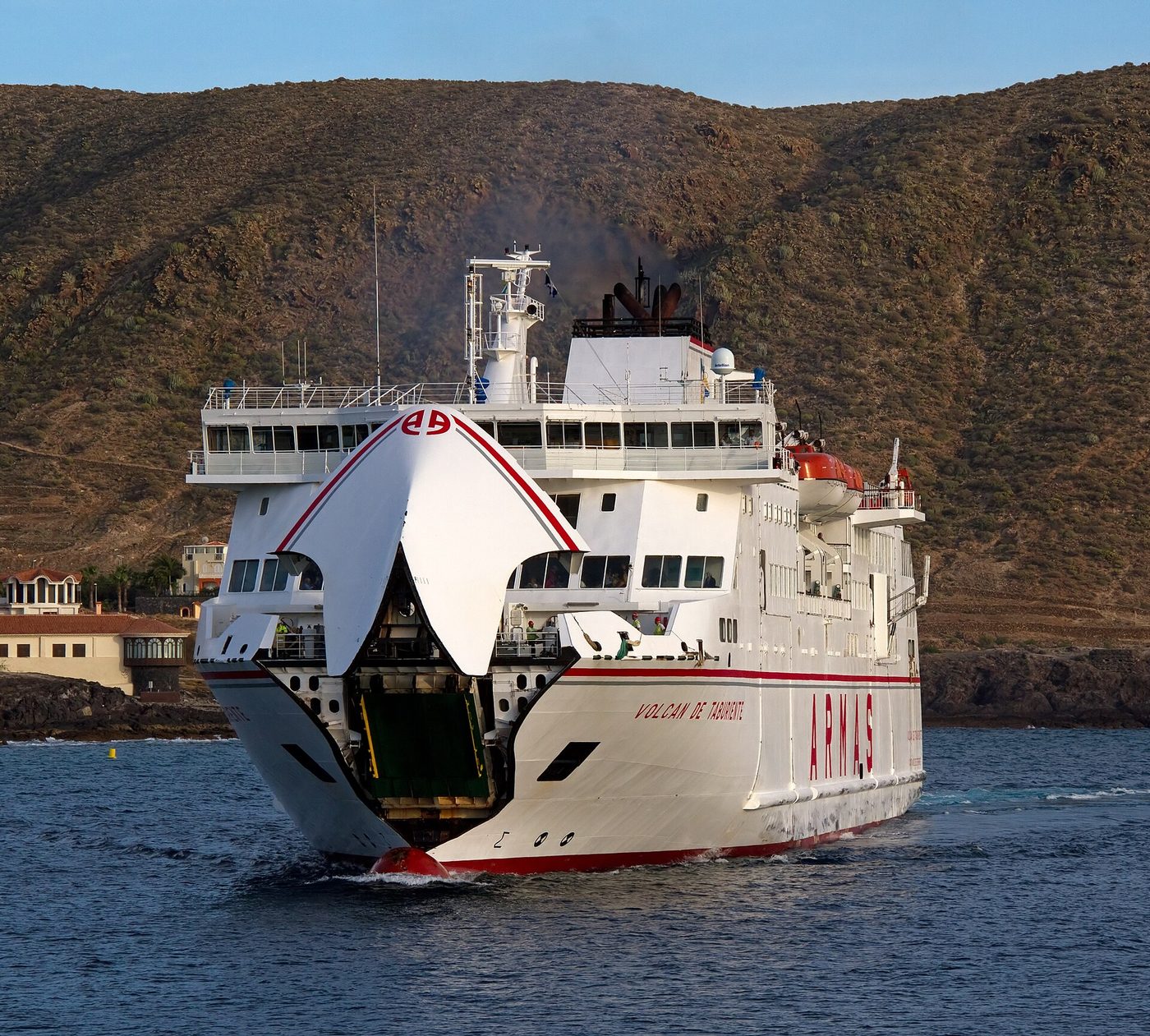
Mass tourism came in the 1960s. Arona approved a general plan in 1966 that made the whole municipality available for building, and seventeen partial plans with room for some 145,000 tourist beds followed.6 The southern motorway (1975) and Tenerife South airport (1978) turned the coast into the island's main tourist region, and the harbour of Los Cristianos became a transport hub in its own right.5610 The old village around the beach is now surrounded by apartment blocks, from the volcanic cone of Chayofita to the Montaña de Guaza, and ferries to La Gomera, El Hierro and La Palma leave from the harbour that the farmers of Arona waited so long to see.710
Notes and sources
- 1.A. Mederos Martín and G. Escribano Cobo, "Prospección arqueológica de La Caleta de Adeje (Tenerife, Islas Canarias)", Revista de Historia Canaria 198 (2016), pp. 177-229 (land grant of 1516, the 1746 attack after Rumeu de Armas, the steamer route of 1911). riull.ull.es
- 2.M. M. Chinea Oliva, "Las bases sociales del poder local. Algunos apuntes para su estudio en Arona (sur de Tenerife), 1900-1936", XIV Coloquio de Historia Canario-Americana (2000). Based on the minutes of the Arona town council and the press of the time. revistas.grancanaria.com
- 3.A. Mederos Martín, G. Escribano Cobo and V. Valencia Afonso, "Poblamiento aborigen y grabados rupestres en el municipio de Arona (Tenerife, islas Canarias)", Anuario de Estudios Atlánticos 68 (2022), 068-002, pp. 1-80. revistas.grancanaria.com
- 4.Svenska kyrkan i Los Cristianos (Church of Sweden), "Historia" (the church's own account of the Casa Sueca and Vintersol). svenskakyrkan.se
- 5.R. de la Cruz Modino, review of A. Galván Tudela, N. González Lemus, K. Moore and R. Hernández Armas, Sol de invierno. Homenaje de Arona al turismo sueco (Arona, 2004), PASOS. Revista de Turismo y Patrimonio Cultural 3(1) (2005), pp. 211-214. DOI 10.25145/j.pasos.2005.03.016. ojsull.webs.ull.es
- 6.C. García-Blanco Chávez, "Turismo y territorio. La transformación del sur de Tenerife (1960-2018)", Territorios en Formación 23 (2025), DOI 10.20868/tf.2025.23.5625. polired.upm.es
- 7.INVOLCAN, Geoturismo urbano de Tenerife: Arona-Adeje costa, 2019. tfgeoturismo.involcan.org
- 8.Cabildo de Tenerife, Patrimonio Histórico de Tenerife. Catálogo de Bienes de Interés Cultural, 2018 (entries for Las Toscas and La Rasca). tenerife.es
- 9.Ayuntamiento de Arona, "Conjunto Histórico de Arona" (municipal heritage page). arona.org
- 10.Opinion article: I. Vasallo, "Historia y desarrollo del turismo en el sur de Tenerife", Tourinews, 27 September 2021 (dates of the motorway and airport; present ferry routes). tourinews.es
What's on in Arona now →
Fiestas, concerts and events from the town hall agenda, updated daily.
More towns in the series
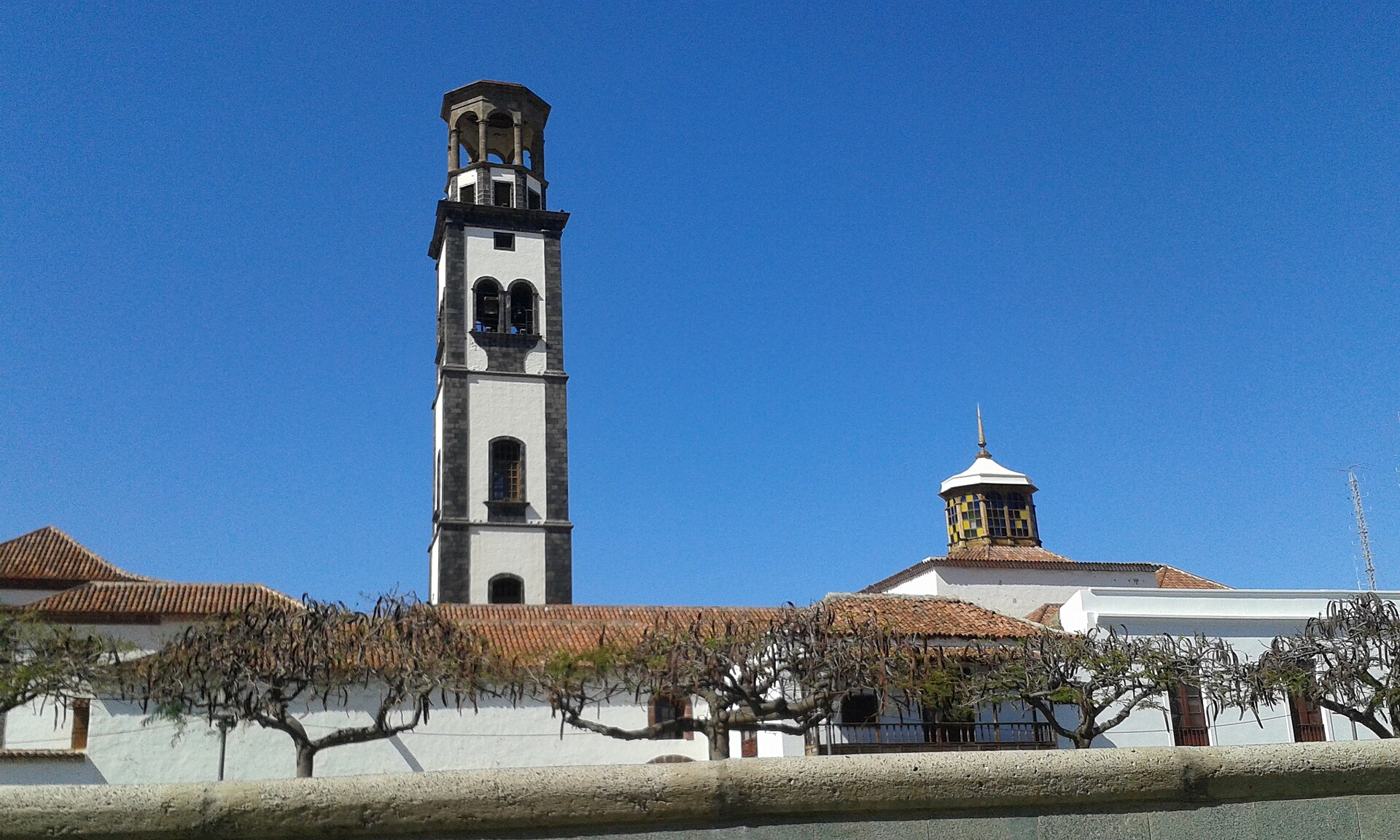
La Laguna · Towns of Tenerife
San Cristóbal de La Laguna: a town planned for peace
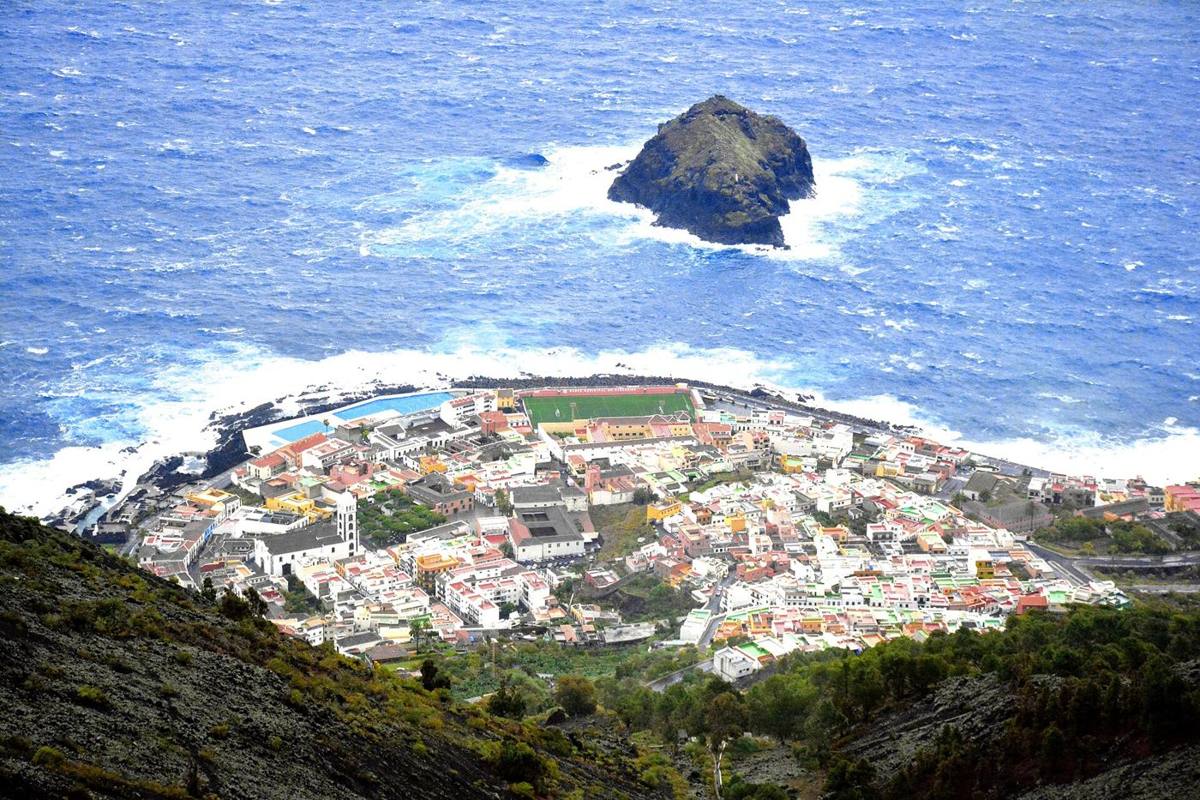
Garachico · Towns of Tenerife
Garachico: the port the volcano took
Bajamar · Towns of Tenerife
Bajamar and Punta del Hidalgo: La Laguna's shore
Candelaria · Towns of Tenerife
Candelaria: the shrine on the shore
Santa Cruz de Tenerife · Towns of Tenerife
Santa Cruz: from army camp to capital
La Orotava · Towns of Tenerife
La Orotava: a town drawn with a cord
Adeje · Towns of Tenerife
Adeje: the kingdom, the fortress and the marquises
La Caleta · Towns of Tenerife
La Caleta: Adeje's old harbour
Las Galletas · Towns of Tenerife
Las Galletas: salt, fish and a garden city
Playa de las Américas · Towns of Tenerife
Playa de las Américas: a resort from scratch
Callao Salvaje · Towns of Tenerife
Callao Salvaje: a resort by decree
Playa Paraíso · Towns of Tenerife
Playa Paraíso: a paradise on paper
Guía de Isora · Towns of Tenerife
Guía de Isora: from Teide to the sea
Playa San Juan · Towns of Tenerife
Playa San Juan: Guía de Isora's harbour
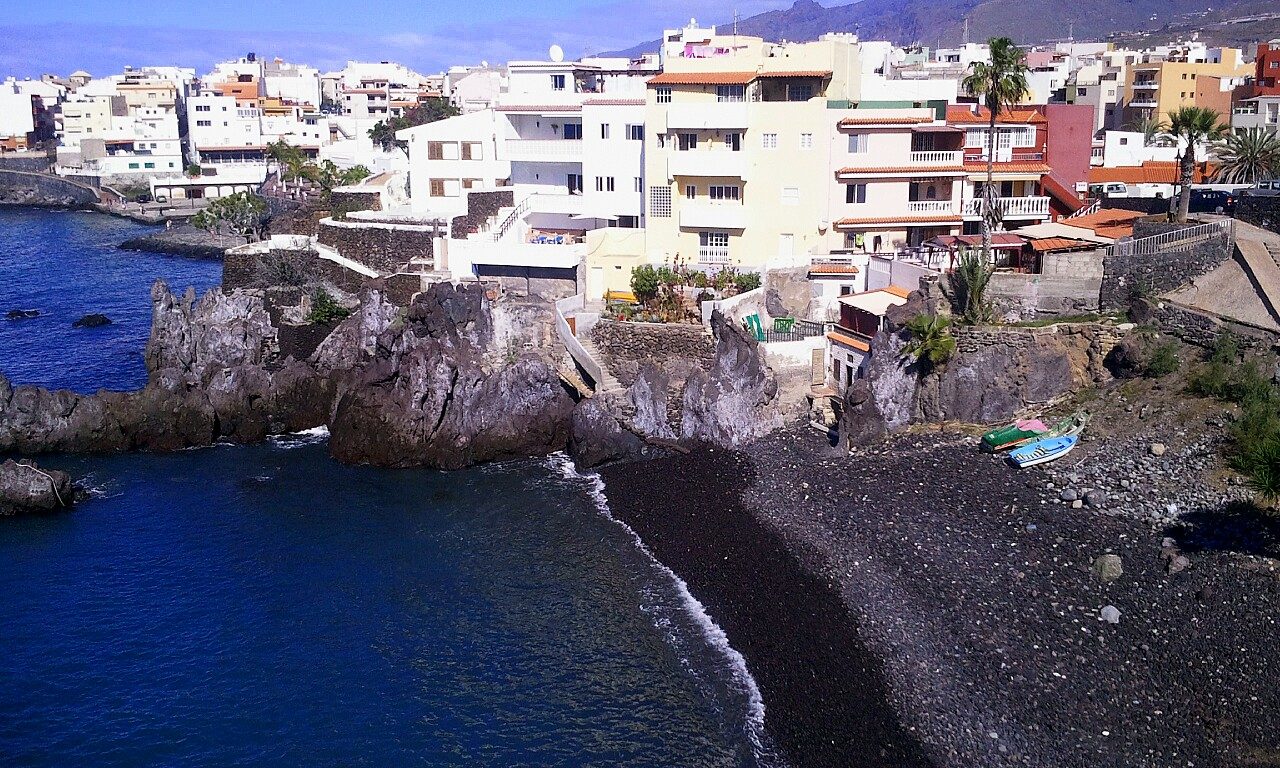
Alcalá · Towns of Tenerife
Alcalá: a fishing village on the lava
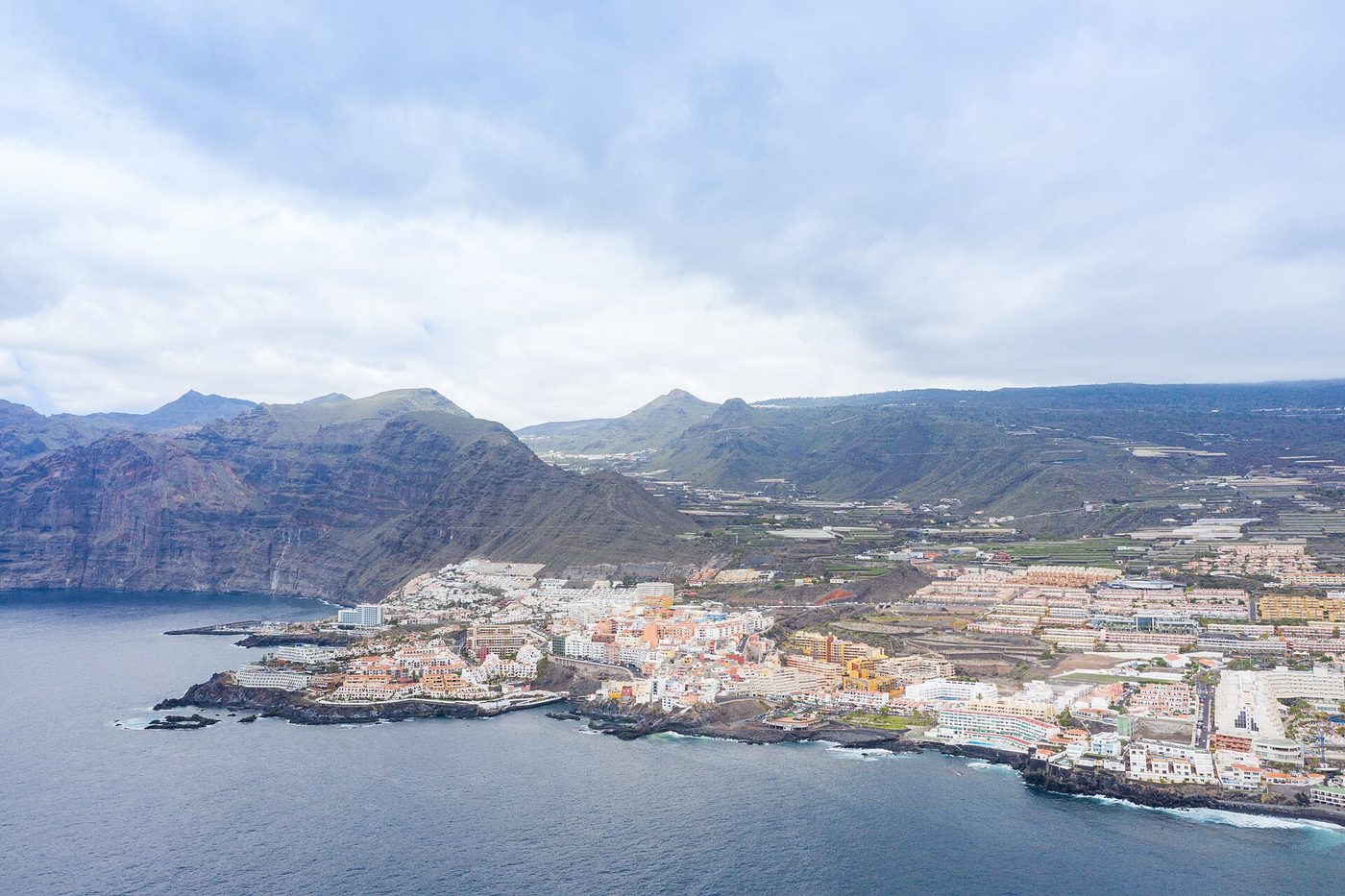
Puerto Santiago · Towns of Tenerife
Puerto Santiago and Los Gigantes: life below the cliffs
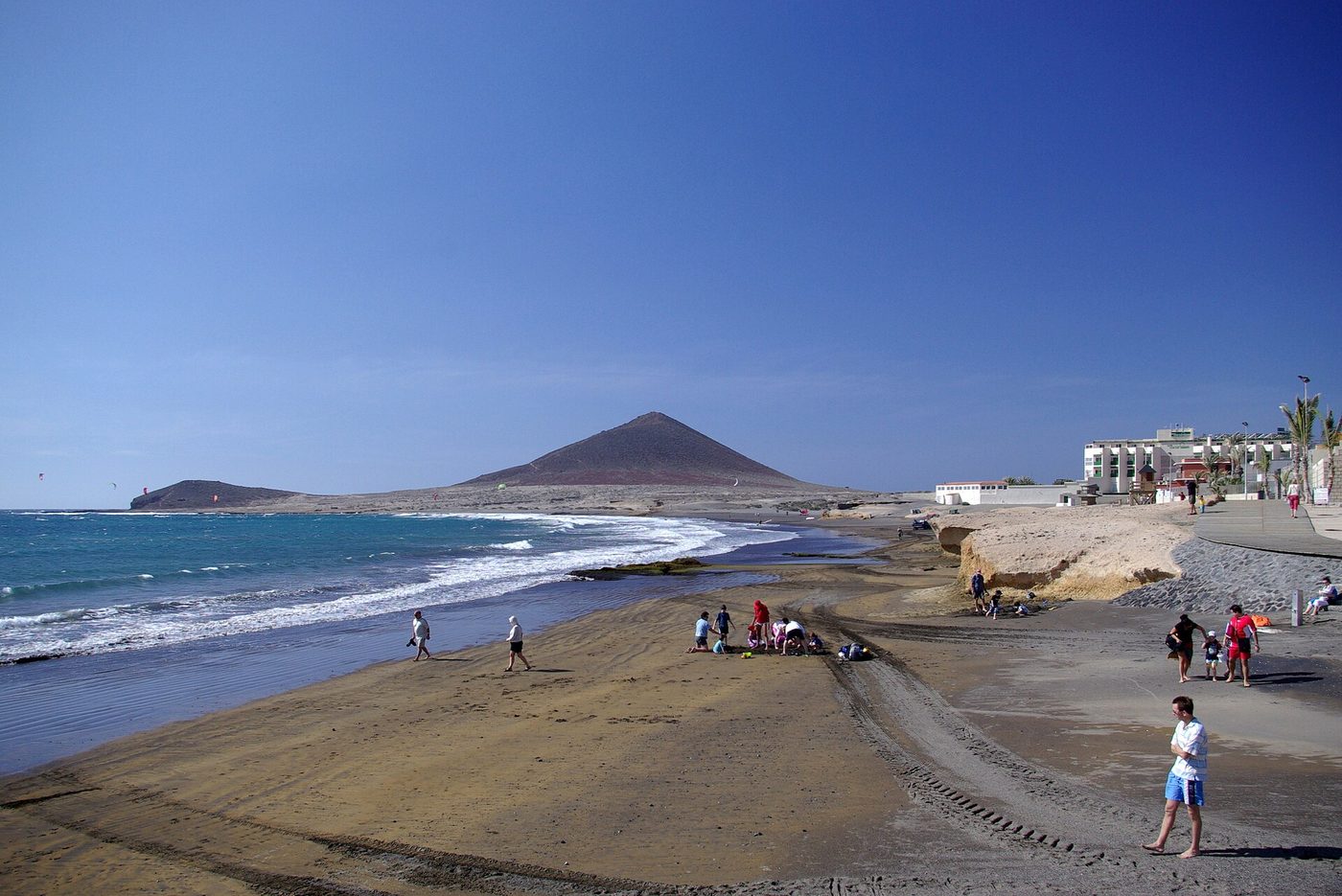
El Médano · Towns of Tenerife
El Médano: the harbour under the red mountain
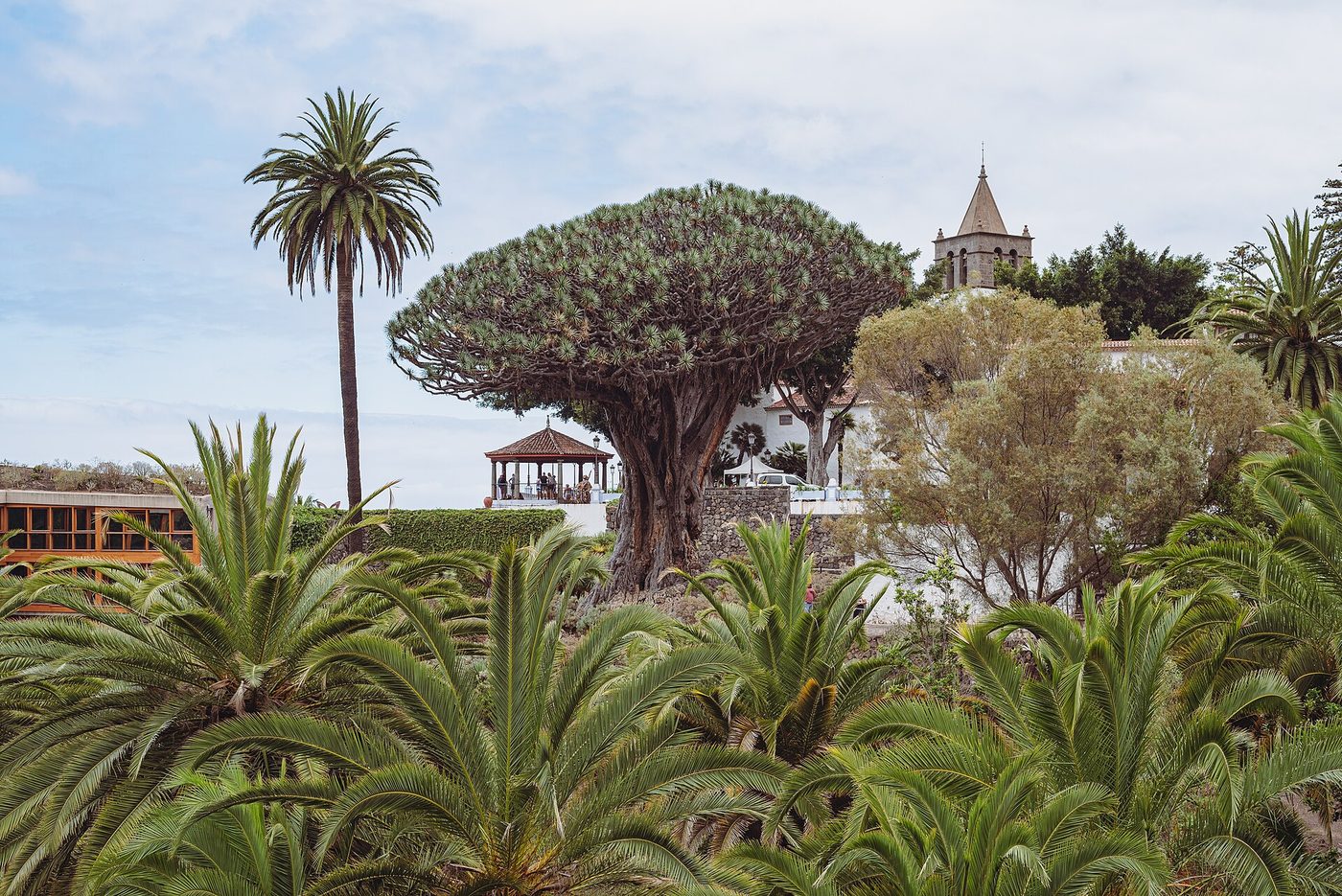
Icod de los Vinos · Towns of Tenerife
Icod de los Vinos: the dragon tree and the cove of San Marcos
Puerto de la Cruz · Towns of Tenerife
Puerto de la Cruz: from wine port to the first resort
San Juan de la Rambla · Towns of Tenerife
San Juan de la Rambla: a village on the badlands
Buenavista del Norte · Towns of Tenerife
Buenavista del Norte: a planned town at the end of the island